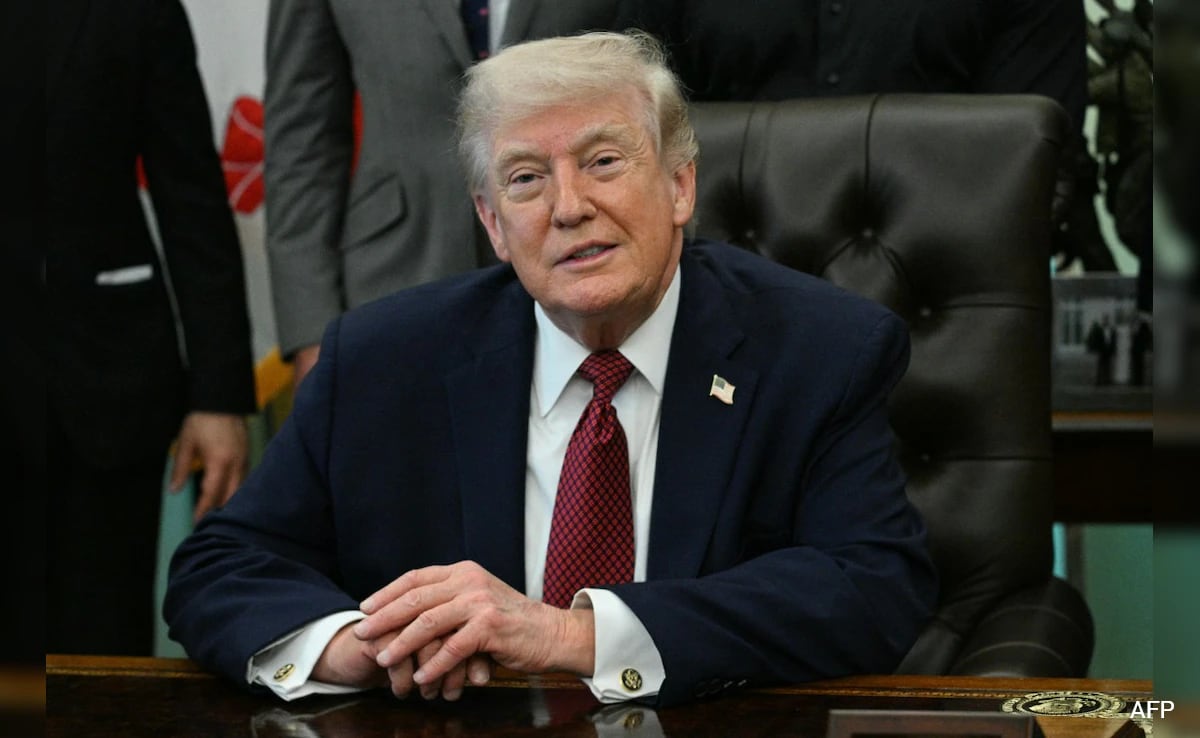
The intersection of populist economic policy and high-frequency brand association creates a unique friction point in political communications. When Donald Trump utilized a McDonald’s delivery to highlight his "No Tax on Tips" proposal, only to later characterize the delivery method as "tacky," he exposed the structural tension between two distinct objectives: the signaling of working-class alignment and the maintenance of a luxury personal brand. This friction is not merely a matter of social etiquette but a case study in the Dual-Incentive Marketing Framework, where a political actor must simultaneously appeal to a mass-market base while distancing themselves from the perceived aesthetic of that base’s daily reality.
The efficacy of this specific event relies on the conversion of a retail transaction into a policy vehicle. By using a fast-food delivery as the stage for a tax policy discussion, the campaign attempted to bypass traditional media filters and speak directly to the service industry workforce—a demographic where "tips" represent a significant portion of the Total Compensation Structure.
The Economic Mechanics of the No Tax on Tips Proposal
To understand the weight of the stunt, one must first isolate the policy mechanism being promoted. The "No Tax on Tips" initiative is designed to target the Marginal Propensity to Consume (MPC) among service workers. In standard economic theory, lower-income earners spend a higher percentage of their incremental income than high-net-worth individuals.
The proposal operates on three primary assumptions:
- Revenue Elasticity: Proponents argue that by eliminating the federal tax burden on tips, service workers will have higher take-home pay without requiring employers to raise base wages, which could theoretically prevent cost-push inflation in the hospitality sector.
- Compliance Incentives: The service industry has historically struggled with underreporting of cash tips. A zero-tax environment removes the incentive for tax evasion, potentially formalizing a larger segment of the "shadow economy."
- Labor Participation: Increasing the net value of a tipped hour could drive labor back into a struggling service sector, addressing the post-2020 labor shortages.
However, the structural limitation of this policy is the Regressive Tax Cliff. If federal taxes are removed from tips but remain on standard hourly wages, it creates a perverse incentive for employers to lower base pay and shift the entirety of compensation onto the customer via gratuities. This complicates the fiscal landscape for the IRS, as the definition of a "tip" versus a "service charge" or "commission" becomes a legal battleground.
The Contrast of Brand Equity: The Tacky Paradox
The subsequent pivot—where the delivery was labeled "tacky"—reveals the Aesthetic Arbitrage Trump employs. In political branding, "tacky" is a strategic designation used to separate the leader from the medium of his message. This creates a psychological distance that preserves the leader's status as an "aspirational figure" rather than just a "peer."
The campaign’s logic follows a specific Tiered Communication Strategy:
- Phase 1: The Tactical Engagement: Use the McDonald's brand as a populist bridge. Fast food is a universal cultural touchstone in the United States, representing affordability and consistency. It serves as the "Common Ground" variable in the political equation.
- Phase 2: The Policy Overlay: Attach the "No Tax on Tips" slogan to the high-visibility act of ordering and receiving food. This ensures that the policy is discussed within the context of a relatable everyday activity.
- Phase 3: The Status Reassertion: By critiquing the delivery as "tacky" after the fact, the actor reinforces their position at the top of the social hierarchy. It signals to the audience that while the actor uses these services to help the worker, they are not defined by them.
This creates a bottleneck in authenticity. If the medium is viewed with disdain by the messenger, the sincerity of the policy intent is scrutinized by the very demographic it intends to court.
Operational Logistics of Political Stunting
The use of a McDonald’s delivery in a political context involves complex logistics that the average observer misses. It is not a simple consumer transaction; it is a Managed Media Event (MME).
The "tacky" comment likely stems from a failure in the Presentation Layer of the logistics. In high-stakes political branding, every visual element is controlled. A delivery bag that is crumpled, a delivery driver who does not fit the desired visual narrative, or the inherent "cheapness" of disposable packaging conflicts with the gilded aesthetic of the Trump brand.
The friction here is between Utility and Image.
- Utility: The McDonald’s order successfully generated headlines and forced the "No Tax on Tips" conversation into the news cycle.
- Image: The delivery process—often associated with the "gig economy" which is itself a byproduct of the labor shifts Trump claims to address—lacks the grandeur required for a high-status political figure.
The second limitation of this strategy is the Reliability Gap. When a candidate utilizes a brand like McDonald's, they are piggybacking on that brand's existing relationship with the public. If that brand experience is then denigrated, it risks alienating the "Brand Loyalists" who comprise a significant portion of the voting bloc.
The Regulatory Landscape of Tipped Wages
Beyond the optics, the debate touches on the Fair Labor Standards Act (FLSA). Currently, the "tip credit" allows employers in many states to pay workers as little as $2.13 per hour, provided that tips make up the difference to reach the federal minimum wage of $7.25.
A "No Tax on Tips" policy would drastically alter the Net Present Value (NPV) of service jobs. If the policy were implemented, we would likely see:
- Shift in Corporate Compensation Models: Large-scale hospitality groups might lobby for the reclassification of various income streams to qualify as "tips."
- Legislative Cannibalization: To offset the lost federal revenue, there might be a push to increase taxes on the corporate entities themselves, leading to a "Wash" in the overall economic impact.
- The "Gig" Convergence: With the rise of delivery apps (the very ones used in the McDonald's stunt), the line between an "employee" and an "independent contractor" is already blurred. Tax-free tips would accelerate the migration of workers into the 1099 economy, where they lack traditional benefits but maximize immediate cash flow.
Behavioral Economics and the Populist Feedback Loop
The "No Tax on Tips" proposal is a masterpiece of Cognitive Ease. It is a simple, catchy solution to a complex problem of wage stagnation and inflation. Unlike nuanced discussions about the Consumer Price Index (CPI) or Quantitative Tightening, "No Tax on Tips" is a directive that every waiter and bartender can immediately calculate in their head.
The "tacky" remark, while seemingly a gaffe, functions as a Status Signal. It prevents the candidate from being fully absorbed into the "working class" identity, which would diminish his perceived power. In the logic of the Trump brand, power is derived from being above the system while claiming to fix it for those inside the system.
This creates a Cognitive Dissonance Loop:
- The worker sees the candidate eating their food (Connection).
- The worker hears the candidate advocating for their paycheck (Policy).
- The worker hears the candidate call the method "tacky" (Hierarchy).
The effectiveness of this loop depends on the voter's preference for Identification (being like the candidate) versus Representation (having the candidate work for them).
Strategic Assessment of the Event
The McDonald’s "No Tax on Tips" event was a high-risk, high-reward maneuver that prioritized Message Velocity over Brand Consistency. The immediate objective—dominating the news cycle with a pro-worker policy—was achieved. The secondary effect—the "tacky" comment—served as a necessary, if clunky, brand correction to maintain the candidate's luxury positioning.
To optimize this strategy in the future, a campaign must resolve the Medium-Message Conflict. If the goal is to champion the service worker, the tools of the service worker's trade cannot be publicly disparaged without eroding the foundational trust of the policy proposal.
The final strategic play for any entity attempting to replicate this "High-Low" political theater is the Institutionalization of the Stunt. Rather than a one-off delivery, the policy must be backed by a white paper that defines the technical boundaries of "tips" to prevent corporate tax sheltering. Without that technical rigor, the stunt remains a fleeting moment of aesthetic friction rather than a sustainable shift in the economic platform.
The core vulnerability remains the Internal Consistency of the Brand. You cannot effectively advocate for a tax break on a transaction while simultaneously expressing disdain for the culture surrounding that transaction. The market—and the electorate—eventually detects the discrepancy between the populist mask and the elitist critique.
Moving forward, the focus should shift from the Delivery Method to the Legislative Framework. If the "No Tax on Tips" proposal is to be taken as a serious economic stabilizer rather than a campaign slogan, it requires a definitive breakdown of how it will interact with the Social Security Trust Fund and the Alternative Minimum Tax (AMT). Without these definitions, the policy is as disposable as the fast-food packaging it was delivered in.
The logical next step for the campaign is to pivot from Retail Populism to Regulatory Specificity. By defining the "Tip" as a specific legal entity distinct from "Service Charges," the campaign can mitigate the "tacky" perception by framing the issue as a professionalized economic reform. This elevates the conversation from the quality of a burger delivery to the structural integrity of the American tax code. The tactical move is to release a "Service Worker Bill of Rights" that codifies these changes, using the McDonald's event as the visual anchor for a much deeper, more technical policy rollout. This would effectively bridge the gap between the billionaire's aesthetic and the worker's reality, turning a moment of "tacky" delivery into a catalyst for systemic change.