The secure line between Washington and Moscow has carried the weight of nuclear launch codes, border disputes, and ceasefires, yet its strangest burdens are almost always the invisible ones.
Consider a hypothetical scenario on a gray Tuesday morning. Picture an emergency room physician in a regional clinic somewhere along the Russian steppe—let’s call her Dr. Elena Rostova. A patient walks in, feverish, clutching his ribs, coughing up blood-tinged sputum. At first glance, it looks like severe pneumonia, the kind that fills wards every winter from Vladivostok to Vermont. Then the lab cultures come back, and the air in the room changes. Yersinia pestis. Not the slow-moving bubonic form that swells lymph nodes and yields reliably to early treatment, but its airborne cousin. Pneumonic plague. The one that moves from breath to breath.
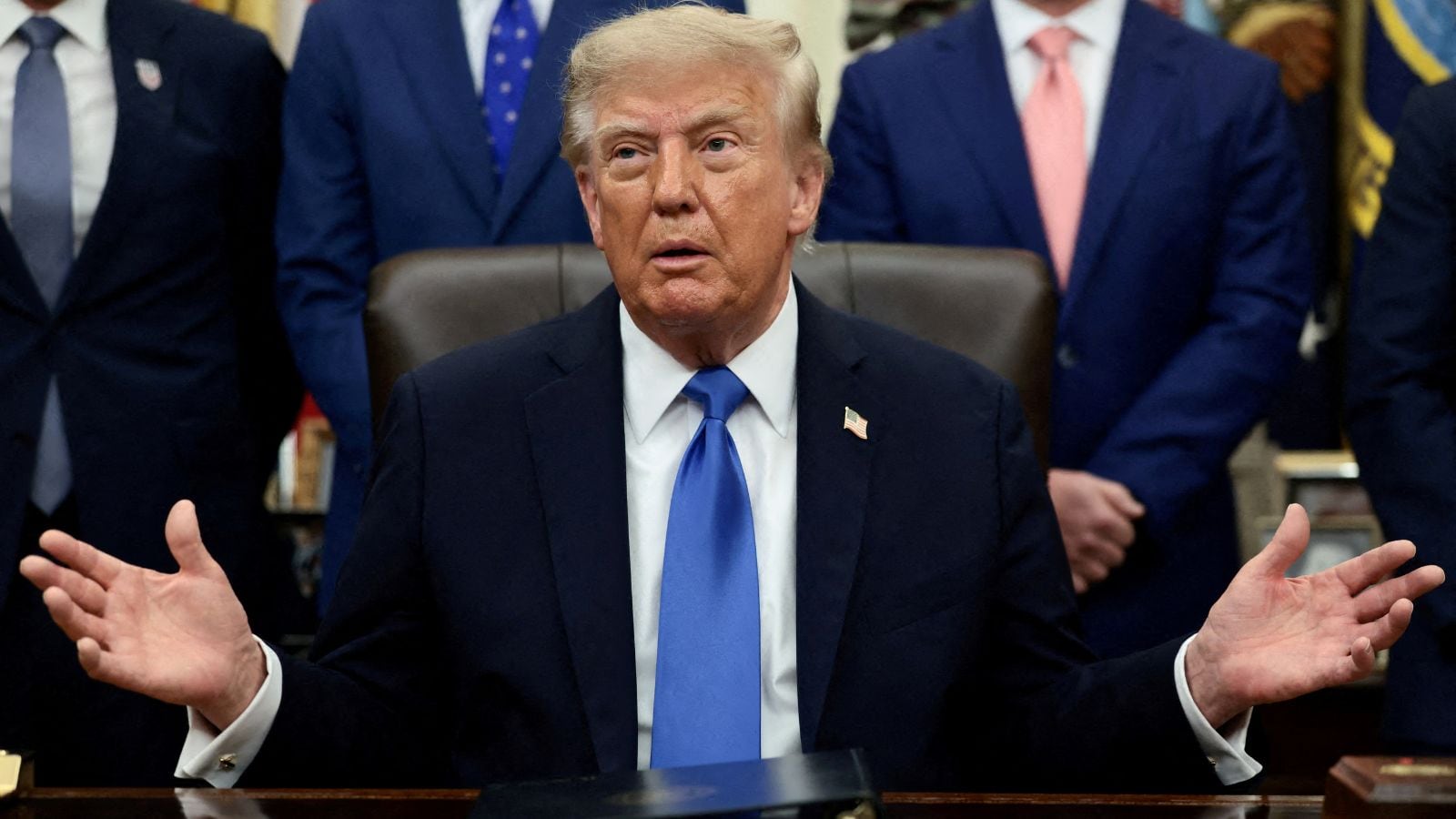
Now zoom out seven thousand kilometers, to a quiet briefing room in the West Wing, where Donald Trump announces to reporters that he has a phone call scheduled with Vladimir Putin to discuss a possible case of pneumonic plague inside Russia.
On paper, that single sentence reads like a bureaucratic wire dispatch—two heads of state touching base over a public health anomaly. In reality, it is a collision between fourteenth-century biology and twenty-first-century geopolitics. It is the sound of two adversaries realizing, however briefly, that a microscopic organism does not care about sanctions, airspace closures, or diplomatic stalemates.
The Anatomy of an Ancient Fear
To understand why a single suspected case triggers presidential phone calls rather than routine memos between mid-level health attachés, you have to strip away the medieval mythology surrounding the word plague.
Most people hear the word and picture woodcuts of hooded physicians, mass graves in 1347, and rats scurrying off merchant ships. That association makes the threat feel theatrical, almost quaint—like worrying about scurvy or smallpox. I remember the first time I sat through an infectious disease tabletop exercise years ago, watching seasoned policy analysts smirk when the moderator dropped the name Yersinia pestis onto the table. Half an hour into the simulation, nobody was smirking.
Here is the clinical truth, stripped of drama. Plague is caused by a rod-shaped bacterium that never actually went extinct. It lives quietly in rodent populations and their fleas across rural pockets of the American Southwest, Madagascar, the Democratic Republic of Congo, and vast stretches of Central Asia and southern Russia. Every year, a handful of human cases pop up globally. Usually, they are bubonic—transmitted by a flea bite, painful, serious, and entirely treatable with common antibiotics like streptomycin, doxycycline, or ciprofloxacin if caught within the first twenty-four to forty-eight hours.
Pneumonic plague is a different animal altogether.
Think of the difference between a brush fire and a gas leak. Bubonic plague stays localized in the lymphatic system unless left untreated; it rarely jumps directly from one person to another. Pneumonic plague settles directly into the lungs. Once there, every cough, every wet exhale, releases infectious droplets into the surrounding air. Without rapid antibiotic intervention, the mortality rate approaches one hundred percent, often within twenty-four to seventy-two hours of symptom onset. Even with modern intensive care, delays of just a single day slash survival odds dramatically.
It is the only form of plague capable of sustained human-to-human transmission. And in an era of commercial aviation, crowded rail corridors, and porous supply chains, an airborne pathogen with a one-to-three-day incubation window is the exact nightmare scenario epidemiologists lose sleep over.
Why Two Rivals Talk When Bacteria Move
So why does Trump pick up the phone to call Putin?
The cynical reading—and Washington is never short on cynicism—is political theater. Two strongmen projecting control over chaos, turning a localized medical alert into high-level statesmanship. Doubtless, optics play a role in every presidential announcement. Nothing happens in front of cameras without someone calculating how it plays on evening broadcasts.
But look closer at the mechanics of global health security, and a much starker reality emerges.
Over the past decade, the formal bridges connecting American and Russian scientific institutions have eroded to rusted cables. Diplomatic expulsions, frozen cooperative threat-reduction programs, and mutual distrust have hollowed out the quiet, routine channels where epidemiologists once traded raw data without asking permission from intelligence agencies. When trust evaporates between superpowers, information slows down. And with pneumonic plague, speed is the only currency that matters.
Consider what happens next when a suspected outbreak occurs inside a closed or guarded information ecosystem. Local officials hesitate to report bad news upward because bad news ruins careers. Regional governors downplay cluster sizes to avoid panic. By the time a confirmation reaches Moscow, days have burned away—days during which contacts may have boarded trains, crossed borders, or visited crowded markets.
A direct leader-to-leader call bypasses the bureaucratic bottleneck. When Trump signals publicly that he is speaking directly with Putin about a possible case, he is doing two things simultaneously. First, he is putting Moscow on notice that Washington is watching—making quiet containment failures politically costly on the world stage. Second, he is opening a direct conduit for technical assistance, diagnostic verification, and border-screening coordination without waiting six weeks for State Department cables to clear interagency review.
History backs up the necessity of this strange, reluctant cooperation. During the height of the Cold War, at the very moment Soviet missiles sat in Cuba and American bombers circled on alert, American and Soviet virologists worked side by side through the World Health Organization to eradicate smallpox. Viktor Zhdanov, a Soviet deputy health minister, proposed the global campaign; D.A. Henderson, an American epidemiologist, led it to victory, relying on hundreds of millions of vaccine doses manufactured in the USSR. Both nations understood a simple, brutal calculus: a pathogen loose in one hemisphere is a loaded gun pointed at the other.
The Invisible Stakes Behind the Headlines
When news breaks that a U.S. president and a Russian president are discussing a potential plague case, public reaction usually swings between two unhelpful extremes. One camp shrugs it off as media sensationalism—after all, antibiotics exist, and Russia is far away. The other camp spirals into apocalyptic dread, stocking up on masks and refreshing flight-tracking maps.
Both reactions miss the real vulnerability.
The danger is rarely the first patient. Returning to our hypothetical Dr. Rostova on the steppe: if her hospital recognizes the symptoms immediately, isolates the patient, administers intravenous antibiotics, and traces every person he shared a room with over the prior forty-eight hours, the chain snaps. The story ends as a footnote in a quarterly epidemiological bulletin.
The real danger is diagnostic blindness.
Because pneumonic plague begins with symptoms indistinguishable from severe influenza or bacterial pneumonia—high fever, chills, headache, weakness, followed rapidly by chest pain and coughing—a harried doctor in an under-resourced clinic has no obvious visual cue screaming plague. Unless the patient happens to mention handling a dead marmot, skinning a wild hare, or traveling through a known endemic zone, standard broad-spectrum treatments might start too late, or isolation protocols might be skipped until nurses and orderlies have already inhaled the bacteria.
I have walked through isolation wards during respiratory scares, and the hardest thing to convey to someone who has never worn a powered air-purifying respirator for twelve hours straight is the psychological friction of containment. Every procedure takes three times longer. Sweat pools inside Tyvek cuffs. Fear makes young residents sloppy with glove removal, and sloppiness is how hospital outbreaks are born. Containment does not fail because we lack miracle drugs; it fails because tired human beings make small mistakes under immense pressure.
And there is another, quieter question hovering beneath any high-level U.S.-Russia conversation about Yersinia pestis—one that diplomats rarely say aloud at press conferences, yet intelligence analysts write into every margin note.
Yersinia pestis is classified as a Tier 1 Select Agent—a pathogen of high consequence that both the United States and the former Soviet Union studied extensively during the twentieth century. Whenever an unusual respiratory case surfaces inside Russian territory, Washington has to verify, quickly and quietly, that they are looking at a natural spillover from wild rodents rather than a laboratory accident or something far worse. That verification requires sample sharing, genomic sequencing, and transparency—none of which happen automatically when two nuclear powers are locked in geopolitical friction.
What Readers Actually Need to Know
Strip away the cable-news chyrons and the geopolitical chess, and a few grounded truths remain worth holding onto.
First, a possible case is not a confirmed outbreak. Initial clinical suspicions frequently turn out to be severe Klebsiella pneumonia, tularemia, or aggressive viral infections once polymerase chain reaction tests and bacterial cultures complete their cycles. Presidential phone calls happen at the suspicion stage precisely because waiting for absolute certainty means forfeiting the narrow window in which containment works best.
Second, unlike novel viruses—which arrive with zero preexisting immunity and no targeted treatments—Yersinia pestis is a known enemy. Global health agencies maintain stockpiles of effective antibiotics, rapid diagnostic assays exist, and the transmission mechanics are thoroughly mapped. You do not need exotic experimental therapies to stop plague; you need early detection, basic isolation, and standard pills taken on time.
Third, the very fact that this conversation is happening openly—announced before the call even takes place—is paradoxically reassuring. The outbreaks that truly spiral out of control are the ones buried under state secrecy until hospital corridors overflow, the way early warnings were muffled in Wuhan in late 2019 or during the 1979 anthrax leak in Sverdlovsk, when Soviet officials blamed tainted meat for weeks while spores drifted downwind. Sunlight, even harsh political sunlight, forces accountability.
Still, uncertainty lingers, and pretending otherwise would be dishonest. Nobody outside a handful of secure briefings knows yet whether the suspected Russian case will test positive, how many contacts are currently under observation, or whether Putin will grant international observers meaningful visibility into the response. Public health always operates in the fog between early smoke and confirmed fire.
The Breath Between Two Worlds
Think back to that phone line stretching across the Arctic Circle—fiber-optic cables buried beneath ocean silt and satellites arcing through the dark above the pole.
On one end sits an American president navigating domestic scrutiny and global volatility. On the other sits a Russian leader presiding over a vast landmass where ancient steppes still harbor bacteria older than human civilization. Between them lies every grievance, sanction, and proxy conflict of the modern era.
Yet for twenty or thirty minutes on a scheduled call, none of that matters as much as a microscopic rod-shaped cell smaller than a grain of dust, capable of riding a single human breath across a crowded room.
Somewhere tonight, in a quiet laboratory lit by fluorescent hum, a technician in a biosafety cabinet is peering at an agar plate, waiting to see what grows.



