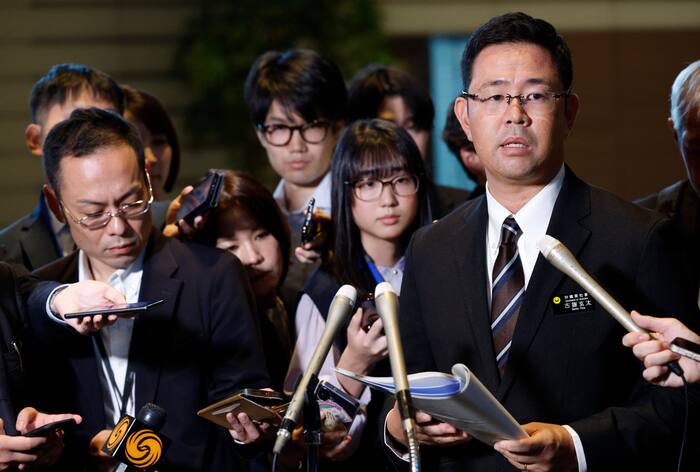
Okinawa Governor Denny Tamaki wants absolute discipline, public apologies, and a complete overhaul of the Status of Forces Agreement after another violent crime involving a United States Marine shocked the prefecture. The core issue centers on a local woman assaulted and murdered by a servicemember, sparking renewed local anger over an arrangement that shields American military personnel from the full weight of Japanese civilian prosecution.
For decades, the residents of Japan's southernmost prefecture have lived with a heavy strategic footprint. Roughly three-quarters of all exclusive US military base facilities in Japan are concentrated on Okinawa, an island chain accounting for less than one percent of the country's total land area. This concentration is not an accident of geography alone. It is the enduring architectural legacy of post-World War II geopolitics and the Cold War calculus that positioned Okinawa as the cornerstone of American power projection in the Pacific.
Yet, that strategic necessity has always come with a steep human cost. The presence of tens of thousands of armed personnel creates persistent friction with local communities. Curfews, noise pollution, environmental degradation from fuel leaks, and recurring criminal offenses by service members feed an atmosphere of resentment. Every high-profile crime acts as a flashpoint, reigniting debates that Tokyo and Washington prefer to manage behind closed doors rather than confront head-on.
Governor Tamaki’s demands go far beyond procedural apologies from base commanders. At the heart of the friction is the U.S.-Japan Status of Forces Agreement, signed in 1960. Under this pact, American military personnel suspected of committing crimes while on duty are often kept in US custody until Japanese authorities formally indict them. Critics argue this framework creates a dual justice system that erodes local sovereignty and denies victims swift legal recourse. When a crime occurs off-base, the jurisdictional gray areas compound the outrage, leaving Okinawans feeling like second-class citizens in their own homeland.
The Japanese national government finds itself caught in an immovable vise. Prime Minister administrations depend on the US-Japan security alliance to counter rising regional tensions involving China and North Korea. Any serious attempt to renegotiate the Status of Forces Agreement risks straining ties with Washington, which views its regional posture as non-negotiable. Consequently, Tokyo frequently offers financial compensation and diplomatic condolences to appease Okinawa while resisting structural legal reforms.
This dynamic fosters deep cynicism among local residents. Protests outside Camp Schwab and other installations are not isolated events driven by fringe activists; they represent a broad, cross-generational consensus that the burden of national defense is unfairly distributed. While mainland Japanese politicians praise the alliance from Tokyo, Okinawans bear the noise, the accidents, and the occasional tragedies that accompany foreign garrisons.
The geopolitical environment has only intensified these pressures. As military planners modernize installations to prepare for potential contingencies in the Taiwan Strait, the strategic value of Okinawa increases. More assets, more personnel, and more exercises mean more daily friction points between the base population and local civilians. Without a fundamental re-evaluation of how conduct is monitored and punished, the current trajectory guarantees future crises.
Real reform requires transparency that the military command structure historically resists. Internal discipline mechanisms within the armed forces often prioritize unit readiness and public relations over accountability to local populations. When minor infractions are handled quietly through non-judicial punishment rather than public trials, public trust deteriorates further.
Governor Tamaki’s insistence on discipline is an urgent reminder that security alliances cannot endure long-term without the consent of the governed. As the diplomatic fallout from the latest tragedy settles, the underlying structural fault lines remain active, waiting for the next tremor to expose the fragility of the peace in the Pacific.