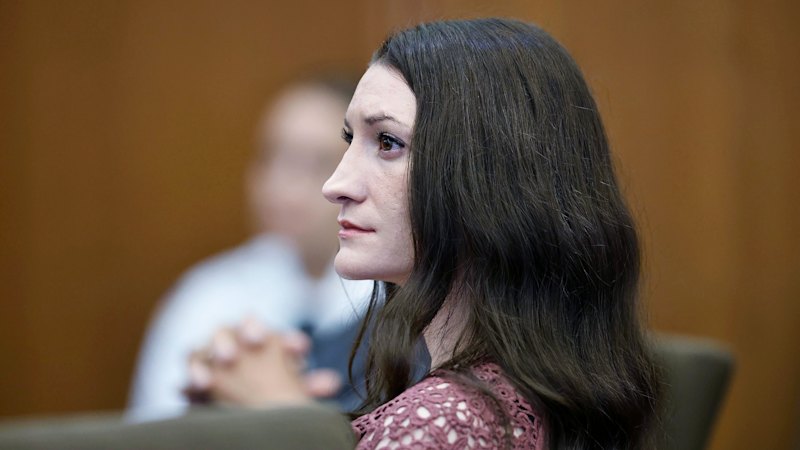
The headlines keep rolling in, treating every procedural heartbeat of the Lindsay Clancy saga as appointment viewing. Another court appearance, another recitation of a horrific tragedy, another wave of public outrage split neatly down familiar, predictable ideological trenches. The media framing remains locked in a comfortable, sensationalized loop: a grieving husband, an accused mother, and a legal system struggling to catch up to an unimaginable crime.
It is a lazy consensus. And it is missing the point entirely.
Focusing exclusively on the theater of the courtroom misses the systemic structural failure that allowed this disaster to manifest in the first place. When society reduces a catastrophic intersection of severe psychiatric illness, overmedicated postpartum distress, and institutional abandonment into a simple courtroom drama about guilt or innocence, we absolve the systems that broke the people inside them.
The Comfort of Villains and Martyrs
We crave clean narratives. The public narrative around postpartum psychosis and infanticide routinely collapses into two lazy extremes: either the perpetrator is an unmitigated monster who deserves the full wrath of the state, or they are a passive victim of biology with zero agency. Both positions are intellectually bankrupt.
I have watched legal analysts and commentators dissect expert testimonies as if they were reviewing a true-crime podcast, completely ignoring the mechanical failures of modern psychiatric pharmacology. When a patient is prescribed a staggering cocktail of psychiatric medications in a compressed window—a well-documented reality in this case—we are not merely treating distress; we are running dangerous chemical experiments on vulnerable brains under fluorescent-lit outpatient offices.
The defense hinges on involuntary intoxication and extreme psychiatric derangement. The prosecution counters with premeditation and awareness of action. Both sides fight over the dead horse of criminal intent while ignoring the elephant in the room: our medical establishment routinely discharges postpartum patients into isolation with chemical cocktails that can induce akathisia, psychotic breaks, and homicidal ideation, all while treating mental healthcare as an afterthought.
Dismantling the Insanity Defense Trap
Let us address the legal elephant directly. The insanity defense in high-profile American jurisprudence is fundamentally broken, not because it lets guilty people off the hook, but because it forces a medieval legal framework onto modern neurological science.
The M'Naghten rule—asking whether a defendant knew right from wrong at the exact moment of an act—is a blunt instrument designed in the nineteenth century. It treats the human brain as a light switch: either flipped on to rationality or completely off. Reality is far messier. Severe postpartum psychosis operates on a spectrum of delusions, command hallucinations, and terror that overrides executive functioning long before the physical act occurs.
When a hung jury results from a trial examining these exact dynamics, the public acts surprised. They should not be. A jury of twelve ordinary citizens is routinely asked to play amateur neuroscientist, parsing complex pharmacokinetic interactions between SSRIs, benzodiazepines, and antipsychotics with zero formal training. The result is a coin toss disguised as justice.
The Cost of Looking Away
If we genuinely care about preventing another tragedy like this, we need to stop treating high-profile trials as morality plays and start dismantling the institutional rot beneath them.
First, we need mandatory, monitored inpatient step-down care for severe postpartum psychiatric presentations. Handing a mother struggling with intrusive, violent thoughts a prescription bottle and telling her to follow up in three weeks is not healthcare; it is institutional negligence.
Second, pharmaceutical transparency regarding postpartum side effects must be legally enforced. The distance between "feeling anxious" and experiencing complete detachment from reality driven by pharmaceutical over-intervention is a bridge too far, yet our medical boards treat adverse psychiatric drug reactions as rare anomalies rather than predictable hazards.
The courtroom drama will drag on. Motions will be filed, appeals will be weighed, and the public will continue to scream into the digital void. But every hour spent debating courtroom theatrics is an hour stolen from fixing the broken architecture of maternal mental healthcare.
Stop treating the symptom as the disease. Until we hold our medical and legal institutions accountable for the preventable chaos they manufacture, we are simply waiting for the next headline to shock us all over again.