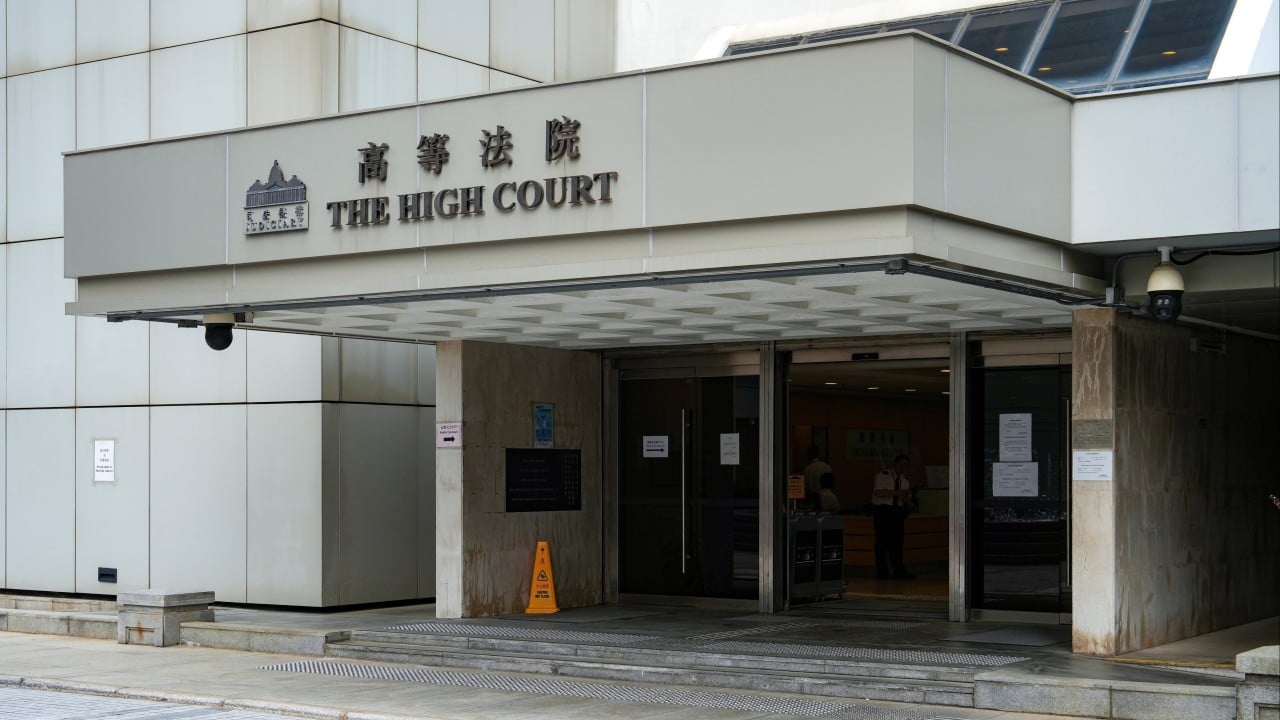
Every major news outlet covering the Abby Choi murder trial just took the bait.
When a Hong Kong police officer took the stand and denied mishandling DNA samples, the media machine spun up its favorite, laziest narrative: Did the cops botch the evidence? Headlines screamed about chain-of-custody vulnerabilities, glove changes, and cross-contamination risks. Readers clicked, commented, and played armchair detective, convinced that a single procedural slip-up in a high-profile crime scene could unravel an entire prosecution.
That narrative is comforting. It reduces a terrifyingly complex criminal investigation to a binary pass-or-fail test on a single cop's competence. It is also completely detached from how modern forensic biology actually operates in a courtroom.
If you are watching the Abby Choi proceedings and hyper-focusing on whether an officer swabbed a surface correctly or logged an exhibit five minutes late, you are looking at the wrong target. The real threat to justice in high-profile murder trials isn't simple human error during collection—it is the dangerous myth of forensic infallibility and the way modern DNA sensitivity has outpaced the legal system's ability to interpret it.
The Lazy Consensus of the "Botched Evidence" Trope
Mainstream crime reporting relies on a predictable script. Defense attorneys attack the chain of custody; police officers testify that they followed protocol; journalists frame the exchange as a high-stakes standoff over whether the evidence will be thrown out.
This framing relies on an outdated understanding of the exclusionary rule and common law evidentiary standards. In jurisdictions like Hong Kong—which operates under a common law system heavily influenced by English legal precedent—a procedural hiccup in handling physical evidence rarely leads to automatic inadmissibility.
Courts do not throw out biological evidence simply because a defense barrister raises the specter of mishandling. Judges look at probative value versus prejudicial effect. Unless the defense can demonstrate actual, material tampering or a catastrophic break in the chain of custody that renders the sample scientifically useless, the evidence stays in. The alleged mishandling doesn't get the DNA tossed; it merely goes to the weight the jury or judge assigns to it.
I have watched defense teams spend weeks cross-examining crime scene investigators over minor clerical discrepancies on evidence bags, convinced they were building a silver bullet. Every single time, the prosecution simply brings in a forensic scientist to explain why the biological profile remains intact despite the paperwork smudge, and the jury nods along. Attacking the cop on the stand makes for great courtroom theater and punchy headlines, but as a legal strategy, it almost always fails to move the needle.
What Everyone Gets Wrong About DNA Contamination
To understand why the media's obsession with police "mishandling" is fundamentally flawed, you have to understand how forensic DNA technology has changed over the last fifteen years.
In the 1990s, forensic analysts needed a visible stain—a drop of blood, a smear of saliva—to generate a Short Tandem Repeat (STR) profile. Contamination required a massive, sloppy blunder, like an investigator bleeding onto a piece of evidence or reusing a visibly dirty swab.
Today, forensic laboratories use ultra-sensitive amplification kits capable of generating profiles from Touch DNA—trace epithelial cells left behind when someone briefly brushes against an object. We are talking about picograms of genetic material, invisible to the naked eye, equivalent to just a handful of human cells.
The Reality of Secondary and Tertiary Transfer
When DNA testing becomes sensitive enough to detect ten cells, the entire concept of "mishandling" changes. You no longer need a negligent police officer to contaminate a crime scene. Biology does it on its own.
Consider the mechanics of indirect DNA transfer, a phenomenon extensively documented by forensic researchers like Roland van Oorschot and Cynthia Cale:
- Primary Transfer: Person A touches a knife. Their DNA is on the handle.
- Secondary Transfer: Person A shakes hands with Person B. Person B then touches the knife. Person A's DNA is now on the knife, even though Person A was never in the room.
- Tertiary Transfer: Person A sits on a sofa. Person B sits on the same sofa an hour later, picks up Person A's cells on their trousers, walks into another room, and brushes against a table. Person A's DNA is now on the table.
Imagine a scenario where a suspect lives in or frequently visits the property where a crime occurs—a dynamic directly relevant to domestic and familial homicide cases like Abby Choi's. In an environment shared by multiple family members, everyone's DNA is everywhere. It is on doorknobs, sinks, tools, and vehicles through entirely innocent, everyday contact.
When journalists frame the courtroom battle around whether a police officer "mishandled" a swab, they completely miss the point. The presence of a suspect's DNA in a shared environment proves association, not guilt. Conversely, the presence of a victim's DNA on an item handled by a relative proves contact, not intent.
The CSI Effect Has Poisoned Public Comprehension
Why does the public immediately panic at the word "mishandling"? Because decades of television procedural dramas have trained citizens to view DNA as an infallible, binary truth machine.
In the public imagination, a DNA match is the end of the story. Either the sample is pure and the defendant is guilty, or the sample is tainted and the defendant walks. There is no middle ground.
Forensic scientists hate this binary thinking. In real laboratories, trace samples from complex crime scenes rarely yield clean, single-source profiles. Instead, analysts face complex DNA mixtures—overlapping genetic data from two, three, or four different individuals, often degraded by environmental factors, cleaning agents, or cooking heat.
Activity Level vs. Source Level Propositions
In forensic science, there is a massive divide between two levels of interpretation:
- Source Level: Whose DNA is this? (e.g., "The DNA on the handle matches Suspect X.")
- Activity Level: How did the DNA get there? (e.g., "Did Suspect X hold the weapon during the assault, or did their DNA transfer onto the handle from a laundry basket?")
Police officers testifying about evidence collection are speaking to the integrity of the sample at the source level. They are proving that the swab taken from Exhibit A is the same swab analyzed in the lab.
The real war in modern criminal trials is fought at the activity level. A police officer can follow every single protocol in the Hong Kong Police Force manual—wearing double gloves, changing masks between rooms, sealing tamper-evident bags with surgical precision—and the resulting DNA evidence can still be completely misinterpreted if the court fails to account for how those cells arrived on the surface.
Does Any of This Actually Matter in a Multi-Evidence Prosecution?
Let's strip away the sensationalism and look at how major homicide prosecutions are actually built.
If a case rests entirely on a single, microscopic touch-DNA sample collected from a public park bench, then yes—every breath the collecting officer took near that bench is life-or-death for the prosecution.
High-profile murder cases involving dismemberment, concealment, and multiple co-defendants do not rely on a single swab. They are built on converging lines of independent evidence:
- Digital Forensics: Cell tower pings, GPS location histories, messaging app metadata, and financial transactions that place suspects at specific locations at exact timestamps.
- CCTV Networks: In dense urban environments like Hong Kong, public and private surveillance networks track vehicle movements and pedestrian paths down to the minute.
- Pathology and Anthropology: Trauma analysis, toolmark examinations, and toxicology reports that establish cause and manner of death independently of genetic material.
- Physical Corroboration: Receipts for specific tools, rental agreements for properties, and biological remains recovered across multiple sites.
When a defense attorney aggressively grills a police officer over DNA handling procedures in a case backed by mountains of digital, visual, and physical corroboration, they are not trying to collapse the entire case. They are trying to create cognitive friction.
If a defense team can convince the court that the police were sloppy with one piece of evidence, they hope that doubt will bleed into how the court views the rest of the investigation. It is a psychological tactic, not a scientific one.
The Uncomfortable Truth About Forensic Accountability
Taking a contrarian stance against the "botched police work" narrative does not mean giving law enforcement a free pass. In fact, the downside to dismissing chain-of-custody challenges too quickly is real: institutional complacency.
History is littered with catastrophic miscarriages of justice caused by systemic laboratory failures and sloppy police work. The Phantom of Heilbronn—a multi-year European manhunt for a nonexistent female serial killer whose DNA kept appearing at dozens of unrelated crime scenes—was eventually traced back to a single factory worker who inadvertently contaminated cotton swabs during manufacturing. In Australia, the Fitzgerald Inquiry exposed massive DNA extraction flaws at a state-run forensic lab that compromised thousands of criminal cases.
Police officers do make mistakes. Cognitive bias does infect crime scene investigators who already believe they have the right suspect in custody. When an officer testifies that they followed every rule to the letter, healthy skepticism is warranted.
The mistake is treating every procedural challenge as a smoking gun. When media outlets amplify routine defense cross-examinations as proof of a crisis in the investigation, they cry wolf. They desensitize the public to what actual forensic misconduct looks like—such as dry-labbing (fabricating test results), hiding exculpatory mixture data, or overstating statistical probabilities on the witness stand.
How to Actually Read Crime Scene Testimony Like an Insider
If you want to understand what is truly happening in the Abby Choi trial—or any major criminal prosecution—stop reading headlines about whether a cop denied making a mistake. Of course they denied it; that is why they were called to testify.
Instead, look for the structural fault lines that actually determine verdicts:
- Follow the Mixture Ratios: Watch how forensic biologists describe the DNA profiles. Are they talking about a "major contributor" (a high concentration of DNA consistent with direct, forceful contact) or a "minor trace contributor" (a tiny fraction of cells that could easily result from casual, secondary transfer)?
- Watch the Timeline, Not the Swab: Physical evidence only matters when anchored to time. A suspect's DNA on a vehicle means nothing if they drove that car legally three days before the crime. Look for how the prosecution links the biological evidence to the narrow window of the offense.
- Separate Clerical Errors from Biological Compromise: A misspelled name on an evidence log is a bureaucratic failure; an unsealed bag stored in a warm trunk is a biological failure. Defense lawyers intentionally blur the line between the two. Do not fall for it.
- Look for Independent Corroboration: Ask yourself a simple question: If this specific DNA sample were completely erased from the record tomorrow, would the rest of the evidence still tell the exact same story? If the answer is yes, the cross-examination you are reading about is pure theater.
The courtroom battle over DNA in Hong Kong is not a referendum on whether one police officer has steady hands. It is a collision between 21st-century molecular biology—capable of detecting the invisible biological dust we shed every second of our lives—and a legal system still trying to force that nuance into a simple, black-and-white verdict.
Stop asking whether the police dropped the sample. Start asking whether the courts know how to read what is actually on it.


