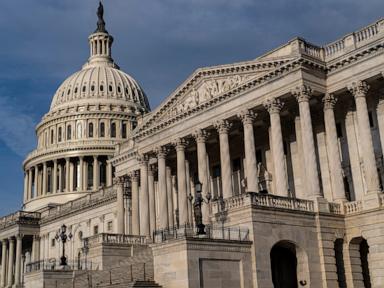
"He's got the White House looking like Saddam Hussein opened a Cheesecake Factory."
Nine words from Barack Obama at a Saturday rally in Cleveland, and suddenly Donald Trump was spending his Monday night in Mississippi defending a casual dining chain. You don't see a sitting president get rattled over restaurant decor every day. Yet that single punchline managed to hijack the final stretch of the 2026 midterm campaign cycle, turning gold leaf and limestone paving into front-page political ammunition.
Most news outlets treated Obama's remark as a throwaway laugh line before pivoting to standard campaign coverage. They missed why the insult worked so well—and why Trump couldn't let it go.
What Actually Happened at the Cleveland Rally
Speaking to a packed crowd at the Cleveland Public Auditorium on October 24, 2026, Obama was stumping for Democratic Senate candidate Sherrod Brown and gubernatorial hopeful Dr. Amy Acton. Midway through his speech, he zeroed in on how Trump was spending his time during a period of rising consumer costs and military tension with Iran.
"I don't know if you've noticed, but he seems very focused on home renovations," Obama told the audience. "He should be on HGTV."
Then came the list. Obama ticked off the massive White House ballroom construction, the paved-over Rose Garden, the new South Lawn helipad, and the sheer volume of gilded trim inside the executive mansion. He asked what was up with all the gold before dropping the line comparing the aesthetic to a Cheesecake Factory run by the late Iraqi dictator.
The crowd roared. Clips of the moment hit social media within minutes and racked up millions of views before Sunday morning.
Why the Cheesecake Factory Joke Landed
Political insults usually bounce off Trump because he treats outrage as oxygen. Mock his policies, and he calls you weak. Question his rallies, and he brags about crowd sizes.
Obama didn't attack Trump's strength or his power. He mocked his taste.
For a former real estate developer whose entire personal brand rests on luxury, gold fixtures, and five-star aesthetics, comparing his prized architectural upgrades to a suburban mall restaurant with a 20-page menu cuts straight to the bone. Adding Saddam Hussein—a dictator infamous for tacky, gold-plated palace interiors—turned a pop-culture jab into a sharp critique of authoritarian excess.
It was specific. It was visual. And once you hear it, you can't unsee it.
Inside Trump's White House Makeover
To understand why Obama had so much material to work with, you have to look at what actually changed at 1600 Pennsylvania Avenue over the past two years. Trump hasn't just swapped out curtains; he's physically altered the footprint of the property.
The Rose Garden Limestone Patio
In March 2025, Trump ordered a major overhaul of the historic Rose Garden. Workers ripped out the central grass lawn and replaced it with flat limestone paving. While the signature rose bushes remained along the outer edges, the middle became a hard-surface patio built for outdoor receptions and press events. Traditionalists hated losing the green space, though event planners quietly admitted that high heels and camera tripods no longer sank into wet turf after a rainstorm.
The South Lawn Granite Helipad
By September 2026, the administration unveiled an upgraded granite landing pad for Marine One on the South Lawn, complete with an inlaid presidential seal. Photos from the September 21 ribbon-cutting showed a gleaming stone circle where plain turf and temporary markers used to sit.
The Grand Ballroom and Gold Trim
The biggest flashpoint is the new permanent ballroom project, which Obama claimed was bigger than the main residence itself. Administration officials argued the space was long overdue—a National Park Service environmental assessment noted that White House planners had flagged the need for permanent event space back in 2000 to stop relying on expensive temporary tents for state dinners. Inside the existing rooms, Trump also added extensive gold leafing and ornamental trim, leanings straight out of his Mar-a-Lago playbook.
How Trump and His Team Fired Back
If the White House communications team hoped the joke would fade by Monday, Trump ensured it wouldn't. He brought it up twice in a single day.
First, while speaking to reporters en route to a campaign stop, Trump called Obama "not a smart guy" and a "lousy president". He claimed the White House had been in "horrible shape" when he took office, accusing Obama of ignoring dirt, filth, and broken ornaments. "I fixed it with the finest artisans in the world," Trump insisted. "We reskinned it."
Later that night at a rally in Mississippi, Trump circled back to the restaurant comparison itself. "He said, 'This isn't a Cheesecake Factory.' Can you believe it?" Trump told supporters. "Which is a very successful company. He doesn't like successful companies."
Treasury Secretary Scott Bessent jumped into the messaging war that same day by eating at a Cheesecake Factory in Washington, D.C. Speaking to Fox Business afterward, Bessent praised the meal and suggested the "Martha's Vineyard set" ought to give the chain a try—framing Obama's joke as coastal elitism rather than a critique of Trump's spending.
The Bigger Midterm Strategy Behind the Laughs
Strip away the comedy, and Obama's renovation routine was doing serious political heavy lifting ahead of the November 3 midterm elections.
Democratic strategists spent autumn 2026 looking for ways to tie household inflation to the administration's foreign policy. In the exact same Cleveland speech, Obama blamed Trump's military confrontation with Iran for driving up gas and grocery prices, while taking aim at Defense Secretary Pete Hegseth over troop readiness and strained missile stockpiles.
Talking about macroeconomics and Strait of Hormuz shipping lanes puts voters to sleep. Painting a picture of a president obsessing over gold molding and granite helipads while working families pay more at the supermarket does the exact opposite. It creates an instant contrast between billionaire vanity and everyday kitchen-table stress.
Of course, Republicans were quick to point out the glass house Obama was standing in. Critics immediately brought up the Obama Presidential Center in Chicago, whose granite tower has been nicknamed the "Obamalisk" and whose construction budget ballooned from an initial $350 million estimate to over $1 billion amid delays and subcontractor disputes. Both sides have expensive building projects to answer for.
How to Spot Aesthetic Framing in Political Coverage
When a viral political insult dominates the news cycle, it's easy to get swept up in the entertainment and miss the mechanics underneath. Next time a campaign clash goes viral over style or decor, run it through three quick filters before sharing:
- Check the functional paper trail. Strip away the partisan adjectives and look at public records like National Park Service filings or budget disclosures. You'll often find that "vanity projects" solve real logistical headaches—like replacing temporary state dinner tents—even when the execution looks flashy.
- Watch who keeps the story alive. A joke only becomes a two-day news cycle if the target takes the bait. When a politician spends rally time defending a restaurant chain, they're signaling exactly where their ego is vulnerable.
- Separate class signaling from policy substance. Notice how quickly Bessent pivoted from gold leaf to "Martha's Vineyard". Whenever politicians argue about chain restaurants or home renovation shows, they're really fighting over which cultural tribe looks out of touch with regular voters.
Watch Obama's Cheesecake Factory White House joke to see how his delivery turned a policy critique into the defining viral clip of the 2026 midterm trail.