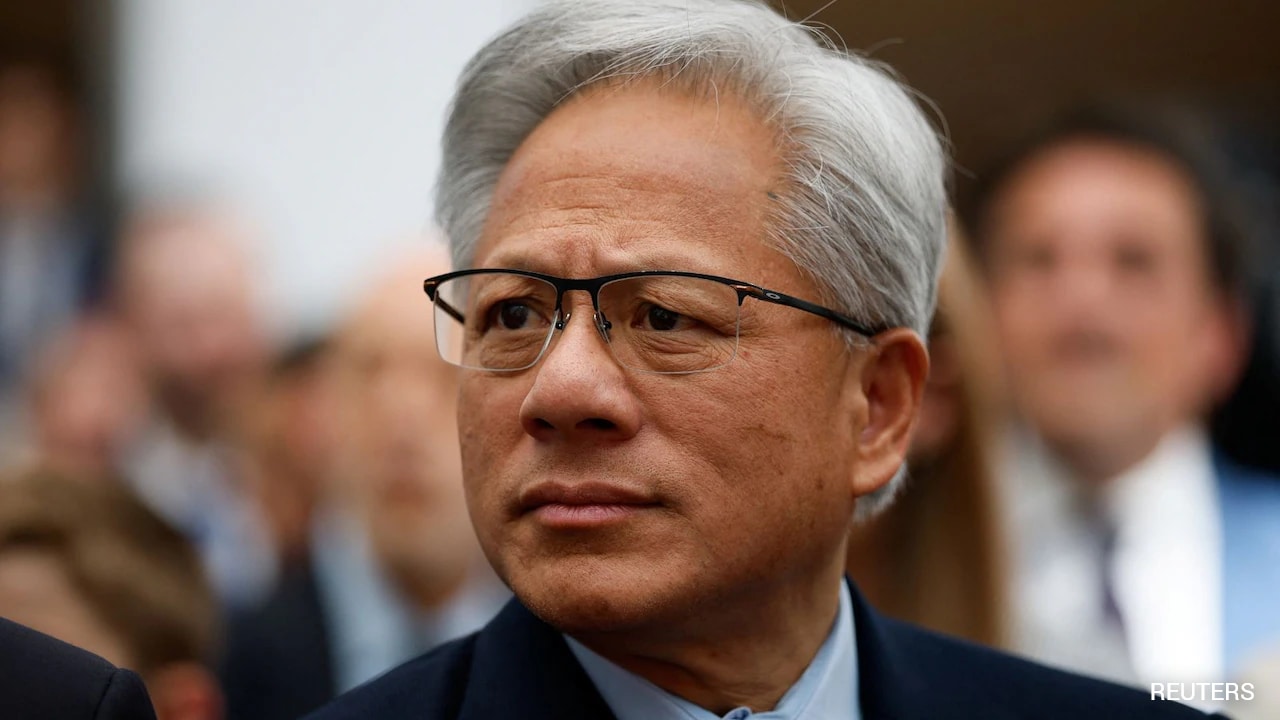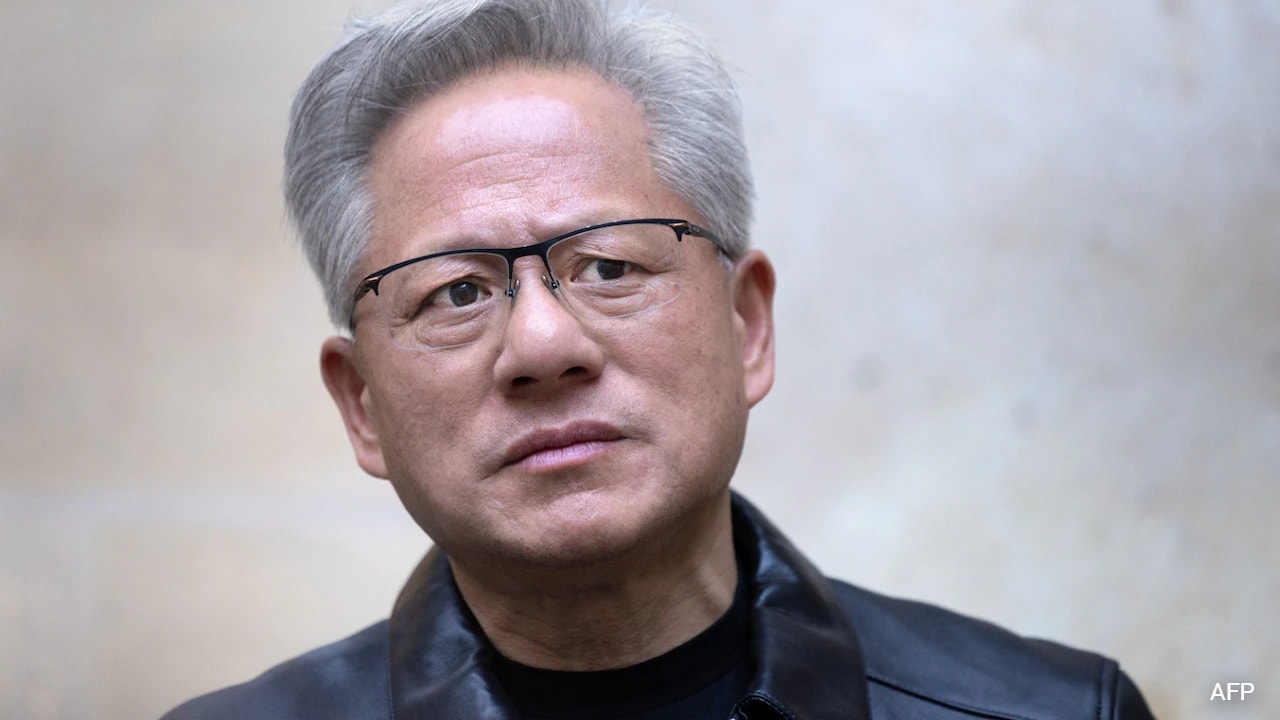
Wall Street loves a neat, predictable narrative, and right now, its favorite bedtime horror story is the impending collapse of Nvidia the second Jensen Huang hangs up his leather jacket.
Financial pundits point to Huang’s sixty-plus direct reports, his legendary micromanagement, and his recent quip that "there'll never be one like me" as proof that the world's most valuable chipmaker is a single point of failure waiting to implode. They compare him to Steve Jobs. They wring their hands over the lack of an obvious Tim Cook waiting in the wings. They treat Nvidia’s flat organizational chart like a ticking time bomb.
They are completely wrong.
The hand-wringing over Nvidia’s succession plan is a textbook case of lazy consensus. Analysts are applying twentieth-century industrial management theory to a company that operates like a distributed software organism. By obsessing over who will replace Jensen Huang, investors are missing the structural reality of how Nvidia actually functions—and why the company has already engineered its own immunity to founder departure.
The Myth of the Indispensable Founder
I have watched dozens of Silicon Valley boards torch billions in enterprise value by trying to clone their departing founders. They hire a charismatic visionary to replace a charismatic visionary, only to watch the new chief executive dismantle the very systems that made the company dominant in the first place.
The financial press treats Nvidia’s lack of a traditional C-suite hierarchy as a glaring vulnerability. With roughly 60 executives reporting directly to Huang, there are no layers of middle management buffering the CEO from the engineers. No traditional chief operating officer. No clear heir apparent running a massive profit-and-loss division. On paper, it looks like chaos.
In practice, it is the exact opposite.
A traditional corporate hierarchy concentrates institutional knowledge inside a tiny cabal of vice presidents. When the CEO leaves, those VPs fight a bloody political war for the throne, paralyzing product roadmaps for years. Nvidia’s flat structure eliminates the political layer entirely. Information flows instantaneously from the lowest-level silicon architect straight to the top, and strategic directives travel back down without getting distorted by middle-management agendas.
Huang did not build a cult of personality. He built a high-velocity routing network. When you remove middle management, the organization itself becomes the decision-making engine. The 60 direct reports—veterans like Jeff Fisher, Dwight Diercks, Jonah Alben, and Ian Buck—are not passive order-takers waiting for divine inspiration. They are autonomous technical operators who have been running their domains with full context for decades.
Why the Steve Jobs Comparison Fails
Every time a tech founder dominates an industry, lazy commentators reach for the Apple playbook. They look at how Apple transitioned from Steve Jobs to Tim Cook—moving from a product-obsessed visionary to a supply-chain execution master—and assume Nvidia needs an identical handoff.
This comparison fundamentally misunderstands what Nvidia sells.
Apple is a consumer hardware company driven by aesthetic taste and secret product reveals. When Jobs died, Apple lost its chief taste-maker, forcing Cook to pivot the company toward operational efficiency, services monetization, and incremental hardware updates.
Nvidia is not a consumer gadget maker. It is an infrastructure standard.
The company’s true moat is not Jensen Huang’s stage presence or his ability to predict consumer trends. Its moat is CUDA (Compute Unified Device Architecture), the proprietary parallel computing platform and programming model that locks millions of developers into Nvidia’s silicon ecosystem. You do not need a charismatic visionary to maintain a software monopoly once the switching costs reach astronomical levels.
Consider the mechanics of enterprise AI adoption:
- Developer Lock-In: Over four million developers write code specifically optimized for CUDA libraries. Rewriting foundational AI frameworks to run efficiently on competing architectures requires massive engineering overhead and introduces unacceptable latency risks.
- Full-Stack Integration: Nvidia no longer sells standalone graphics chips. It sells entire data center architectures—combining GPUs, CPUs (Grace), high-speed interconnects (NVLink), networking hardware (Mellanox InfiniBand), and enterprise software stacks (Nvidia AI Enterprise).
- Annual Cadence: The company has locked itself into a ruthless one-year product release cycle (Hopper, Blackwell, Rubin). This cadence is an industrial assembly line, not an artistic whim.
Once an infrastructure standard achieves escape velocity, the chief executive’s primary job shifts from invention to capital allocation and supply-chain defense. That requires discipline, not magic.
Decoding the "60 Direct Reports" Strategy
To understand why Nvidia will survive Huang, you have to understand why he refuses to hold one-on-one meetings with his executives.
In almost every Fortune 500 company, executives hoard information to protect their turf. They lobby the CEO behind closed doors, spin metrics to hide delays, and form internal alliances. Huang destroyed that dynamic by insisting that almost all feedback happen in open group settings. If one engineering lead makes a mistake or spots a bottleneck, all 59 other leaders hear the dissection in real time.
"If you have a strategic direction, why would you tell one person at a time?" — Jensen Huang
This radical transparency forces collective intelligence. Every senior leader at Nvidia understands the entire business, not just their narrow vertical. A networking executive knows the exact thermal limits of the next-generation GPU. A software architect knows the manufacturing constraints at Taiwan Semiconductor Manufacturing Company (TSMC).
Imagine a scenario where Huang steps down tomorrow. In a traditional company, the board would have to spend eighteen months teaching the new CEO how all the pieces fit together. At Nvidia, dozens of senior leaders already possess the complete operational picture because they have spent twenty years sitting in the same open-door strategy sessions. The succession plan isn't a single person; it is a distributed hive mind of tenured lieutenants.
Answering the Questions Wall Street Gets Wrong
When institutional investors panic about Nvidia’s leadership, they tend to fixate on the same flawed questions. Let's dismantle them one by one.
Who is the next CEO of Nvidia?
Asking for a single name misses the point. If the Nvidia board is smart—and their capital allocation track record suggests they are—they will not look for a founder clone. They will elevate an internal technical operator like Ian Buck (VP of Hyperscale and High-Performance Computing) or Jonah Alben (SVP of GPU Engineering), or pair a deep technologist with a ruthless financial operator like CFO Colette Kress. The next CEO does not need to invent accelerated computing; they just need to protect the R&D budget and keep TSMC fabrication slots locked down.
Will Nvidia lose its edge without Jensen's vision?
Vision matters when you are bleeding cash in 2006 to build CUDA while Wall Street screams at you to focus on gaming cards. Vision matters far less when you generate tens of billions in free cash flow per quarter and own over 80 percent of the AI accelerator market. At Nvidia’s current scale, execution speed beats visionary pivots every single time. Their competitive advantage is now structural, backed by a balance sheet that lets them outspend every rival on R&D simultaneously.
Does a flat hierarchy collapse without a strongman?
Yes, if you leave it untouched. A 60-person flat structure works because Huang has the historical authority to arbitrate disputes instantly. When he leaves, the next CEO will inevitably have to introduce some formal grouping—likely consolidating hardware, software, and networking under three or four division presidents. Critics will call this "bureaucracy." In reality, it is simply maturing from a founder-led sprint into an institutional marathon, much like Microsoft did when Satya Nadella reorganized Steve Ballmer’s fractured divisions.
The Real Threats Nobody Is Talking About
If you are shorting Nvidia or trimming your position because you are worried about Jensen Huang’s retirement date, you are looking at the wrong risk matrix.
The actual existential threats to Nvidia have nothing to do with who wears the leather jacket:
- Hyperscaler Custom Silicon: Microsoft, Google, Amazon, and Meta account for massive chunks of Nvidia’s data center revenue. Every single one of them is pouring billions into custom ASICs (Application-Specific Integrated Circuits) like Google’s TPUs and Amazon’s Trainium to break free from the "Nvidia tax."
- Power and Physical Infrastructure Limits: You cannot plug infinite GPU clusters into a nineteenth-century electrical grid. Transformer shortages, liquid-cooling bottlenecks, and municipal power caps will slow down data center deployments long before an executive transition ever does.
- Geopolitical Chokepoints: Nvidia is completely reliant on TSMC in Taiwan for advanced node manufacturing and packaging (CoWoS). A naval blockade or trade escalation in the Taiwan Strait would vaporize Nvidia’s supply chain overnight, regardless of who is sitting in the Santa Clara headquarters.
- Software Abstraction Layers: Open-source tools like OpenAI’s Triton and PyTorch 2.0 are actively working to decouple AI model training from underlying hardware specifics, slowly chipping away at CUDA’s historical lock-in.
Notice what is missing from that list? Executive succession.
The Honest Downside of the Nvidia Model
To be clear, Nvidia’s hyper-flat, founder-centric operating system is not without genuine friction. Admitting the flaws in this model is critical for anyone evaluating the stock honestly.
First, key-man risk in supplier negotiations is real. Huang’s personal relationships with TSMC founder Morris Chang and current leadership give Nvidia preferential treatment during wafer shortages. A new CEO will not inherit that thirty-year blood bond on day one, meaning Nvidia may have to pay higher premiums or fight harder for leading-edge manufacturing capacity.
Second, employee retention will get harder. Right now, thousands of Nvidia engineers stay despite brutal workloads because they are loyal to Huang and motivated by parabolic stock appreciation. Once the founder leaves and the stock settles into mature mega-cap growth, competing AI labs and hungry startups will poach top talent far more aggressively.
Third, the transition will trigger a temporary valuation multiple compression. Wall Street hates uncertainty. The day Huang announces his retirement, algorithmic trading desks and nervous mutual fund managers will sell first and ask questions later, likely knocking 15 to 20 percent off the stock price in a single session.
How Smart Capital Should Play This
If you are managing capital or advising enterprise tech buyers, stop treating Nvidia’s succession as a crisis and start treating it as an asymmetric opportunity.
For investors, the inevitable "Jensen departure dip" will be the single best entry point into AI infrastructure of the decade. When retail investors panic over the end of an era, institutional buyers should step in and buy the cash-flow machine at a discount. The underlying physics of parallel computing do not change because a CEO retires.
For enterprise CTOs, do not delay your infrastructure buildouts waiting to see how Nvidia’s leadership evolves. Your real strategic priority should be building hardware-agnostic abstraction layers into your software stack today. Use Nvidia’s hardware because it is objectively the fastest path to production, while keeping your codebase portable enough to leverage custom silicon or AMD accelerators when pricing power eventually shifts.
Stop Confusing the Architect with the Fortress
Great founders build companies that depend on them. Legendary founders build companies that outlive them.
Jensen Huang spent three decades constructing an algorithmic fortress surrounded by a moat of proprietary software, custom networking, and unmatched capital reserves. He systematically stripped away corporate politics so that his top sixty engineers could operate as a unified, self-correcting organism.
When he finally walks off the stage, he won't be leaving behind a fragile empire waiting to collapse. He will be leaving behind a ruthless, automated execution machine that doesn't need him anymore.
Betting against Nvidia because Jensen Huang is irreplaceable is like betting against the electrical grid because Thomas Edison died.