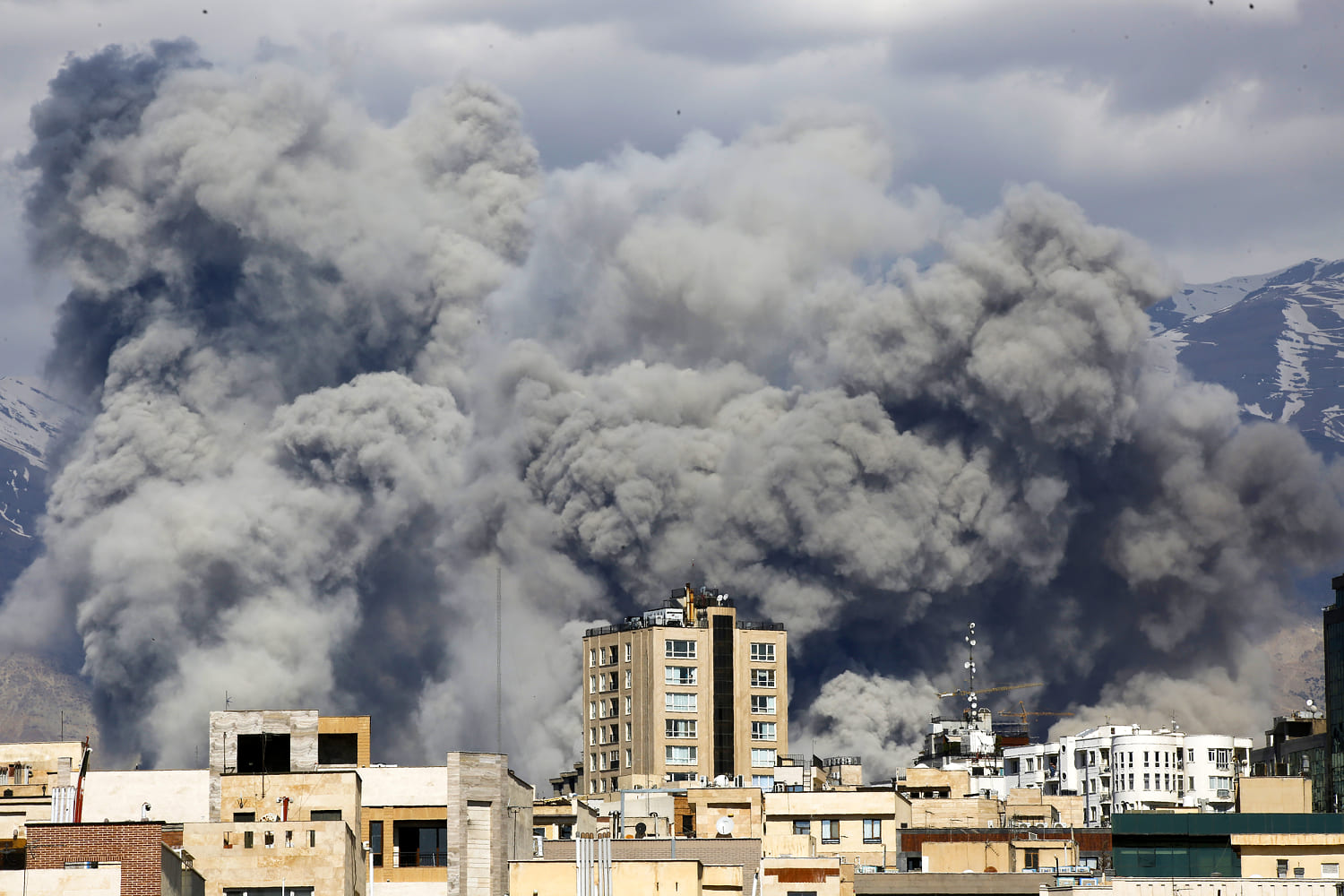
Vladimir Putin is pointing at Ukraine. The media is pointing at Libya. Both are looking at the wrong map.
When a gas tanker erupts and sinks in the Mediterranean, the instinct is to hunt for a smoking gun—a drone, a frogman, or a stray missile. It feeds the narrative of a globalized conflict spilling into the "Wild West" of North African waters. But if you’ve spent any time analyzing maritime logistics or the grey-market energy trade, you know that a sinking ship is rarely just an act of war. It is usually a convenient liquidation of evidence.
The "lazy consensus" surrounding the recent explosion off the Libyan coast suggests this is a binary choice: either a daring Ukrainian special ops mission or a catastrophic mechanical failure. This binary is a fairy tale.
In reality, we are looking at the intersection of Sanction-Busting 101 and the Physicality of Ghost Fleets.
The Ukrainian Ghost in the Machine
The Kremlin’s accusation that Ukraine targeted a gas tanker near Libya is strategically brilliant and factually hollow. To believe this, you have to believe that Kyiv—a military currently strained to its breaking point on a 1,000-kilometer front—decided to waste high-end assets on a random tanker in a secondary theater of the energy war.
It doesn't scan.
Ukraine has proven it can hit the Black Sea Fleet with homegrown maritime drones. It has proven it can sabotage pipelines. But a mission to Libya? That requires a logistical footprint and a blue-water capability that provides zero ROI for a nation fighting an existential war at its own doorstep.
Putin isn't accusing Ukraine because he has radar tracks. He’s accusing Ukraine because it justifies a Russian "protective" presence in Libyan ports. It is an invitation for the Wagner Group (or whatever they’re calling the "Africa Corps" this week) to tighten their grip on the Mediterranean’s most volatile energy hubs.
The "Accident" That Wasn't
Most journalists see a sinking ship and think "Titanic." I see a sinking ship and think "Insurance and Anonymity."
The Mediterranean is currently crawling with what the industry calls the Shadow Fleet. These are vessels that are:
- Over-aged: Frequently 20+ years past their scrap date.
- Under-insured: Often carrying "protection and indemnity" from entities that don't actually exist.
- De-flagged: Switching registries like a teenager switches TikTok filters.
When one of these ships explodes, the immediate assumption of "terrorism" or "state-sponsored attack" ignores the more terrifying reality of Structural Fatigue and Regulatory Evasion.
Liquefied Petroleum Gas (LPG) and Liquefied Natural Gas (LNG) are not just "fuel." They are highly pressurized, volatile chemical systems. Managing them requires precision engineering. On a shadow fleet vessel, "precision" is replaced by "duct tape and a prayer."
If you want to understand why that tanker sank, stop looking for a missile. Look for the maintenance logs that were forged three years ago in a basement in Panama.
The Geography of Plausible Deniability
Why Libya? Because Libya is the world’s premier "Black Hole" for accountability.
The country is split between the Government of National Unity (GNU) in Tripoli and the Libyan National Army (LNA) in the east. This fracture creates a regulatory vacuum. When a ship sinks in Libyan waters, who investigates? Who conducts the forensic dive?
Nobody.
This makes the Libyan coast the perfect graveyard for ships that have become "too hot" to operate. If a tanker has been used to move sanctioned Russian or Iranian oil, and the risk of seizure by Western navies becomes higher than the value of the hull, an "explosion" is the ultimate exit strategy. It deletes the data. It deletes the cargo trail. It deletes the history of the vessel.
The $20 Billion Blind Spot
The international community is obsessed with the who (Ukraine vs. Russia) while ignoring the how.
We are currently witnessing the total breakdown of the global maritime safety regime. For seventy years, the IMO (International Maritime Organization) and classification societies like Lloyd's Register kept the seas relatively safe. Sanctions have nuked that system. By pushing a massive chunk of the world’s energy trade into the shadows, we have created a floating ticking time bomb.
Imagine a scenario where 20% of the cars on the highway have no brakes, no registration, and are driven by people using fake licenses. That is the current state of the Mediterranean energy trade.
When one of these ships blows up, the geopolitical finger-pointing is just noise. The real story is that our global obsession with economic warfare has made the physical environment of the sea fundamentally more dangerous.
Dismantling the "Terrorism" Premise
People often ask: "Wouldn't a state want to blow up a tanker to send a message?"
The answer is: No. If you want to send a message, you seize the ship. You take the crew hostage. You create a standoff. Blowing up a ship in the middle of the sea—especially a gas tanker that could cause massive environmental damage or a massive fireball—is high risk and low reward.
- Collateral Damage: A gas explosion at sea is unpredictable. You could easily damage your own assets or those of a neutral party.
- The "So What?" Factor: One tanker sinking does not shift the needle on global energy prices. It’s a blip.
The "attack" narrative serves the politicians. The "decrepit ship" narrative serves the truth.
The Industry Insider’s Audit
If you want to know what actually happened off Libya, don't read the intelligence briefings. Look at the AIS (Automatic Identification System) data.
- Did the ship "go dark" (turn off its transponder) in the 48 hours leading up to the blast?
- Was there a ship-to-ship (STS) transfer in the days prior?
- What was the "True Beneficial Owner" of the vessel? (Hint: It’s usually a shell company in the Seychelles that owns exactly one ship).
When you follow the money and the metal, the "Ukrainian attack" theory evaporates. What’s left is a much grimmer picture of a world where energy is moved in rust-buckets by people who don't care about maritime law, operating in waters where no one is coming to help.
Stop Asking "Who Did It?"
Start asking "Who profited from the disappearance of the evidence?"
If a ship carrying illicit cargo disappears, the owner gets an insurance payout (if they’re lucky or have a corrupt surveyor) and the paper trail of their illegal trade is vaporized. Russia gets a talking point to use at the UN to paint Ukraine as a "terrorist state." Libya stays chaotic.
The only losers are the crew members—usually from developing nations—who are sacrificed for the sake of a geopolitical shell game, and the environment, which now has a few thousand tons of steel and toxic residue on its floor.
The status quo media wants you to pick a side in a war. I’m telling you to look at the business model. The tanker didn't sink because of a drone. It sank because the shadow economy requires the occasional sacrifice to keep the rest of the fleet moving.
Go look at the hull age of the next tanker that makes the news. Compare it to the average age of a Maersk or Hapag-Lloyd vessel.
The math of the explosion is written in the rust, not the rhetoric.
Stop waiting for the "investigation" to conclude. In Libya, investigations are just another form of fiction. If you want to understand the modern world, you have to accept that sometimes, a fireball is just a very loud way of closing a spreadsheet.
Keep your eyes on the AIS tracks and your hands on your wallet. The Mediterranean is about to get a lot more "accidental."
Refuse to participate in the choreographed outrage. The next time a "mystery explosion" happens, ignore the prime ministers. Call a salvage master. They’re the only ones who know where the bodies—and the forged documents—are buried.
The Mediterranean isn't a battlefield. It's a crime scene where the evidence is designed to self-destruct.
Moving LPG across a war zone in a twenty-year-old hull isn't "geopolitics." It's professional negligence. And as long as we keep buying the "terrorism" excuse, the people actually responsible will keep getting away with it.
Check the Lloyd’s List Intelligence reports for the vessel’s history before you tweet about the "onset of World War III." You’ll find that "The Tanker that Sunk" had a heart condition long before the "missile" supposedly hit it.
The real war isn't between Russia and Ukraine. It's between the truth and the lucrative shadows of the global supply chain.
Pick a side.