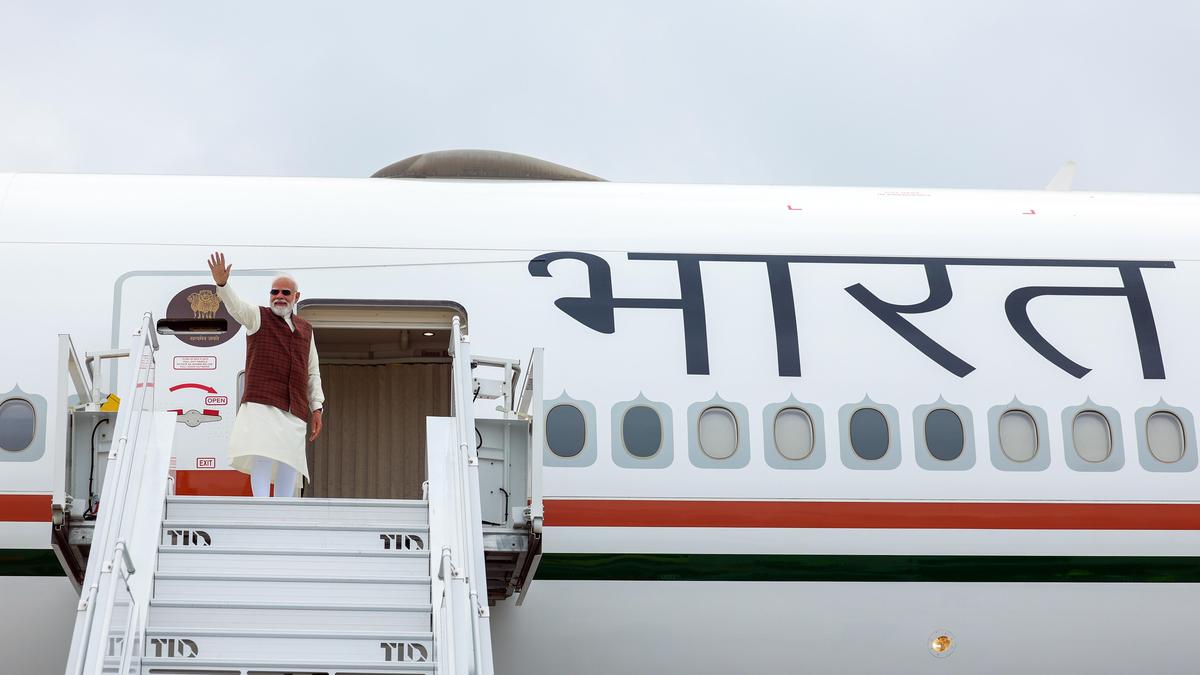
Geopolitics is often just theater for people who don't understand balance sheets. The mainstream press is currently swooning over Prime Minister Narendra Modi’s engagement with the Nordic countries, painting a picture of a "green strategic partnership" that will magically solve India’s energy crisis while checking the boxes of global diplomacy. They talk about trade, sustainable development, and "shared values" as if these were the engines of a modern economy.
They are wrong. If you liked this article, you should look at: this related article.
The standard narrative suggests that India is looking to the Nordics—Denmark, Norway, Sweden, Finland, and Iceland—as a blueprint for a high-tech, carbon-neutral future. But if you look at the cold, hard capital flows, this isn't a masterstroke of vision. It is a desperate search for relevance in a region that is increasingly becoming a museum of 20th-century social democracy, not a laboratory for 21st-century growth.
The Green Energy Fallacy
Every analyst from New Delhi to Copenhagen wants to talk about wind turbines and hydrogen. They claim India can simply "import" the Nordic model of sustainability. This ignores the fundamental physics of the two regions. For another look on this development, check out the latest update from MarketWatch.
The Nordic countries have a combined population of roughly 27 million people. India adds that many people to its census every 18 months. You cannot scale a boutique energy solution designed for a sparsely populated, water-rich, high-latitude region to a subcontinent of 1.4 billion people living in tropical density.
Norway’s sovereign wealth fund is built on the very fossil fuels it tells the rest of the world to stop using. When India sits down to discuss "green energy" with Oslo, it is participating in a grand hypocrisy. The technology India actually needs—baseload power that can sustain a massive manufacturing base—is not what the Nordics are selling. They are selling high-margin, niche engineering that looks good in a PR brochure but fails when it hits the reality of the Indian grid.
[Image of hydrogen fuel cell]
We are told that green hydrogen is the future of the India-Nordic corridor. But the math doesn't add up. The Levelized Cost of Energy (LCOE) for green hydrogen in India remains prohibitively high compared to the immediate, dirty alternatives that actually keep the lights on in Noida and Pune. To pretend that a few MOUs with Danish wind firms will bridge this gap is a fantasy.
The Sovereign Wealth Trap
The "lazy consensus" says India needs Nordic investment. Specifically, the trillions of dollars sitting in pension funds and the Norwegian Government Pension Fund Global.
I have seen government officials waste years chasing this capital. They think that because these funds have "ESG" mandates, they will naturally flow into Indian infrastructure. This is a misunderstanding of how risk-adjusted returns work. Nordic capital is the most cowardly capital on the planet. It seeks stability, predictable legal frameworks, and 4% returns in stable currencies.
India is a high-growth, high-volatility market. When a Swedish pension fund looks at an Indian highway project, they don't see an opportunity; they see currency risk, bureaucratic friction, and "reputational hazards." The result? We get high-level summits, smiling photos, and zero actual deployment of the "dry powder" everyone talks about.
If India wants real investment, it needs to stop courting the cautious managers of the North and start looking at the aggressive, risk-hungry private equity players who don't care about the "Nordic Model."
Security as a Distraction
The competitor headlines focus on "global conflicts" and "regional security." This is diplomatic filler.
Denmark and Sweden have spent decades under a security umbrella they didn't pay for, and they are now scrambling to adjust to a new reality in the Baltic. They have nothing to offer India regarding the Indian Ocean or the Himalayan borders. Their perspective on China is filtered through the lens of European trade, not the existential territorial threat India faces.
Discussing "global security" with the Nordic states is like a tiger asking a group of well-behaved house cats how to hunt. The strategic interests are fundamentally misaligned. India is a pivot state in the Indo-Pacific; the Nordics are a peripheral bloc in a fractured Europe. Every hour spent discussing Ukraine in Copenhagen is an hour not spent securing the Malacca Strait.
The Real Innovation Gap
We are told the Nordics are "innovation leaders." On paper, yes. They have high R&D spend and great patents. But their innovation is stagnant. It is the innovation of refinement—making a slightly better ball bearing or a slightly more efficient pump.
India doesn't need refinement. It needs "Jugaad" at scale. It needs the radical, messy, cheap innovation that comes from scarcity.
Why the Nordic Model Fails in Bangalore
- Cost Structures: A Swedish engineer costs ten times an Indian engineer. The solutions they build are over-engineered for the Indian market.
- Regulatory Rigidity: Nordic tech is built for a world where rules are followed to the letter. Indian markets are fluid, chaotic, and informal.
- Market Size: Nordic firms are used to captive, high-wealth domestic markets. They have no idea how to sell to the "Next Billion" users.
The "disruption" India needs isn't going to come from a collaboration with a Finnish telecom giant that lost its lead a decade ago. It’s going to come from domestic startups that understand how to build for a $2,000 per capita GDP, not a $60,000 one.
The Education Myth
There is a frequent call for "collaboration in higher education." This is usually code for sending India’s brightest minds to Uppsala or Helsinki so they can stay there. This isn't a partnership; it’s a brain drain disguised as a cultural exchange.
The Nordic education system is designed to produce consensus-driven citizens for a welfare state. India needs aggressive, competitive entrepreneurs who are comfortable with inequality as a byproduct of growth. Importing Nordic pedagogical theories into India is like trying to install a lawn sprinkler system in the middle of a monsoon. It is the wrong tool for the wrong climate.
Stop Asking for Permission
The most damaging part of these summits is the underlying assumption that India needs the "approval" of the Global North to be considered a modern power.
We see it in the way the media covers these trips—as if a nod from the Swedish Prime Minister validates India’s status. This is a vestige of a colonial mindset that views the West (and its northern satellites) as the ultimate arbiter of "best practices."
The truth is that the Nordic countries are more dependent on India’s future than India is on theirs. They need India’s market because their own populations are aging and shrinking. They need India’s talent because their own innovation pipelines are drying up.
The Brutal Reality of Trade
The Nordic-India trade volume is a rounding error in the grand scheme of global commerce. While the press heralds "new eras of cooperation," the trade balance remains skewed. India exports raw materials and low-value services; the Nordics export high-value machinery and intellectual property.
This isn't a partnership. It’s a classic center-periphery relationship. Until India stops buying "solutions" and starts selling them, these trips are nothing more than expensive photo ops.
The Pivot That Actually Matters
If India wants to lead, it should stop trying to emulate the Nordics and start out-competing them.
Instead of asking for "technology transfer"—which never happens in any meaningful way—India should be poaching their best researchers with the promise of a market that actually wants to build things. Instead of asking for "green finance," India should be building its own deep capital markets that aren't beholden to the whims of European ESG boards.
The Nordic countries are a great place to retire. They are not the place to build the future of a global superpower.
India is currently distracted by the "quiet elegance" of the North. It is time to wake up and realize that the noise, the heat, and the chaos of the South are where the real power lies. Every minute spent trying to fit the Indian square peg into the Nordic round hole is a minute wasted.
Stop looking for a blueprint in the Arctic Circle. The map you need is already in your hands, and it doesn't have any snow on it.


