The glow of a smartphone screen in a darkened room can feel like the center of the political universe. For the modern political influencer, validation comes in short, sharp bursts. Retweets. Likes. The intoxicating rush of viral engagement. It is a world built on rapid-fire reactions, where complex geopolitical history is routinely compressed into 280-character soundbites.
But out in the real world, beyond the algorithmic echo chambers, policy has teeth. Decisions made in the wood-paneled rooms of Washington D.C. carry consequences that stretch across decades, dictating the flow of billions of dollars, the stability of volatile regions, and the literal life or death of nations.
Every so often, these two worlds collide. The friction is always explosive.
It happened on a seemingly ordinary day on X, the platform formerly known as Twitter. A prominent MAGA influencer, steeped in the online culture of constant confrontation, decided to weigh in on one of the most labyrinthine topics in global diplomacy: the United States' historical stance on Iran. The take was bold, designed to generate clicks and rally a digital base.
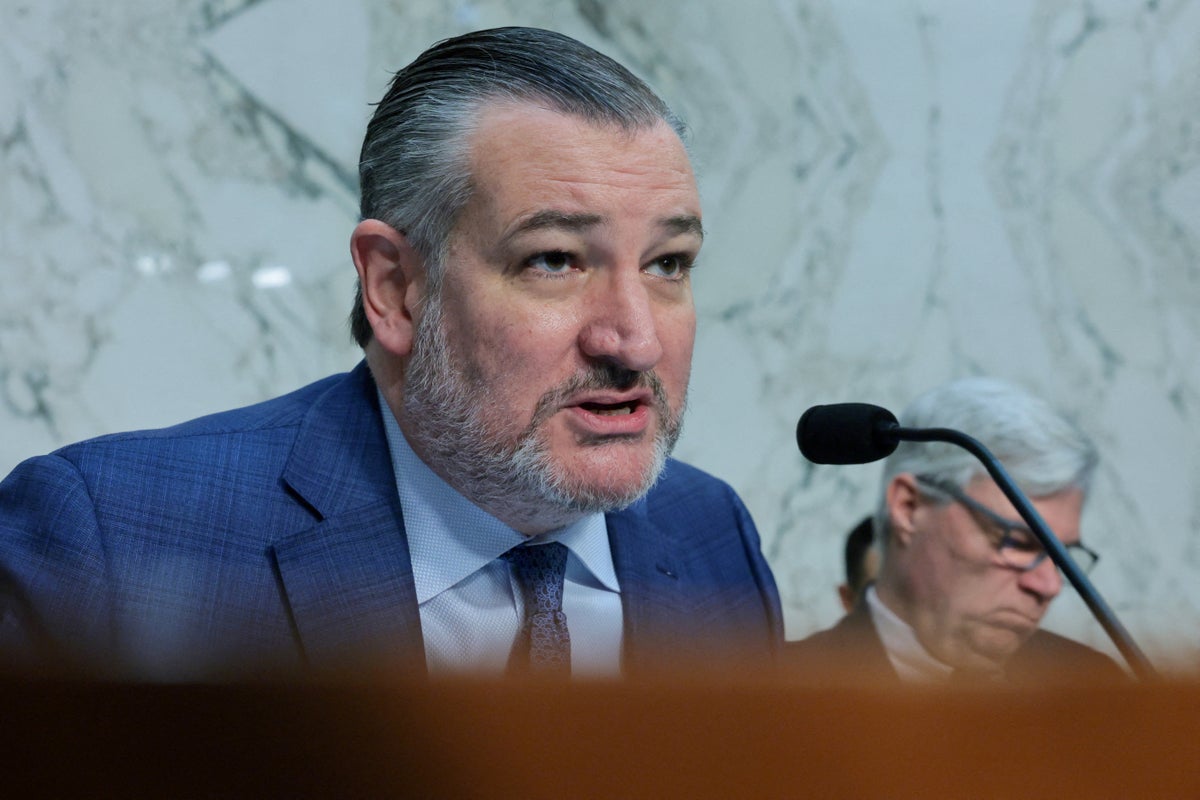
Then came the counter-strike. It didn't come from a rival influencer or an anonymous troll. It came from Senator Ted Cruz.
With two words—"Hush, child!"—the Texas lawmaker didn't just correct a statement. He exposed a widening chasm in modern conservatism, drawing a sharp, unforgiving line between the theater of internet commentary and the grim reality of international statecraft.
The Mirage of the Instant Expert
To understand why this digital skirmish matters, we have to look at the mechanics of the modern attention economy. Anyone with an internet connection can build an audience. By mastering the art of the provocation, a commentator can amass hundreds of thousands of followers, becoming an overnight authority to a loyal digital crowd.
This creates an illusion. When you possess the power to move crowds with a single post, it is easy to believe you possess an equivalent grasp on the levers of global power.
The debate in question centered on Donald Trump’s handling of Iran during his presidency, specifically the aftermath of the Joint Comprehensive Plan of Action (JCPOA)—commonly known as the Iran Nuclear Deal. The influencer sought to frame a complex series of diplomatic maneuvers and sanctions in a way that fit a specific, highly idealized narrative of flawless strategy.
Consider how international relations actually operate. It is not a chess match with clear, immediate moves. It is more like a multi-dimensional game of poker played in the dark, where every participant is hiding cards, lying about their resources, and dealing with decades of historical baggage.
When an influencer approaches this topic with the subtlety of a sledgehammer, they aren't just oversimplifying. They are fundamentally misrepresenting the high stakes involved. They see a win-loss record on a screen. The people tasked with voting on these measures see regional stability, nuclear proliferation risks, and the safety of American personnel abroad.
The Weight of the Gavel vs. the Speed of the Feed
Ted Cruz is no stranger to political theater. He is a politician who knows exactly how to utilize the media to his advantage. Yet, he is also a Harvard-trained lawyer, a former Texas Solicitor General, and a member of the Senate Foreign Relations Committee. He has spent years reading intelligence briefings that the public never sees.
When Cruz intervened, the tone shift was palpable. The phrase "Hush, child!" was undeniably patronizing, a verbal slap designed to humiliate. But beneath the condescension lay a deeper frustration that many institutional lawmakers harbor toward the influencer class.
The frustration stems from an asymmetry of consequence. If an influencer gets a fact wrong, they face a wave of angry comments, or perhaps they simply delete the post and move on to the next outrage cycle. Their livelihood depends on engagement, not accuracy.
If a senator misjudges a foreign policy stance, the ripple effects can alter the trajectory of a presidency, shift alliances in the Middle East, or inadvertently signal weakness to an adversary.
By publicly rebuking a figure within his own broader political coalition, Cruz signaled that certain topics are too important to be used as fodder for cheap online branding. Foreign policy, particularly regarding an adversary as volatile as Iran, requires a level of institutional memory and factual rigor that the fast-paced world of social media content creation rarely tolerates.
The Fractured House of Conservative Foreign Policy
This clash was not an isolated incident of internet drama. It was a symptom of a much larger, ongoing civil war within the American right over the direction of foreign policy.
For decades, the conservative consensus was defined by a hawkish, interventionist approach—a belief in peace through strength, robust alliances, and an active role in policing global hotspots. The rise of the MAGA movement fundamentally disrupted this paradigm. It introduced a powerful strain of isolationism, a deep skepticism of foreign aid, and a desire to pull back from international entanglements to focus strictly on domestic concerns.
This tension creates strange bedfellows and fierce internal rivalries.
On one side stand the traditional hawks and constitutional conservatives, represented by figures like Cruz, who view foreign regimes through a lens of systemic threat and strategic containment. On the other side sits the populist influencer class, who often view foreign policy through a purely domestic political lens: How does this help our faction? How does this hurt our internal enemies?
When these two perspectives clash, the arguments quickly devolve from policy debates into personal attacks. The influencer views the lawmaker as a relic of an old, failed establishment. The lawmaker views the influencer as an uneducated amateur playing with fire.
The Danger of a Post-Fact Political Culture
What happens when a society values the loudness of an opinion over the depth of the knowledge behind it?
We are living through that experiment right now. The democratization of information has achieved incredible things, stripping away the gatekeepers who used to decide who could speak. But it has also stripped away the mechanisms that used to verify if what was being said was true.
When a political movement relies heavily on influencers to rally its base, it risks letting those influencers dictate the policy agenda. This is dangerous. An influencer is incentivized to tell their audience exactly what they want to hear, reinforcing biases and creating a comforting, simplified version of reality.
Iran's nuclear ambitions, its proxy networks in Lebanon, Yemen, and Iraq, and its complex relationships with Russia and China cannot be understood through a lens of partisan cheerleading. It requires study. It requires an acknowledgment of past failures by administrations of both parties. It requires an understanding of nuance that cannot survive in a comment section.
Cruz's blunt dismissal was a rare moment where the reality of governance forced its way into the fantasy world of the digital timeline. It was a reminder that while you can block an opponent on social media, you cannot block the geopolitical consequences of a flawed foreign policy strategy.
The digital ecosystem will continue to churn out new stars, new controversies, and new narratives hourly. The clicks will keep coming. But the real test of a nation's strength doesn't happen on a timeline. It happens in the quiet, high-stakes decisions where the noise of the internet is forced to fall silent, and the cold, hard realities of power take over.


