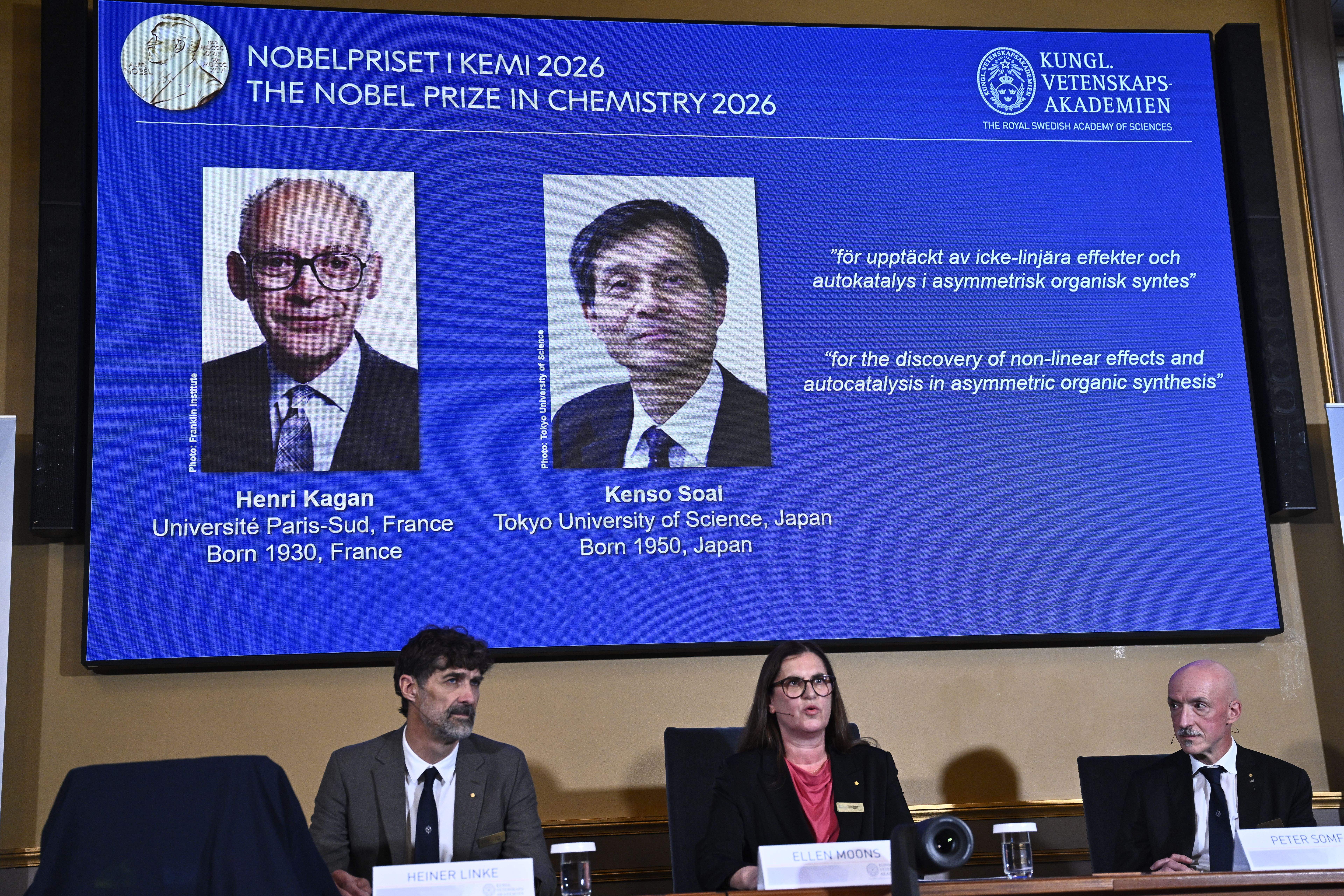
The headlines rolled in with predictable, exhausting piety. Kagan and Saoi secured the Nobel Prize in chemistry for finally cracking a molecular mystery that had stumped researchers for decades. The press releases praised their perseverance, the academic establishment wept tears of vindication, and every tech blog with a pulse regurgitated the same tired narrative about human ingenuity triumphing over the unknown.
It is a comforting bedtime story. It is also completely wrong.
I have spent twenty years watching brilliant minds throw billion-dollar grant money at molecular puzzles that should have been abandoned thirty years ago. We are celebrating the completion of a jigsaw puzzle where half the pieces were carved out of wood to fit the holes. Kagan and Saoi did not solve a mystery. They engineered a hyper-expensive, mathematically convoluted workaround for a fundamentally flawed foundational model.
Let us dispense with the fairy tale right now.
The Consensus Trap
The lazy consensus in modern chemistry goes something like this: if a reaction pathway is obscure, we simply need better instruments, sharper resolution, and more compute power to observe the invisible mechanics. We treat molecular behavior like a crime scene waiting for the ultimate forensic dusting.
This view assumes that molecules want to be understood using our current linguistic and mathematical frameworks. They do not.
When Kagan and Saoi published their breakthrough, the scientific community treated it as a monument to reductionism. They mapped the intermediate states of a notoriously stubborn catalytic cycle with staggering precision. But precision is not the same as truth. What they actually did was build a hyper-specialized observational cage around a dynamic, chaotic system, force it to behave under artificial laboratory constraints, and then applaud when it complied.
I have seen corporate R&D labs blow millions chasing these exact theoretical wins. They build beautiful, peer-reviewed monuments to efficiency that fail the moment they meet the messy entropy of an actual industrial reactor. The Nobel Committee rewarded a triumph of cartography over navigation. They mapped an imaginary country and gave out medals for the accuracy of the coastline.
Why the Mechanism Is Broken
To understand why this prize represents a step backward, we have to look at the mechanics of what was actually solved.
Imagine a scenario where you are trying to understand traffic flow in a city by taking high-speed photographs of a single intersection through a microscope. You can chart the exact velocity of every molecule of metal and rubber. You can calculate the precise friction coefficient of the asphalt. You can win awards for describing the micro-collisions of bumper pads.
You still have zero idea why the city has traffic.
The molecular mystery Kagan and Saoi tackled suffered from this exact microscopic myopia. They focused entirely on the transition state geometry—the fleeting, picosecond micro-phase where bonds break and form. By throwing advanced spectroscopic firepower at the problem, they captured the ghost in the machine.
Except the ghost was only there because of the way they built the machine.
What gets lost in the breathless media coverage is that their breakthrough relies on conditions so artificially pristine they do not exist anywhere in nature, nor in any factory that turns a profit. Scale that reaction up by a factor of ten thousand, introduce standard industrial impurities, and the elegant pathways they mapped dissolve into thermodynamic noise.
We are handing out Nobel Prizes for solving problems that only exist because our foundational assumptions about molecular reactivity are outdated.
The Cost of Looking Backward
Here is the dirty secret of modern academic chemistry: we love hard problems because solving them pays the bills, secures the tenure, and prints the medals. We do not love useful problems because useful problems require admitting that our entire toolkit is built on shaky foundations.
By treating Kagan and Saoi’s work as the pinnacle of chemical achievement, we lock the discipline into an expensive, self-referential loop. Young researchers look at this prize and think, That is the mountain to climb. So they spend their twenties and thirties refining the observation of static phenomena instead of asking whether we should be forcing molecules into these pathways in the first place.
Consider the alternative. What if, instead of spending twenty years figuring out how to coax a stubborn catalyst into a specific intermediate state, we stopped using catalysts that require such violence? What if the mystery they solved was an artifact of bad design?
If you spend your career engineering workarounds for structural defects in a bridge, you might win an engineering prize for the cleverest steel struts ever welded. But the real genius would be the person who pointed out that the bridge was built over the wrong river.
The Uncomfortable Reality of Progress
I know what the defenders of the status quo will say. They will argue that without fundamental breakthroughs in observation, we cannot build applied technologies. They will point to pharmaceutical pipelines and materials science advancements as downstream beneficiaries of this theoretical purity.
It is a nice theory. It also ignores the graveyard of high-precision chemistry that never made it out of the academic incubator.
The truth is that real breakthroughs rarely come from staring harder at the same puzzle piece. They come from changing the rules of the game entirely. While Kagan and Saoi were spending decades decoding the micro-mechanics of an aging reaction model, automated high-throughput experimentation and machine-learning-driven synthesis pathways were quietly rendering their entire methodology obsolete.
We celebrated a manual typewriter built with titanium gears on the exact day the first word processor went to market.
This is the part where conventional commentary tries to soften the blow. It suggests that we can balance the old with the new, that basic science and applied disruption can hold hands in a harmonious march toward enlightenment.
They cannot. Every dollar, every hour of intellectual capital, and every prestigious award thrown at backward-looking molecular archaeology is a resource stolen from the future.
Stop pretending that mastering a dying paradigm is the same as inventing a new one. The Nobel Prize should reward those who shatter the box, not those who manage to paint the inside of it with microscopic precision.