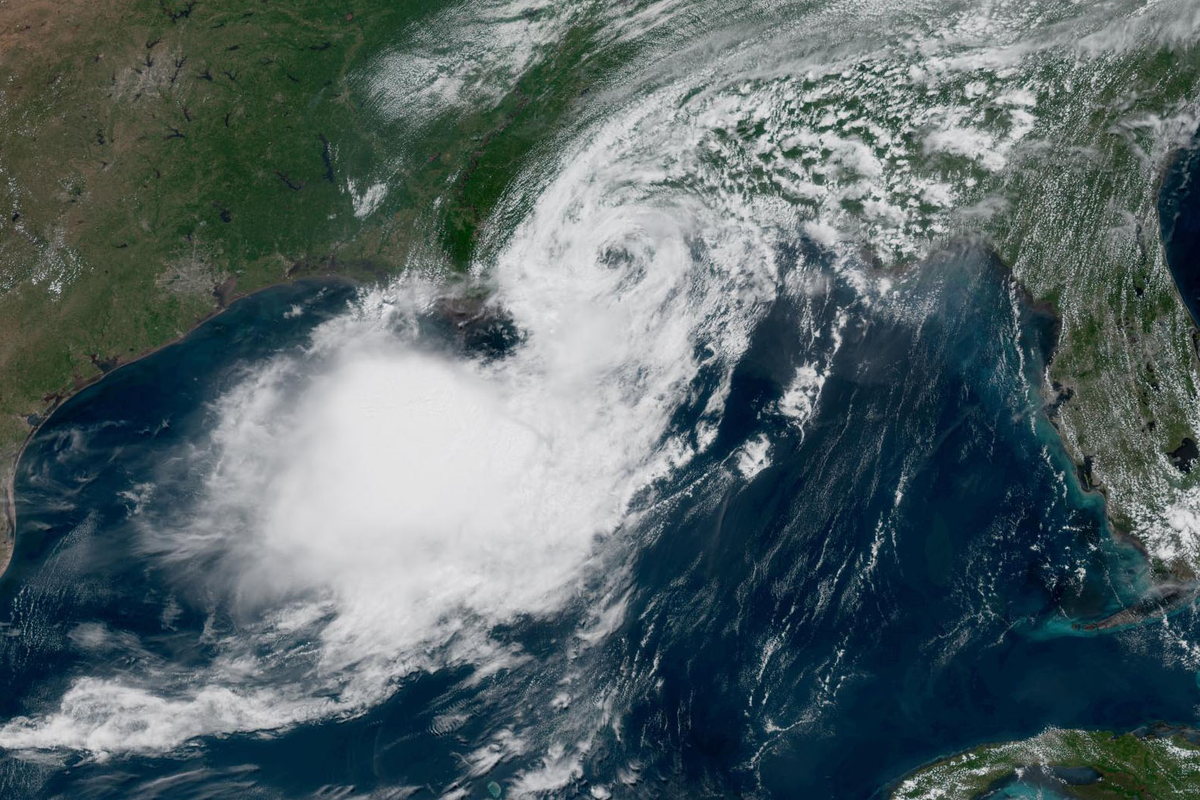
Every single year, the weather establishment rolls out the same tired ritual. Meteorologists step up to podiums, point at colorful satellite maps, and tell the public what kind of hurricane season to expect. When they predict a quiet stretch, collective sighs of relief echo across coastal boardrooms, real estate portfolios, and municipal budgets. Property developers pop champagne. Homeowners skip insurance renewals. Everyone relaxes.
It is a catastrophic mistake.
The lazy consensus dominating public discourse right now assumes that seasonal headline numbers dictate individual risk. NOAA drops a forecast predicting below-average named storm counts in the Atlantic while whispering about a busy Pacific, and the narrative writes itself: coastlines are safe, resources can be reallocated, and nobody needs to panic.
I have watched cities blow tens of millions of dollars based on seasonal averages that completely missed the localized target. I have seen multi-billion-dollar infrastructure projects approved in high-risk flood zones because a national agency slapped a "quiet" label on a twelve-month window.
The entire premise of forecasting a season based on aggregate storm counts is broken. Mother Nature does not care about your median statistics.
The Fallacy of the Aggregate Count
Let us clear up the core misconception right out of the gate. A seasonal forecast tells you nothing about the storm that might hit your specific zip code.
When researchers talk about a quiet Atlantic season, they are usually pointing to variables like a developing La Nina or unfavorable wind shear patterns across the main development region. They look at sea surface temperatures in the tropical Atlantic, factor in African easterly wave activity, and spit out a probability distribution.
Here is what they leave out of the press release: severity completely eclipses frequency.
Imagine a scenario where the Atlantic produces a total of six named storms. By historical standards, that qualifies as a sluggish, forgettable year. Statisticians pencil it in as a victory for calm weather. But what happens if those six storms all form as sudden, high-intensity Category 4 or 5 monsters right on the warm shelf waters of the Gulf of Mexico or the Florida coastline?
You do not care about the other forty dormant disturbances out in the open ocean. You care about the single compact hurricane that rapid-intensifies over warm loop currents thirty-six hours before slamming into a major metropolitan area.
A quiet season on paper can easily translate into one of the most destructive years on record for human infrastructure. Conversely, a hyper-active season featuring twenty weak, fish-chasing tropical storms that harmlessly swirl into the North Atlantic can yield zero property damage while dominating the annual statistical tallies.
Focusing on the aggregate count is an exercise in institutional laziness. It provides comfort to people who want an excuse to ignore preparation.
The Pacific Divergence Trap
The companion narrative usually tied to these outlooks involves the flip side of the coin: the Pacific theater taking the brunt of the atmospheric punishment while the Atlantic sleeps.
This zero-sum framing is intellectually bankrupt. The atmosphere is not a seesaw where energy spent in one basin inherently starves another. Global climate teleconnections—such as the El Nino-Southern Oscillation (ENSO) and the Madden-Julian Oscillation (MJO)—create complex, multi-scale waves of energy propagation.
When agencies suggest that a roaring Pacific trades off with a quiet Atlantic, they are leaning on broad climatological correlations that break down precisely when people need them to hold true. Atmospheric instability is not locked into a strict regional budget. A phase shift in the upper-level winds can align moisture channels and thermal gradients to create localized anomalies anywhere, regardless of what the basin-wide averages suggest.
Relying on cross-basin comparisons to lower your guard in your own backyard is an active hazard. If the Eastern Pacific is breaking records for typhoon or hurricane activity, that does not build a protective shield around the Gulf Coast or the Carolinas.
The Cost of Institutional Complacency
Corporate risk management and municipal planning agencies are notoriously addicted to comfort. When a federal authority issues an optimistic outlook, risk officers look for permission to trim budgets.
Insurance underwriters adjust premiums based on macroeconomic models that lag behind real-time oceanic shifts. Supply chain logisticians reroute shipping fleets based on seasonal advisories, assuming standard transit lanes will remain clear of rogue perturbations.
I have watched maritime logistics firms dismiss minor atmospheric anomalies in early summer, only to watch their cargo vessels get caught in rapid cyclogenesis events that modern ensemble models caught too late. Why? Because the baseline expectation baked into their operational framework assumed a quiet horizon.
The downside of my contrarian approach is simple: it is exhausting. Preparing for the worst-case scenario every single year, regardless of what the seasonal outlook pamphlet claims, costs real money. It requires redundant power supplies, hardened structural reinforcements, and continuous supply chain auditing.
Yet, the alternative—betting your balance sheet on a government meteorologist's probabilistic guess about seasonal totals—is financial Russian roulette.
Redefining the Risk Matrix
To survive modern climate volatility, you have to throw out the seasonal forecast entirely. Treat it as noise.
Stop asking whether the upcoming season will be above or below average. It is the wrong question. The correct question is: Is my physical asset or operational footprint capable of surviving a worst-case, localized impact right now?
Here is how you actually operationalize that mindset:
- Ignore the headlines: Never make capital allocation decisions based on a seasonal weather summary. National outlooks are designed for media consumption and broad risk pooling, not operational defense.
- Audit for intensity, not frequency: Stress-test your infrastructure against maximum potential intensity metrics for your geographic coordinate, assuming optimal thermodynamic conditions.
- Account for rapid intensification: Modern tropical systems are increasingly defying gradual development curves. Look at ocean heat content down to a depth of fifty meters, not just surface temperatures. If the fuel is sitting there in the water column, assume a storm can turn lethal overnight.
The weather does not care about consensus. The storm that matters does not care what NOAA predicted in May.
Pack away the comforting statistics. Build for the worst.