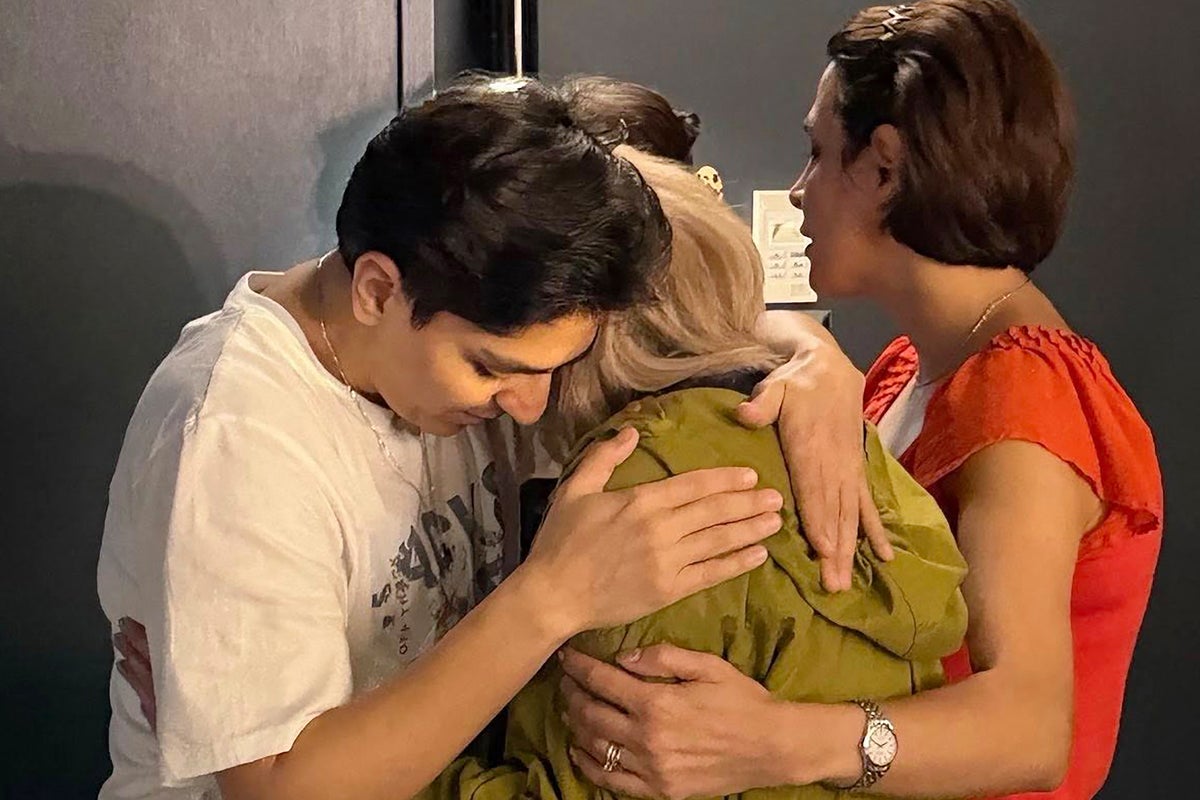
The Western media loves a martyr. They especially love a female athlete from the Middle East who appears to be escaping a "backward" regime. When Niloufar Ardalan, the former captain of the Iranian national women’s futsal team, stayed in Australia after the 2024 Asian Football Confederation (AFC) Women’s Olympic Qualifying Tournament, the narrative was already written. The headlines screamed about a daring escape and a blow to the Islamic Republic.
Then she went home.
The collective gasp from the human rights industrial complex was audible. Why would she return? The lazy consensus is that she was "coerced" or "threatened." But that’s a surface-level reading that ignores the brutal reality of professional sports, the weight of national identity, and the sheer arrogance of the Western "asylum-as-default" mindset.
Ardalan didn’t just reject Australia; she rejected the patronizing script the West had prepared for her.
The Myth of the Grateful Refugee
We have a pathological need to view every Iranian athlete as a political dissident in waiting. When Ardalan initially stayed behind in Australia, the assumption was that she was trading her kit for a permanent seat at the table of Western democracy.
The reality? Life as an asylum seeker is a death sentence for an elite career.
I’ve seen this play out in dozens of sports federations. A world-class talent defects, spends eighteen months in a bureaucratic purgatory, loses their peak physical conditioning, and ends up coaching a suburban U-12 team just to pay the rent. Ardalan is a tactician. She knew that "freedom" in a foreign land meant the end of her influence. In Iran, she is a titan—a coach and a former captain who has fought and won battles against the sports ministry from the inside.
By staying in Australia, she would have become a footnote in a human rights report. By going back, she remains a powerhouse in a league that actually matters to her. We need to stop assuming that everyone’s "endgame" is a passport from a G7 country. For many, the endgame is the sport.
Misunderstanding the 2015 Passport Precedent
The press loves to bring up 2015. That was the year Ardalan’s then-husband refused to sign her exit visa, preventing her from playing in the AFC Women’s Futsal Championship. The West used it as a "gotcha" moment against Iranian law.
What they missed was the follow-up.
Ardalan didn't just sit home and cry. She took it to the courts and won a landmark ruling that allowed her to travel for the next tournament without her husband's permission. She changed the system through the system.
When you look at her 2024 decision through that lens, her return makes sense. She isn't a victim of the regime; she is a negotiator within it. If she had stayed in Australia, she would have surrendered the ground she spent a decade gaining. You don't win a game by walking off the field. You win by forcing the referee to change their mind.
The Economic Reality No One Mentions
Let’s talk about the money. Not the "freedom" money, but the professional capital.
The Australian W-League is professional, sure. But is it looking for a 38-year-old former futsal star to lead a franchise? No. They want 19-year-old prodigies.
In Iran, Ardalan is a brand. She has access to coaching roles, media appearances, and a legacy that translates into actual social and economic power. The Western media frames her return as a "loss" for human rights. It was actually a shrewd "win" for her career longevity.
Imagine a scenario where a top-tier European CEO is offered "asylum" in a country where they can only work as a middle manager. Would they take it? Only if their life was in immediate danger. If it wasn't—if the stay in Australia was a protest rather than a permanent flight—returning home is the only logical move for someone who values their professional stature.
The Failure of the Western Gaze
We treat Middle Eastern women as if they have no agency. We assume their only desire is to be "saved." This is the ultimate form of soft bigotry.
- The "Safety" Trap: We assume Iran is a monolith of danger, ignoring that millions of people navigate its complexities daily.
- The "Talent" Drain: We encourage athletes to defect, then abandon them when they are no longer "useful" as political props.
- The "Identity" Erasure: We expect them to trade their culture, family, and language for the "privilege" of living in our suburbs.
Ardalan’s decision to return was a middle finger to this entire framework. She proved that she is not a pawn in a geopolitical game. She is an athlete who knows exactly what her value is—and she knows that value is highest in Tehran, not Sydney.
Why the "Asylum" Narrative is Broken
Asylum should be a last resort for the persecuted, not a career move for the disgruntled. When we conflate the two, we devalue the plight of those truly in danger and we insult the intelligence of athletes like Ardalan.
The AFC and FIFA have been under pressure to "do something" about Iran for years. But if the athletes themselves choose to stay and play, the calls for boycotts and bans become increasingly disconnected from the reality on the ground.
Ardalan knew that if she stayed, she would be used to justify the further isolation of Iranian sports. By returning, she keeps the lines of communication open. She stays in the room.
The next time a female athlete from a "contentious" nation stays behind after a tournament, don't rush to print the hagiography. Don't assume she's finally "seen the light." She might just be weighing her options. And as Niloufar Ardalan proved, sometimes the bravest thing an athlete can do isn't running away—it's going back to finish the job.
Stop looking for victims where there are only competitors.


GR_SOL_TOP__FCO_X_200_ML.jpg)