The tea was still warm on the kitchen table in Tehran when the first concussion hit.
It was not the sharp crack of thunder or the heavy rumble of distant construction. It was something older, something that rattled the marrow of the bones before it ever reached the ears. In an instant, the glass in the windowpanes hummed, vibrating with a frequency that felt unnatural, born of fire and sudden metal. Across the city, millions of people did what humans have done for millennia when the dark comes alive with violence: they froze. They looked up at ceilings that suddenly felt fragile. They reached for phones that were already beginning to stutter and fail.
State media would later use precise, sterile language to describe what happened next. Words like kinetic action, strategic response, and verified targets would fill the television screens and scroll across news feeds thousands of miles away. But numbers do not capture the taste of copper in the air, nor do they measure the weight of silence that follows an explosion, when even the street dogs stop barking and the city holds its collective, terrifying breath.
To understand the strikes announced by Iranian state media, you have to strip away the ticker tape of global politics and look at the geometry of ordinary life caught in the crosshairs of escalation.
Consider the geography of anxiety. Tehran is a sprawling metropolis of concrete and asphalt, framed by the jagged, snow-capped peaks of the Alborz mountains. It is a place of rushing traffic, crowded bazaars smelling of cardamom and roasted nuts, and university students debating poetry over weak tea. On any given evening, the air is thick with the exhaust of millions of aging Paykan cars and the low hum of daily survival under the heavy weight of economic sanctions.
When military strikes hit the perimeter of such a city, the transition from normalcy to crisis is not a slow fade. It is a hard, jagged break.
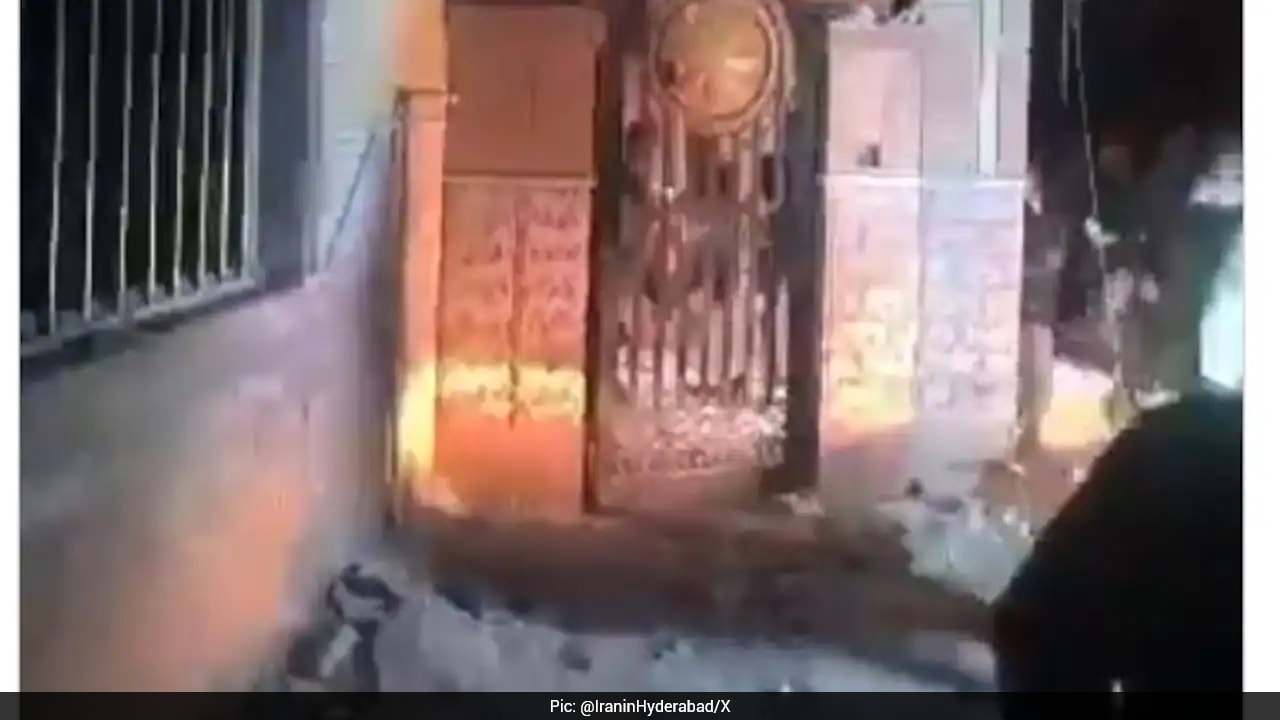
Sirens wailed. Not the automated, rehearsed drills of a peacetime preparation, but ragged, desperate sounds echoing through concrete canyons. In the moments after the blasts, the power flickered and died in several districts, plunging neighborhoods into a stygian dark punctured only by the sweeping beams of emergency vehicles and the pale glow of smartphone flashlights.
State television anchor desks, usually draped in the predictable iconography of official narrative, shifted rapidly. The broadcasts moved from standard cultural programming to emergency bulletins, confirming what the concussion waves had already written into the night air: United States military forces had launched targeted strikes within the country.
The official statements were immediate, laced with indignation and warnings of severe retribution. Yet, behind the rigid posture of the newsreaders, there was an unmistakable undercurrent of raw shock. For years, the shadow war between Washington and Tehran had been fought through proxies, through cyber attacks, through intercepted tankers in the blue waters of the Gulf, and through the slow, grinding misery of economic blockades. It was a war of whispers and remote controls.
Tonight, the whispers stopped. The steel arrived.
Why now? Why this escalation? To answer that, you have to trace the fuse back through years of frayed diplomatic cables and broken treaties. The collapse of the nuclear agreement years ago set a timer ticking in the dark. Every provocation—every militia drone launched in Iraq or Syria, every enrichment milestone reached in the fortified underground bunkers of Natanz—was a step closer to this exact precipice. Both governments were trapped in a logic of deterrence where backing down is interpreted as weakness, and standing firm guarantees a collision.
War is rarely an accident. It is usually the predictable destination of a road built brick by brick by leaders who believed they could control the speed of the descent.
In Washington, the narrative was framed around defense and deterrence. Officials stepped behind walnut podiums to brief reporters, explaining that the strikes were precise, proportional, and designed to degrade capabilities that threatened American service members in the region. They spoke of command nodes, logistics hubs, and retaliatory necessity. To a Pentagon analyst looking at a high-definition tactical feed on a glowing monitor, the operation was a clean geometric problem solved with explosive variables.
But distance sanitizes violence.
The screen in the situation room does not show the dust settling on a family’s courtyard. It does not record the sound of a child crying in the dark because the concussions cracked the plaster walls of their bedroom. It does not measure the spike in blood pressure of an elderly couple listening to the radio for news of whether their son, stationed near an industrial suburb, is still alive.
This is the great chasm of modern conflict: the vast, unbridgeable distance between the architects of war and those who inhabit its blast radius.
As dawn crept over the Alborz mountains, painting the peaks in cold shades of rose and amber, the true scope of the night began to emerge. Smoke rose in thick, greasy plumes from targeted zones on the outskirts. Emergency workers moved through the wreckage with shovels and bare hands, searching for bodies beneath collapsed masonry. The international markets reacted instantly, oil prices spiking like a fever chart, reacting to every whisper of closure in the Strait of Hormuz—that narrow liquid bottleneck through which a massive share of the world's petroleum flows.
Traders in New York and London watched green and red numbers flash on screens, calculating the cost of a barrel of crude, while people in Tehran calculated the cost of staying alive for another week.
The paradox of these moments is their strange, heavy stillness. After the initial panic subsides, a peculiar kind of fatigue sets in. People still go out to buy bread, because hunger does not pause for geopolitics. Shopkeepers still roll up their metal shutters, though they keep one ear cocked toward the sky. There is a grim, practiced resilience among populations that have lived through revolution, war, and isolation. They know how to patch the holes, sweep up the glass, and wait for the other shoe to drop.
Because everyone knows the first strike is rarely the last. It is the opening chord of a symphony no one wants to hear, yet everyone seems powerless to stop.
The diplomatic wires are currently burning out. Back-channel messages are being passed through intermediaries in Oman and Qatar. Ambassadors are delivering stern demarches in European capitals. Everyone is talking, even as their fingers hover over the triggers of bigger, more destructive systems. The calculus of retaliation is being weighed in secret rooms, measured not in human lives, but in political survival and regional dominance.
Standing on a rooftop in Tehran as the morning wind sweeps down from the mountains, the city looks deceptively peaceful. The call to prayer floats from a minaret, clear and melancholy, cutting through the distant hum of traffic. Down below, life resumes its fragile rhythm, suspended over an abyss. The explosions from the night before are now just smoke drifting into the stratosphere, but the air remains charged with a quiet, humming dread. The world has shifted on its axis, just a fraction of an inch, and nothing will ever quite go back to the way it was before the sky split open.