The coffee in the cup didn't just ripple. It jumped.
Ask anyone who has spent a night in the Iraqi Kurdistan capital when the sirens start, and they won't talk to you about international law or geopolitical proxy wars. They will talk about the hum. A low, persistent buzz that sounds like an oversized, angry lawnmower hovering thousands of feet in the dark. It is the sound of an explosive-laden drone cruising through the night, looking for something to break.
Then comes the flash. The thunderous crack of defensive fire cutting through the silence. A fiery arc across the black expanse. Panic. Relief. Then, silence again, heavy and thick with smoke.
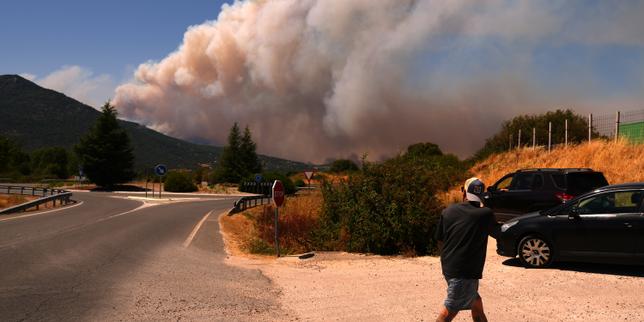
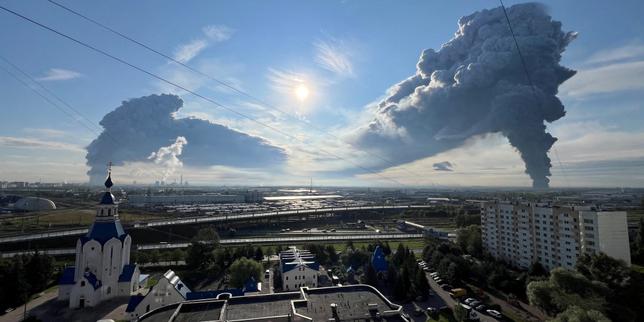
This was the scene over Erbil when Kurdish counter-terrorism forces intercepted and downed armed drones targeting forces deployed in the region. To the international news desks scanning wire service bulletins, it was another paragraph in a long, dry tally of regional security updates. Three sentences, maybe four, buried beneath market reports and political soundbites.
To the people living beneath that trajectory, it was everything.
The Geometry of Terror
Modern conflict has quietly changed its shape.
Decades ago, air strikes meant the roaring, unmistakable tear of jet engines—screaming machines piloted by flesh-and-blood humans flying at supersonic speeds. You had seconds to react, but the sheer noise brought a visceral, immediate reality. Today, war arrives with a whisper.
These uncrewed aerial vehicles—often simple, cheap assemblages of fiberglass, small engines, and commercial guidance systems—are designed for a specific kind of psychological attrition. They do not need to destroy an entire military base to achieve their goal. Their power lies in their persistence. They drag the nerve endings of an entire city over jagged glass, hour after hour, night after night.
Consider what happens on the ground when the air defense systems lock on.
Imagine a local shopkeeper—let us call him Farhad—working the late shift in a neighborhood just miles from the airfield where international coalition forces are stationed. Farhad isn't a soldier. He isn't a politician. He is a man calculating whether he can afford to stock more imported tea next week. When the sky detonates above his roof, his first instinct isn't to analyze who launched the projectile or which faction claimed responsibility. His first instinct is to throw his body over his teenage son, shielding the boy with his own back while glass rattles in the window frames.
That fraction of a second, where a father becomes a physical shield, is the true cost of uncrewed warfare. It is a cost that never appears on official press releases or military intelligence briefings.
The Shadow War Overhead
Why Erbil? To understand why this specific stretch of sky keeps catching fire, one has to look at the unique position the Kurdistan Region of Iraq occupies.
Erbil has long served as a rare bastion of relative stability and economic momentum in a region battered by decades of upheaval. Glass towers rise alongside ancient citadel walls. Western diplomats, international aid workers, local entrepreneurs, and coalition military advisors share the same streets, dining at side-by-side cafes.
That very stability makes it a target.
When regional tensions flare, Erbil becomes a lightning rod. Non-state actors and armed groups use weaponized drones not always to inflict mass casualties, but to send sharp, terrifying messages. A drone intercepted over an airport or a military installation sends shockwaves through foreign exchange markets, pauses international flight schedules, and forces foreign investors to second-guess their commitments.
The math behind this strategy is brutal and lopsided.
A strike drone can cost as little as a few thousand dollars to manufacture. The interceptor missiles used by modern defense systems to shoot them down can cost hundreds of thousands, sometimes millions. It is an asymmetrical equation where the attacker pays pennies to force the defender to spend fortunes, all while keeping the civilian population in a state of perpetual hyper-vigilance.
When Kurdish counter-terrorism forces report another successful intercept, it is undeniably a tactical victory. The defensive envelope held. The warhead exploded harmlessly in mid-air instead of plunging into a barracks or a residential street.
But every intercept is also a reminder of vulnerability. The drone was shot down, yes. But it was there in the first place.
Living Between the Thunderclaps
The human mind is remarkably adaptive, which is perhaps the most tragic part of long-term conflict.
After the first few incidents, the terror shifts into a bizarre, surreal routine. People learn the distinct sonic signatures of incoming fire versus outgoing air defenses. They learn which rooms in their apartments have the fewest exterior walls. WhatsApp groups instantly light up not with messages of panic, but with rapid-fire localized intelligence: Did you hear that? Was it north or west? Is the airport shut down?
Children learn to read the anxiety on their parents' faces before they even process the sound of the explosion. A mother pauses her cooking, spoon hovering over a pot of stew, listening to the night air. Her children stop playing, watching her eyes to judge whether they need to run to the hallway or if it was just a sonic boom from a passing jet.
This is the invisible toll of low-intensity, high-technology warfare. It steals the quiet from the night. It converts the open sky—once a symbol of freedom and rain and morning light—into a vector of constant, unpredictable threat.
The Sky Is Still Waiting
The official reports will tell you that the situation was contained, the targets neutralized, and the threat averted. The diplomatic statements will express gratitude to the defensive crews who operated the radars and fired the interceptors with split-second precision. All of that is true, necessary, and vital.
Yet as the sun rises over Erbil, casting a warm golden light across the ancient bricks of its central citadel, the smell of burnt propellant lingering in the upper atmosphere slowly dissipates. Street sweepers clean the dust from the avenues. Markets open their heavy metal doors. The city moves forward because it has no other choice.
Farhad sweeps tiny fragments of shattered glass from his storefront threshold, his hand steady, his face unreadable. He looks up at the cloudless blue horizon for a long, quiet moment, searching the vast emptiness, before stepping back inside to light the stove.