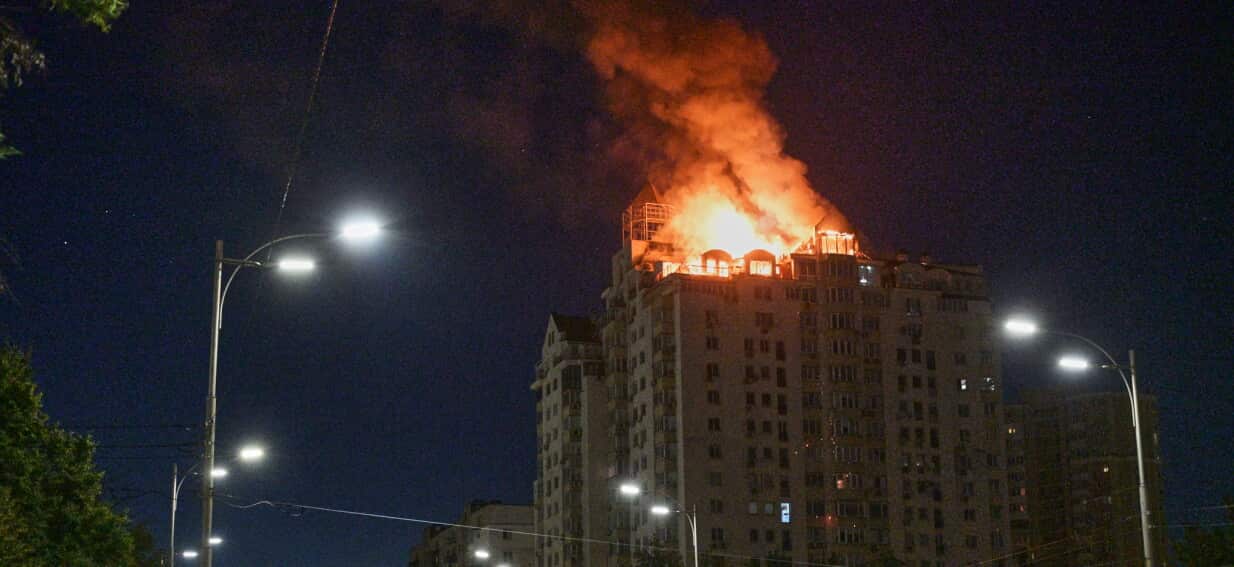
The air in the Moscow suburbs at three in the morning has a specific, crisp silence. It is the kind of quiet that belongs to sleeping families, to overstretched electrical grids, and to the soft hum of distant highways. But on a recent, unremarkable night, that silence did not just break. It evaporated.
A sharp, violent hiss tore through the upper atmosphere. It was not the low, rumbling groan of a heavy, slow-moving drone, the kind that residents have tragically grown accustomed to over the last few years. This was something else. A streak of kinetic fury, a flash of light, and then an impact that rattled teacups in kitchen cabinets miles away.
By sunrise, the debris was smoking in a fractured crater. Within hours, the military analysts were staring at the scrap metal, scratching their heads.
Ukraine had struck deep inside Russian territory again. But they had not used a weapon anyone recognized.
The standard news reports covering the event fell back on their usual, clinical vocabulary. They called it an "unidentified aerial asset." They talked about "telemetric anomalies" and "disputed air defense efficacy." They turned a moment of profound, terrifying technological evolution into a spreadsheet.
They missed the point entirely.
When a mystery missile zips past some of the most heavily fortified airspace on the planet and strikes near a capital city, the story isn't just about the payload or the wingspan. It is about a fundamental shift in the friction of modern warfare. It is about a group of engineers sitting in a dimly lit room in Kyiv, outbidding death with duct tape, repurposed microchips, and sheer, desperate ingenuity.
The Phantom in the Air Defense Grid
To understand the panic this unknown weapon caused in the Kremlin, you have to understand how air defense works. Imagine a security guard watching a monitor. If a crow flies past, he ignores it. If a person walks up, he challenges them.
Modern air defense systems, like the Russian S-400, are programmed to look for specific digital signatures. They know what a ballistic missile looks like—it flies high, fast, and follows a predictable, mathematically perfect arc. They know what a cruise missile looks like—low, hugging the terrain, powered by a jet engine. They even know how to spot the slow, lawnmower-like buzz of a Shahed drone.
But what happens when the security guard sees something that moves like a missile but has the radar reflection of a bird, or flies at a speed that bridges the gap between a drone and a jet?
The system glitches. The human operators hesitate. Seconds tick away.
That hesitation is where the mystery missile lives.
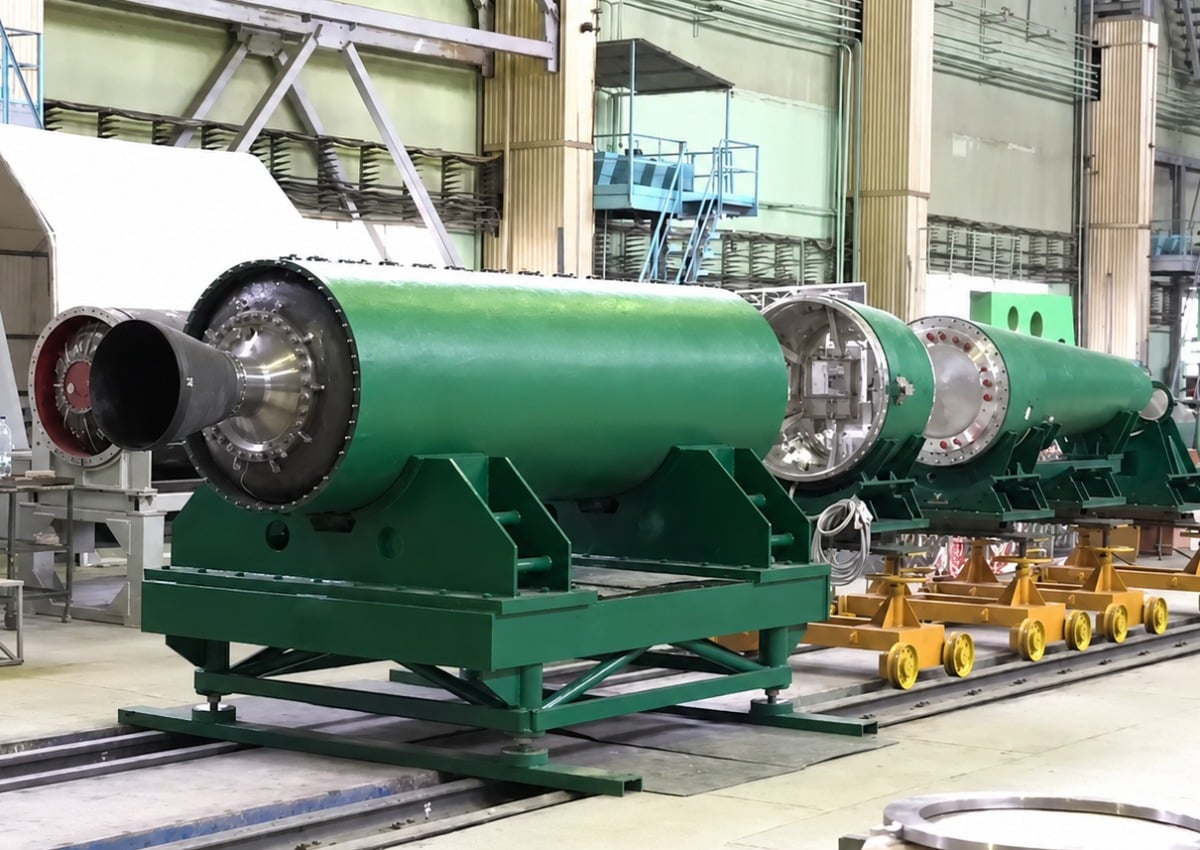
Early reports from independent weapons tracking groups suggest the wreckage recovered near Moscow does not match anything in Ukraine’s known arsenal. It isn't a Neptune anti-ship missile adapted for land attacks. It isn't a modified S-200 rocket from the Soviet era. The scrap metal tells a story of a Frankenstein creation: high-grade Western composites mixed with domestic Ukrainian rocketry, powered by a propulsion system that left military intelligence agencies scrambling to identify its acoustic signature.
Consider a hypothetical engineer named Dmitry. He is forty-two, his eyes are bloodshot from a diet of instant coffee and air-raid sirens, and he hasn't slept a full night since February 2022. Dmitry isn't building weapons for a corporate defense contractor with a billion-dollar budget and a ten-year timeline. He is building them because if he doesn't, his daughter's school might not be there next month.
When Dmitry runs out of a specific western-made microchip because of supply chain bottlenecks, he doesn't pause the project. He walks down to a local electronics market, buys a component meant for a high-end washing machine or a commercial agricultural drone, and rewrite the guidance software to make it fit.
The result of Dmitry's late-night improvisation is a weapon that defies categorization. It doesn't exist in any NATO Jane's Defense Weekly manual. It has no official designation. It is a ghost created by necessity.
Breaking the Iron Curtain of Moscow
For decades, the skies above Moscow were considered untouchable. The city is ringed by layers of overlapping radar, surface-to-air missile batteries, and electronic warfare jamming stations designed to fry the brains of any incoming projectile. It is an invisible dome, built at the cost of trillions of rubles.
Yet, this mystery weapon found a seam.
How does an unidentified missile travel hundreds of miles through enemy territory without being blown out of the sky? The answer lies in the invisible war of radio frequencies.
When Ukraine launches a strike, they aren't just firing a missile; they are playing a high-stakes game of chess against Russian electronic warfare. The Russian military uses massive jammers that blanket the airspace, blinding GPS guidance systems. If a missile relies on satellite navigation to find its target, it becomes a multi-million-dollar lawn dart the moment it crosses the border.
To beat this, Ukrainian designers have had to look backward to move forward. They are utilizing optical navigation systems—essentially teaching the missile to "see" the ground below it using a basic camera and an onboard digital map, comparing the topography in real-time to its pre-programmed route. No GPS required. No signals to jam.
When the mystery missile flew near Moscow, it wasn't just avoiding physical missiles; it was deaf to the electronic noise meant to drown it out. It slipped through the net because it was too quiet, too weird, and too fast for the legacy systems designed during the Cold War to recognize it as a threat until the sky went white.
The Economics of Asymmetric Terror
There is a cold math to this war that rarely makes it into the evening news broadcasts, but it dictates every single move on the battlefield.
A single Russian S-400 interceptor missile costs hundreds of thousands, sometimes millions, of dollars. The radar stations that guide them cost tens of millions. They are exquisite, expensive pieces of machinery that take months to manufacture.
The weapon that flew toward Moscow likely cost a fraction of that.
Ukraine has mastered the art of asymmetric innovation. They have realized that they do not need to build a perfect, shiny stealth bomber. They just need to build something ugly and functional that forces Russia to burn through its limited supply of air defense rockets.
If Russia fires two million-dollar interceptors to shoot down a hundred-thousand-dollar improvised missile, Ukraine wins the economic exchange. If Russia fails to fire, the missile hits a refinery, a military depot, or a command center, and Ukraine wins the strategic exchange.
It is a brutal, relentless equation.
Every time a new, unidentified piece of Ukrainian military tech appears in the skies, the Kremlin is forced to redeploy its air defense assets. To protect Moscow, they must pull missile batteries away from the front lines in Donbas or the southern plains. They must strip protection from their own energy infrastructure.
The mystery missile didn't just cause physical damage; it forced a choice. And in war, being forced to choose between protecting your capital or protecting your soldiers is a catastrophic position to be in.
The Cold Ground of Reality
Walking through the aftermath of an aerial strike is an exercise in sensory overload. The smell of burnt fuel hangs heavy, a sickly sweet odor that sticks to the back of your throat. The ground is littered with jagged shards of aluminum and carbon fiber, their edges so sharp they can slice through a heavy boot.
For the people living in the path of these weapons, the geopolitical grandstanding means nothing. The debate over whether this was a drone-missile hybrid or a new variant of a cruise missile is irrelevant.
What matters is the sudden realization that distance no longer guarantees safety. The war, which for many in the Russian interior felt like a distant television drama taking place on the periphery of their lives, has broken through the screen. It is now outside their windows.
The unidentified weapon is a physical manifestation of a nation’s refusal to die quietly. It represents the collective intellect of a tech-heavy society pushed to the absolute brink, turning software engineering, metallurgy, and aerodynamics into raw survival tools.
Western allies often worry about red lines and escalation, debating for months whether to provide specific long-range capabilities to Kyiv. But the smoking crater near Moscow proves that while the politicians debate, the engineers are working. They aren't waiting for permission anymore. They are building their own answers.
The wreckage has grown cold now, carted away in military trucks to secret labs where state scientists will analyze the welds, decode the scorched circuit boards, and try to understand the nature of the threat they face. They will look for serial numbers. They will look for signatures of origin.
But they won't find the most important component under a microscope. You cannot reverse-engineer the desperation of a people who have realized that their only path to peace is to make the air above their enemy as dangerous as the air above themselves.
The next silence in the night will be even harder to trust.