The air inside the stadium always smells of old rain, crushed yellow felt, and the particular sweat of twenty thousand people waiting for a king to stumble. We expect our gods to die in armor, bloodied on some sun-bleached plain, overwhelmed by an army worthy of their songs. We do not expect them to trip over their own shoelaces in the damp shadow of a Tuesday night.
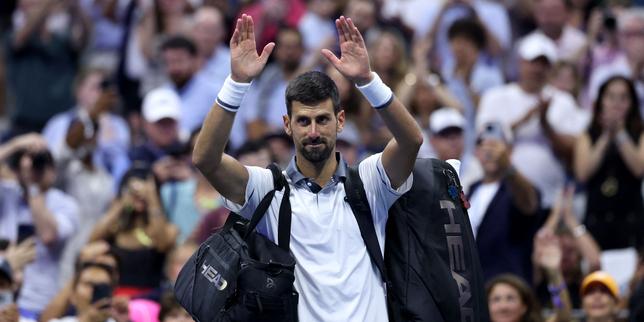
Novak Djokovic walked onto the hard court with the posture of a man who owned the calendar, the history books, and the gravity of the sport itself. Twenty-four majors. More weeks at the summit than anyone who had ever picked up a racket. He was the metronome of men's tennis, beating out an unyielding rhythm for two decades, a mechanical perfection disguised as muscle and bone.
Then the first set slipped.
Then the second.
You could hear the silence expand across the concrete amphitheater. It was a heavy, suffocating thing, the sound of an entire ecosystem realizing that the laws of physics had just been repealed. Not since the early days of the George W. Bush administration had a Grand Slam tournament opened its doors only to lock them immediately against the greatest name in the draw on day one. Twenty years. Two full decades of reaching deep into the second week, of hoisting silverware under blinding lights, of outlasting youth, injuries, and the relentless march of time.
Gone. Before the fortnight had even truly found its breath.
Imagine standing on a train track you have walked every single day since you were a teenager. You know every tie, every loose bolt, the exact hum of the rails before the engine appears. You close your eyes. You take a step. And the ground simply isn't there anymore.
That is what defeat looks like at thirty-seven. It does not arrive with a dramatic clash of swords. It arrives as an unforced error into the net, a weary drop of the shoulders, and the sudden, terrifying realization that the machine is wearing out.
We talk about sports through the sterile lens of numbers. We count aces, break points converted, and prize money accumulated. But that is like describing a symphony by counting the notes. The truth of athletic dominance is emotional, messy, and devastatingly fragile. For twenty years, Djokovic carried the weight of chasing ghosts—Federer's effortless grace, Nadal's brutal clay-court majesty—while simultaneously fighting the invisible adversary that waits for every athlete: the calendar.
Down in the players' lounge, the television screens flicker with the instant replay. Across the globe, millions of coffee cups freeze mid-air in kitchens waking up to the news. The invulnerable had bled.
We project our own desperate desire for permanence onto these athletes. When Djokovic wins, we tell ourselves that age is just a construct, that discipline can conquer biology, that if we just work hard enough, we too can cheat the ending. His victories are our collective insurance policy against decay.
And so his defeat feels personal. It feels like an eviction.
If the metronome can stop on a quiet night in New York, what does that say about our own steady rhythms? What happens when the routines that define us suddenly yield no purchase?
He packed his bags in the subterranean locker room, the white noise of reporters echoing through the concrete corridors overhead. He walked out into the humid city air, a mortal man carrying twenty years of ghosts, leaving behind a tournament that suddenly felt wide open, vast, and strangely empty.
The lights of the stadium stayed on for a little while longer, illuminating an empty blue court, waiting for a ghost that wasn't coming back.