The coffee maker didn’t click. That was the first sign. In a small apartment in Berlin, Elias reached out in the dark, his fingers brushing against cold plastic. He flipped the switch again. Nothing. Outside, the streetlights that usually bathed his bedroom in a pale amber glow were dead. The silence was heavy, broken only by the distant, frantic honking of cars trapped in a gridlock that was beginning to swallow the city whole.
This isn’t a scene from a dystopian novel. It is the new math of global energy, a calculation written in fire and crude oil across the Persian Strait. When the International Energy Agency (IEA) declared this the largest energy crisis in human history, they weren’t looking at spreadsheets. They were looking at a world where the primary artery of global movement—the flow of Iranian and Middle Eastern oil—had been severed by the jagged blade of war.
History is usually measured in years, but crises are measured in seconds. The moment the first missiles impacted the refining infrastructure in Khuzestan, the price of a barrel of oil didn't just rise. It vanished. Markets don't handle "zero" very well. When supply becomes a question mark rather than a number, the global economy enters a state of cardiac arrest.
The Ghost of the Strait
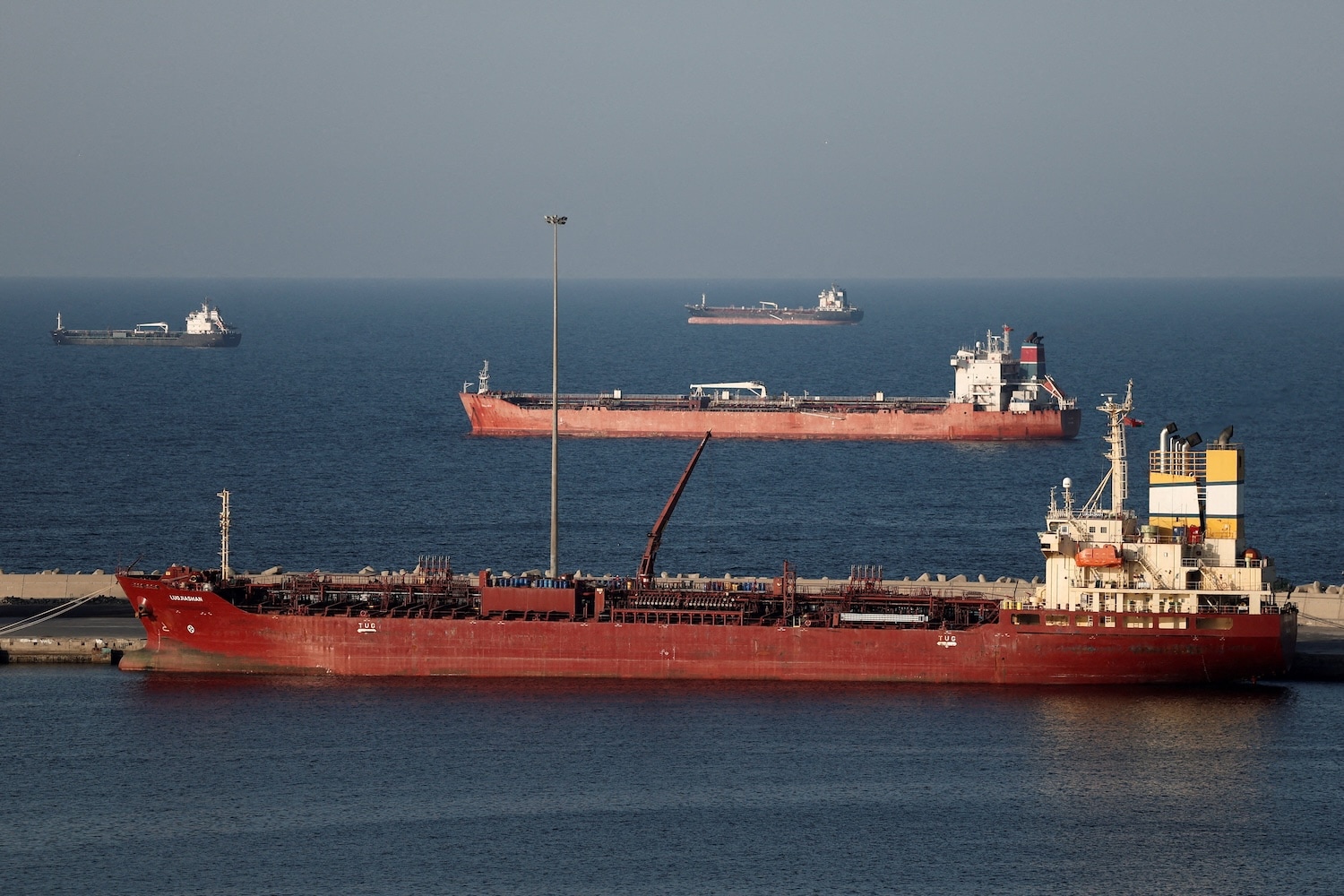
To understand why a conflict in one corner of the world can make a thermostat in Chicago go cold, you have to look at the water. Specifically, the Strait of Hormuz. Picture a narrow throat. Through this throat passes a fifth of the world’s daily oil consumption. It is the most vital pressure point on the planet.
When the war began, that throat closed. Suddenly, the millions of barrels that fuel the trucks in Ohio, the tankers in the Atlantic, and the heating units in Seoul simply stopped moving. The IEA's report outlines a deficit so sharp that even the strategic reserves of the United States—the emergency "blood bank" of the economy—look like a drop of water in a desert.
We often think of "energy" as an abstract commodity, something we pay for via a direct debit once a month. We are wrong. Energy is the invisible scaffolding of every human interaction. It is the reason there is milk in the grocery store and the reason your phone can connect to a tower. When that scaffolding collapses, the "human-centric" narrative becomes one of desperate improvisation.
The Invisible Ledger
Consider Sarah, a logistics manager in Singapore. For her, the crisis didn't start with a blackout. It started with a notification. The shipping rates for her company's cargo had tripled overnight. Then they quadrupled. Within a week, the ships weren't coming at all.
"It’s like the world just stopped breathing," she said during a frantic call to a supplier. She isn't just dealing with oil prices. She is dealing with the reality that modern civilization is built on a "just-in-time" delivery model. We don't keep backups. We don't have warehouses full of safety nets. We have a pipeline. And when that pipeline is caught in a crossfire, the delay doesn't just mean higher prices—it means the end of availability.
The IEA reports that the current shortfall exceeds the 1973 oil embargo and the 1979 Iranian Revolution combined. Those were ripples. This is a tsunami. The sheer scale of the loss—roughly 12 million barrels a day removed from the global tally—creates a vacuum that no amount of green energy or fracking can fill in the short term. We are witnessing the brutal friction between our high-tech future and our carbon-heavy present.
The Math of Survival
Let’s talk about the numbers, because they are terrifying. The IEA data suggests that global GDP could contract by 6% within the next twelve months if the conflict doesn't de-escalate. That sounds like a boring statistic until you realize that 6% represents the difference between a family keeping their home and a family losing everything. It represents the point where the cost of transporting food exceeds the value of the food itself.
We are seeing a radical shift in how power is brokered. Nations that were once allies are now outbidding each other for the few remaining tankers of liquified natural gas (LNG) or crude. It is a bidding war for survival. The "biggest energy crisis in history" isn't just about the scarcity of resources; it's about the scarcity of trust.
In the past, we relied on a globalized system where a buyer in Japan and a buyer in France could trust that the market would provide for both. That trust is dead. Now, it is every nation for itself, a scramble for energy security that looks more like the 19th century than the 21st.
The Heat and the Dark
The irony is that this crisis arrived just as the world was trying to walk away from fossil fuels. But you cannot run a construction crane on a battery that doesn't exist yet, and you cannot heat a skyscraper in a blizzard using only the wind from a calm day. The IEA is clear: the transition to renewables is too slow to catch us. We are falling through the gap between what we were and what we hope to be.
In a small village outside of Tehran, a family huddles in a basement. They aren't thinking about global GDP. They are thinking about the sound of the jets overhead and the fact that their local refinery—the source of their livelihood and their warmth—is a pillar of black smoke on the horizon. This is the human cost. The war in Iran has turned energy from a utility into a weapon, and like all weapons, it doesn't care who it hits.
The ripple effects are everywhere. In the suburbs of London, people are gathering at "warm banks"—public libraries or community centers where the heat is still on, because they cannot afford the £800-a-month bill to heat their own three-bedroom homes. In India, factories are shutting down three days a week to preserve the grid for hospitals.
This is the "invisible stake." It isn't just the price at the pump. It is the structural integrity of the modern life we took for granted.
The Great Recalibration
We are learning, painfully, that energy is not a given. It is a privilege of stability. The IEA's warning is a eulogy for the era of cheap, easy movement.
Elias, still in his dark apartment in Berlin, eventually finds a candle. The small flame flickers, casting long, dancing shadows against the wall. He looks at his dead phone, his dead laptop, and the silent city outside. For the first time in his life, he realizes that the "modern world" is actually a very thin veneer, held together by a steady flow of dark liquid from a part of the world he has never visited.
He wonders how long the candle will last. He wonders if the trucks will bring bread to the bakery on the corner tomorrow. He realizes that the war, thousands of miles away, has finally come home to him.
The crisis will eventually end, as all wars do. But the world that emerges from the smoke will not be the one we left behind. We are being forced to reinvent our relationship with the earth and with each other. We are finding out, in the cold and the dark, what we can actually live without—and what we are willing to fight for.
The flame on Elias's candle wavers as a draft sweeps through the room, but it doesn't go out. Not yet.