The floorboards of the Boghayi Hospital 2 do not just creak; they hum with the low, constant vibration of oxygen machines, the soft squeak of rubber-soled nursing shoes, and the quiet, rhythmic breathing of people fighting for their lives. Ahvaz, a southwestern Iranian city known for its brutal summer heat and resilient spirit, houses this specialized wing dedicated entirely to cancer patients. For those inside, the world has already shrunk to the boundaries of an intravenous drip and the sterile smell of antiseptic.
Then, the ground gave way.
A sudden, deafening roar tore through the humid night air. The glass panes in the ward rattled violently, some shattering into fine, glittering dust on the linoleum floors. The walls groaned. Inside the oncology ward, panic—visceral, animalistic, and immediate—superseded the slow, methodical pace of medical care.
Imagine the terror of a mother holding her child’s IV pole, running into the dark, dust-choked street because the sky itself seemed to be falling. Many patients and their terrified relatives fled into the night, leaving only those too sick to move, still tethered to their beds, staring at the ceiling and waiting for the next blast.
This is the human toll of a geopolitical chess match currently playing out across the Persian Gulf. In Washington and Ankara, the conflict is discussed in terms of "deterrence," "leverage," and "degrading capabilities". But in the streets of Ahvaz, on the docks of Bandar Abbas, and in the cramped quarters of commercial tankers navigating the Strait of Hormuz, the war is measured in heartbeats, shattered glass, and the terror of sudden silence.
The Collapse of a Fragile Peace
Only weeks ago, there was a tentative sigh of relief. A memorandum of understanding, mediated by Pakistan, had promised a pause in the hostilities that erupted on February 28. For 60 days, the guns were supposed to go quiet, and the critical shipping lanes of the Strait of Hormuz—the vital throat through which 20 percent of the world’s oil flows—were supposed to breathe again.
But peace in the 21st century is a fragile construct, easily shattered by old grudges and new misunderstandings.
The truce unravelled almost as quickly as it was woven. The United States accused Iran of continuing to restrict and threaten maritime traffic, while Tehran viewed the initial agreement as an acknowledgment of its sovereign authority to police, and perhaps even toll, the vessels passing through its backyard.
When the rhetoric turned back to steel, the response was swift. The U.S. military’s Central Command (CENTCOM) launched a massive, multi-wave air campaign. Over a 24-hour period, precision-guided munitions slammed into coastal defense sites, command centers, and radar installations from the rocky outcroppings of Greater Tunb Island to the bustling port city of Bandar Abbas.
Simultaneously, the U.S. reimposed a strict naval blockade on Iranian ports. The message from Washington was clear: comply, or be cut off from the world.
Iran’s response was not long in coming. The Islamic Revolutionary Guard Corps retaliated by launching strikes against U.S. military facilities in neighboring Bahrain and Kuwait, turning the entire region into a highly volatile powder keg.
The Cold Logic of "Behave"
While the missiles fly, the language used to describe them remains strangely informal, almost domestic.
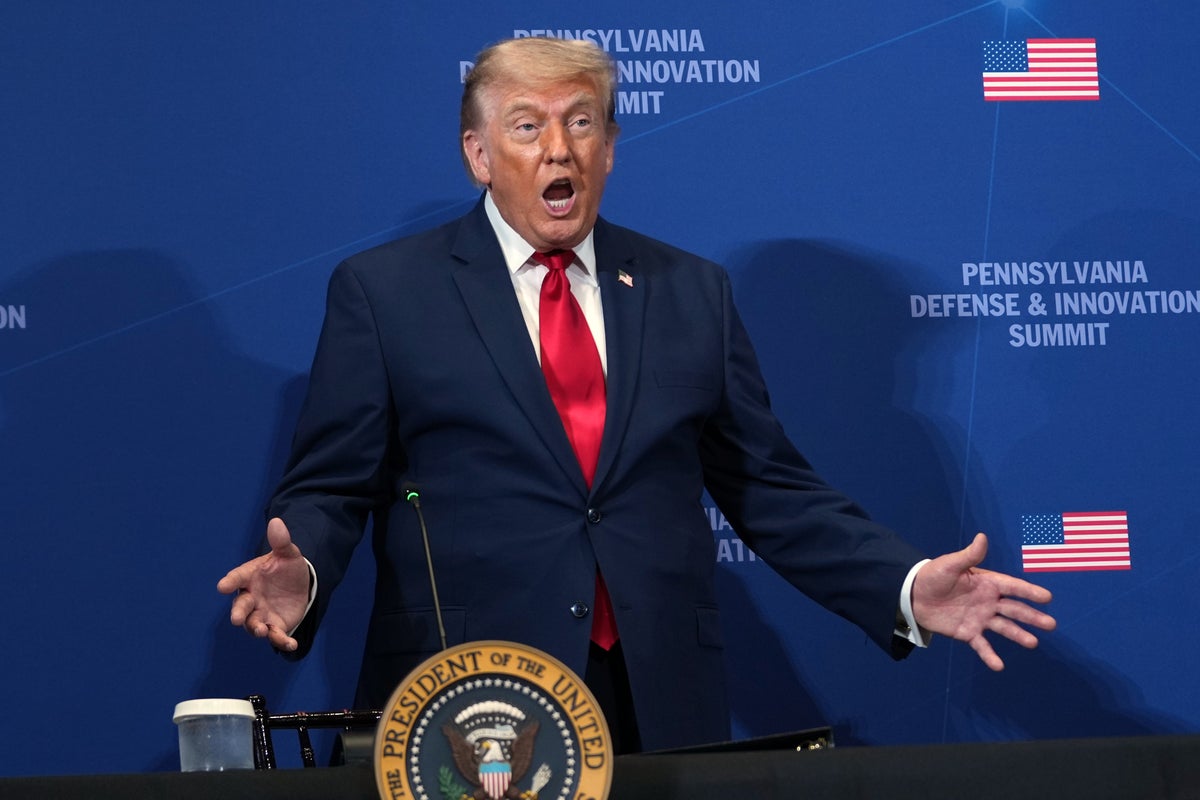
Arriving in Pennsylvania for a defense summit, U.S. President Donald Trump was asked if he had set a hard deadline for Iran before ordering the bombardment of its infrastructure.
"I don't like giving deadlines," he remarked, his tone carrying the casual weight of a superpower that knows its own strength. "But they pretty much know—they know the story. They better behave".
It is a striking phrase. "Better behave." It is the language of a parent reprimanding a wayward child, transposed onto the theater of modern, high-tech warfare. But the consequences of not "behaving" are catastrophic.
In a television interview just a day prior, the warnings were far more explicit. The current strikes on military targets are merely the prelude. If negotiations do not resume, the next phase of the campaign will target the civilian nervous system of the country.
"We're going to knock out all their power plants. We're going to knock out all their bridges," the warning went, promising that by next week, the pressure would become unbearable.
To the strategist, a bridge is a logistical node, a line on a map to be severed to prevent the movement of troops and supplies. To a power plant, it is a target that degrades the enemy's industrial capacity.
But to a family in Shiraz or Isfahan, a bridge is how you get to work. A power plant is how you keep the refrigerator running, how you light your children's bedrooms, and how a hospital keeps its life-support systems functioning through the sweltering heat of summer.
To say "you're not going to have anybody left" is to reduce a nation of 85 million people, with its poets, teachers, mechanics, and children, to a blank slate of rubble.
The Invisible Stakes of a Broken Chokepoint
It is easy to look at this conflict and see it as a distant, localized tragedy—a regional dispute between two long-standing adversaries. But the modern world is too tightly bound for any war to remain isolated.
Consider the Strait of Hormuz. It is a narrow bend of water, a geographical pinch point where the mountains of Oman look across at the coast of Iran. It is the artery of global energy.
When the war first flared in February and the strait was closed, the ripples were felt in grocery stores and gas stations thousands of miles away. The price of oil spiked. The cost of fertilizer—essential for the food supply of dozens of nations—skyrocketed.
The shipping lanes are not just paths for tankers; they are the invisible threads holding the global economy together. A prolonged disruption doesn't just mean more expensive gasoline in Ohio or Munich; it means farmers in developing nations cannot afford to fertilize their crops, leading to smaller harvests and, ultimately, empty plates.
The Revolutionary Guard has already warned that if the blockade continues, "the export of oil and gas from the region will be either for everyone or for no one". It is a promise of mutual economic ruin, a scenario where the entire world is dragged into the dark alongside the cities of Iran.
The Human Paradox of War
Yet, even in the midst of this escalating violence, the strange, contradictory nature of diplomacy persists.
While bombs fell on Bandar Abbas and missiles shook the ground near Ahvaz, negotiators from both sides were still in contact. Phone calls were exchanged. Messages were passed through intermediaries.
In a surprising turn, Iran allowed an American citizen, who had been detained in the country since 2024, to leave the country and return home—a move the U.S. administration publicly thanked Tehran for, calling it a "gesture of goodwill".
It is a jarring juxtaposition. One hour, a government releases a political prisoner as a sign of diplomatic overture. The next hour, those same governments exchange missile fire that terrifies cancer patients in a regional hospital.
This is the dizzying, terrifying reality of modern conflict. It is a world where high-stakes diplomacy and devastating military violence happen simultaneously, managed by leaders who treat the survival of nations as a bargaining chip in a game of brinkmanship.
The tragedy of this approach is that it assumes the other side will always act rationally, that they will bend before they break. But history is littered with the ruins of nations that miscalculated, that believed the other side was bluffing until the first bridges began to fall.
As the sun rises over the Persian Gulf, the warships of the U.S. Navy patrol the blue waters of the strait, their radars sweeping the horizon for any sign of movement. In Washington, the planners look at their maps, preparing the coordinates for the next wave of strikes.
And in Ahvaz, a nurse sweeps the shattered glass from the floor of a darkened ward, while a patient, too weak to flee, watches the dust motes dance in the shaft of morning light, wondering if the night will bring the dark once more.