The air over the Persian Gulf at three o’clock in the morning possesses a heavy, metallic weight. It smells of salt, diesel oil, and the faint, sweet tang of unrefined petroleum drifting from distant tankers. For decades, this body of water has served as the world’s neural pathway. Everything flows through it. Energy, wealth, security.
Until the sky tears open.
When the flash came over Qeshm Island, it was not a distant rumble. It was a sharp, incandescent crack that turned the black horizon into a violent noon. The physical shockwave traveled across the water, rattling the windows of desalination plants and luxury high-rises along the Arab states of the coast. In an instant, a theoretical conflict became an undeniable, terrifying reality.
The United States military had struck targets on Iranian soil. Tehran struck back.
We often discuss geopolitics through the cold lens of strategy. We map arrows, analyze payload capacities, and debate the readiness of fifth-generation fighter jets. But strategy looks entirely different when you are standing on a concrete pier in Bahrain, watching the horizon burn, realizing that the thin veneer of global stability has just evaporated.
The Friction of the Narrow Sea
To understand why Qeshm Island became the flashpoint, you have to understand the claustrophobia of the Strait of Hormuz.
On a map, the gulf looks vast. On the water, it feels like a hallway. Qeshm Island sits like a long, jagged tooth right at the mouth of that hallway. It is Iran’s natural aircraft carrier. For years, Western intelligence agencies watched the island transform. It was no longer just an outpost of fishermen and mangrove forests. It became a fortress of concrete bunkers, anti-ship missile batteries, and drone launch pads.
The logic of the American strike was simple, calculated, and clinical. Neutralize the threat before the throat of global commerce could be cut.
But military logic rarely accounts for the chaotic ripple effect of human retaliation.
Consider a hypothetical air traffic controller in Kuwait City, whom we will call Tariq. He is working the graveyard shift. The radar screen is a familiar ballet of commercial airliners, cargo haulers, and regional shuttles. Then, the alarms sound. The radar tracks don't show civilian transponders. They show low-altitude, high-speed signatures crossing the water from the east.
Iran did not launch a symmetrical counterattack against American naval groups. They went after the neighbors.
The Sky Over Manama and Kuwait City
When the missiles hit targets in Bahrain and Kuwait, the illusion of distance died.
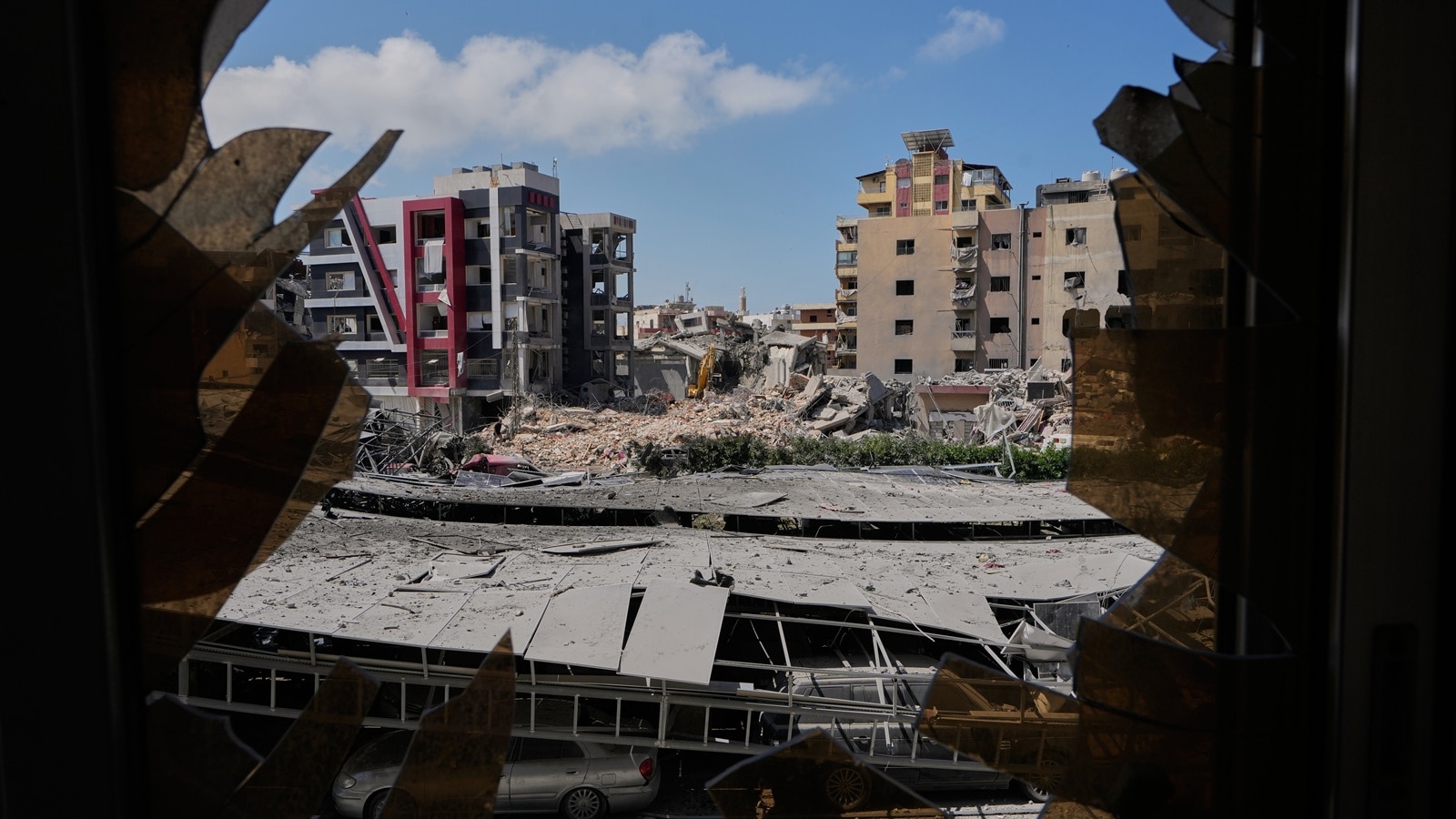
For the people living in Manama, the capital of Bahrain, the attack was a sensory assault. The sound of air defense batteries engaging incoming targets is unlike anything else. It is a rapid, guttural tearing sound, followed by the dull thuds of interceptions high in the atmosphere. Shrapnel, white-hot and jagged, rained down on empty streets and industrial zones.
This is the true cost of modern warfare. It is rarely contained to the battlefield.
Iran's choice of targets was deliberate. Bahrain hosts the United States Navy’s Fifth Fleet. It is the nerve center for Western maritime security in the region. Kuwait houses thousands of American troops across several key bases. By striking these nations, Tehran sent a message that bypassed Washington entirely. The message was meant for the local populations and their rulers: If the Americans hit us, you will bleed.
The panic in the hours following the strikes was silent but total.
People did not run screaming through the streets. Instead, they stared at smartphones in darkened living rooms. They watched stock tickers plunge in late-night trading. They listened to the low, continuous drone of military aircraft circling overhead, unsure if the next sound would be an explosion or the all-clear siren.
The Invisible Engine of Chaos
The immediate aftermath of the strikes revealed a deeper, more systemic vulnerability. The global economy is built on the assumption that the Gulf remains open.
Within two hours of the attack on Qeshm Island, maritime insurance rates for tankers in the region skyrocketed by four hundred percent. Shipping companies ordered vessels to drop anchor or turn around entirely. The supply chain did not just slow down; it froze.
This is where the abstract concept of regional conflict hits the average person thousands of miles away. It shows up in the price of a gallon of gas in Ohio. It manifests in the delayed shipment of semiconductors to a factory in Bavaria. We are all connected to the fate of that narrow strip of water, whether we recognize it or not.
The complexity of the situation is staggering. Western analysts often view Iran as a monolithic actor, a rational chess player calculating its next move. But the reality on the ground is far more fractured. The forces operating the missile batteries on Qeshm Island, or the drone command centers in southern Iran, often operate under broad mandates with immense local autonomy. One nervous finger on a launch button can alter the course of global history.
We must confront the uncomfortable truth that deterrence has failed. For years, the presence of Western naval power was supposed to keep the peace. The strike on Qeshm and the subsequent retaliation proved that deterrence is a fragile psychological construct. Once the first missile flies, the rulebook is shredded.
The Morning After
As the sun rose over the Gulf, the sky turned a pale, dusty yellow. The smoke from the burning facilities on Qeshm Island drifted westward, a dark smudge against the dawn.
In Kuwait and Bahrain, emergency crews sifted through the debris of the intercepted missiles. The damage to physical infrastructure was remarkably limited, thanks to sophisticated air defense systems. But the damage to the collective psyche of the region was absolute.
The old status quo is gone. The line has been crossed.
The question hanging over the water now is not who won the night, but who can stop the day from becoming darker. Every military asset in the region remains on hair-trigger alert. The politicians will release statements filled with resolve and condemnation. The analysts will update their spreadsheets.
But on the ground, the people of the Gulf look out at the water with a new, profound understanding of how thin the line is between peace and catastrophe. They know the sky can open again at any moment.
A single dhow, a traditional wooden fishing boat, slipped out of a harbor near Manama into the quiet, gray waters of the morning, its crew casting nets into a sea that suddenly felt completely foreign.