Dust and Silence
Dust gets into everything. It settles in the seams of your uniform, grinds between your teeth, and coats the cheap plastic keys of a gym treadmill.
In the northeastern corner of Jordan, where the border meets Syria and Iraq in an endless expanse of gray grit, lies Tower 22. It is not a grand fortress. It is a logistics hub—a collection of trailers, sandbags, shipping containers, and sun-bleached tents sticking out of the mud. For the roughly 350 American service members stationed there, life moved to the slow, predictable rhythm of deployed routine. Shift work. Cold meals. Laps around the gravel yard. Calls home when the satellite internet decided to cooperate.
Then came the morning of January 28, 2024.
It was roughly 4:00 AM. Most of the base was asleep. In the quiet, darkness hung thick and heavy over the desert. Outside, the night air carried a faint, mechanical buzz—a low frequency sound easily mistaken for a generator or a friendly reconnaissance drone returning to base.
It was neither.
The Friction of a Split Second
Military bases rely on an intricate mesh of radar, early warning systems, and automated defenses. But systems are built by humans, and human systems rely on assumptions.
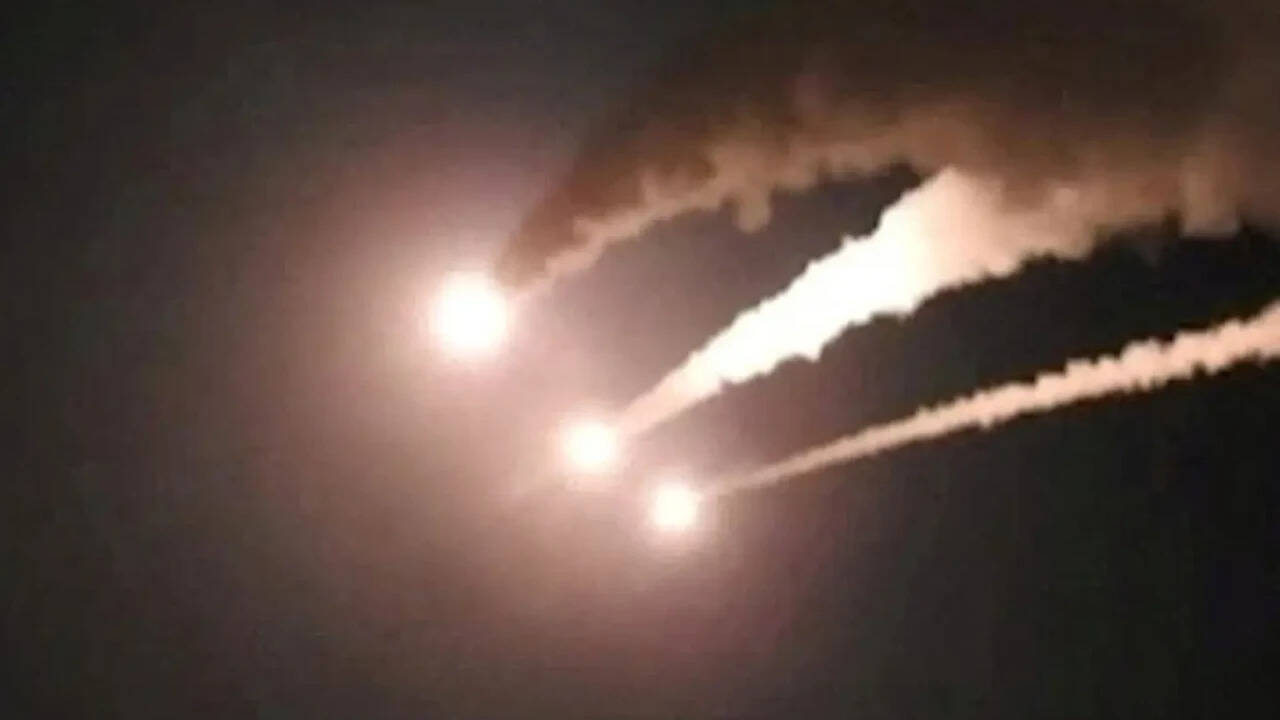
At that precise moment, a friendly American drone was returning to Tower 22. The incoming threat—a low-flying, attack drone carrying a warhead—followed almost in its shadow. Radar screens pinged. Identifications blurred. A lethal ambiguity lasted just long enough.
Silence.
Then, terror.
The drone did not strike an armored vehicle or an empty perimeter wall. It slammed directly into the living quarters—the modular container units where soldiers slept, wrapped in blankets, dreaming of home thousands of miles away.
The explosion tore through thin walls like paper. Sheetrock disintegrated. Metal shredded. Fire filled the confined spaces of the living quarters in a fraction of a heartbeat.
Impact.
Imagine the sound. Not the cinematic, polished boom of a Hollywood film, but a concussive shockwave that slams into your chest before your ears can even register the noise. The sheer kinetic force threw bodies from cots, shattering glass and filling the air with blinding smoke and red-hot shrapnel.
In seconds, forty service members were wounded. Three were killed. Sergeant William Jerome Rivers, Specialist Kennedy Ladon Sanders, and Specialist Breonna Alexsondria Moffett—all members of an Army Reserve engineer unit based out of Georgia—never made it out of their beds.
The Invisible Network
To understand how three lives ended in a quiet corner of the Jordanian desert, you have to look far beyond the perimeter wire of Tower 22. You have to trace a line across mountains, borders, and oceans.
The attack was not an isolated incident of random violence. It was the culmination of a deliberate, long-term strategic calculation. For years, Iran-backed militia groups operating across Iraq and Syria had been testing defenses, firing unguided rockets, and launching increasingly sophisticated unmanned aerial vehicles at coalition positions.
These were not crude weapons made in a garage. They were carefully designed instruments of asymmetric warfare.
When a nation cannot match an adversary's air superiority, it turns to cheap mass. A drone costing a few thousand dollars can bypass multi-million-dollar defense networks if the timing and vector are right. The math is brutal. The attacker only has to get lucky once. The defender has to be perfect every single second of every single night.
On January 28, the defense missed one second.
Consider the human cost of that mathematical asymmetry. A family in Georgia receives a sudden knock on the door in the early hours of the morning. A uniformed officer stands on the porch, holding a dark folder. A mother falls to her knees on the linoleum floor. The abstract game of regional deterrence, played out on maps in distant capitals, suddenly collapses into a single living room filled with unbearable grief.
The Fragmented Frontier
For the survivors, the trauma did not end when the fire was extinguished.
When a warhead detonates in a confined sleeping quarter, the blast wave does something terrifying to the human brain. Even those without visible physical scars carry invisible brain injuries—microscopic tearing of neurological pathways caused by the violent shift in air pressure.
In the hours after the strike, blood was wiped from the gravel. The burnt debris of the living quarters was dragged away. Medevac helicopters kicked up blinding clouds of dust as they shuttled the critically wounded toward higher-level medical care.
Yet, the base had to keep operating. The remaining soldiers had to clean their rifles, strap on their body armor, and step back out into the sun. They had to look at the sky every time a distant engine hummed.
That is the psychological reality of modern conflict. There is no clear front line anymore. There are no safe rear areas. The boundary between a combat zone and a sleeping quarter has evaporated. A soldier can finish a workout in the base gym, walk twenty steps to their cot, and be in the epicenter of a geopolitical crisis before their heart rate drops.
The Echo in the Dust
The events at Tower 22 triggered a wave of retaliatory strikes across the region. Command centers were bombed, stockpiles were destroyed, and political leaders traded stern warnings across podiuns. Headlines moved on within days, replaced by new breaking news, new statistics, and new arguments.
Map lines remain drawn. Radar dishes continue their slow, endless rotation under the relentless desert sun.
Walk through the quiet footprint of an isolated outpost today, and you will still find dust coating the plastic keys of the gym equipment, the metal frames of empty cots, and the worn soles of combat boots left by the door. You will hear the low, steady hum of generators cutting through the night.
And in that dark, wide expanse, every time the air shifts, every time an engine buzzes on the horizon, the desert holds its breath.