The steel plating beneath a merchant sailor’s boots is never entirely still. It vibrates with the deep, rhythmic thrum of a two-stroke diesel engine the size of a three-story house. On a fully laden crude carrier plowing through the Persian Gulf, that vibration becomes a heartbeat. You learn to sleep to it. You learn to gauge the health of your entire world by the pitch of that mechanical hum.
But when the projectile hit, the rhythm didn’t just change. It shattered.
The Strait of Hormuz is a narrow strip of water. At its narrowest, the shipping lanes are just two miles wide in either direction. Through this tiny throat passes a fifth of the world’s petroleum consumption every single day. It is a geographical bottleneck where global economics and ancient geopolitical friction press against each other until the heat is almost palpable. On deck, the air is thick with humidity and the heavy, sweet stench of unrefined oil.
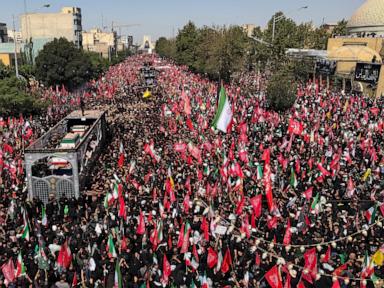
Ashore, Iran was enveloped in a state of enforced, monolithic grief. The state apparatus had ground to a halt following the passing of Ayatollah Ali Khamenei. Black flags draped the concrete facades of Tehran, and the airwaves filled with rhythmic, somber chanting. A nation stood suspended between the weight of a multi-decade legacy and the profound uncertainty of what comes next. History shows that when a regional power enters a leadership vacuum, its borders do not become quieter. They bleed tension outward.
On the bridge of the tanker, the radar screen was a crowded constellation of green sweeps. Fishing dhows, patrol craft, container ships, and sister tankers all jostling through the narrow corridor.
Then came the flash.
It wasn’t the cinematic explosion you see in movies. It was a sudden, violent concussive slap that knocked the ceramic coffee mugs off the chart table and turned the night sky an unnatural, chemical orange. The impact occurred near the starboard quarter, just above the waterline. The sound followed a millisecond later—a metallic tear, like a giant ripping open a soda can, accompanied by the immediate, shrill wail of the ship’s automated fire alarms.
Fire at sea is a unique kind of terror. There is nowhere to run. The ocean surrounding you is an endless expanse of deep water, but inside the skin of the ship, you are trapped in a steel oven that conducts heat with terrifying efficiency.
Consider the mathematics of a modern supertanker. You are floating on millions of gallons of highly volatile hydrocarbons. The deck is a labyrinth of pipes, valves, and manifold systems. The crew consists of barely two dozen people—mostly low-profile professionals from the Philippines, India, and Eastern Europe who are simply trying to send money back to families thousands of miles away. They are not combatants. They do not have armor. They have fire hoses, foam systems, and the hope that the damage control drills they practice on lazy Sunday afternoons will hold the line against a raging inferno.
The captain’s voice over the internal communication system was remarkably steady, a product of decades spent navigating the unpredictable whims of the world's oceans. "All hands to emergency stations. This is not a drill. Isolate the cargo manifolds. Fire parties, don your gear."
Thick, acrid black smoke began to roll past the bridge windows, blotting out the stars and the distant, twinkling lights of the Omani coastline. The smell was an atrocious mix of burning fuel oil, melting electrical insulation, and scorched paint. It catches in the back of your throat, making you gag instantly if you don't have a respirator sealed tightly against your face.
Down in the engine room, the perspective was entirely different. You don't see the fire; you just feel the ship shudder and watch the pressure gauges dance erratically. The chief engineer, an old hand who had navigated these waters during the fraught years of the late twentieth century, immediately began adjusting the fuel pumps to keep the generators alive. If the ship lost electrical power, the main fire pumps would die. If the pumps died, the ship would burn to the waterline.
It is easy to look at global shipping through the lens of abstract market charts. We see a line graph dip, a percentage point rise, or the price of a barrel of West Texas Intermediate tick upward on a screen in New York or London. But those numbers are anchored to flesh and blood. The spike in energy futures that occurred within minutes of the attack was driven by twenty-two men wearing reflective coveralls, dragging heavy canvas hoses across a blistering steel deck while the dark waters of the gulf lapped against a ruptured hull.
As the crew fought the flames, the geopolitical machinery ashore continued its separate, heavy rotation. The mourning period for the Supreme Leader created a complex layer of confusion. Who authorized the strike? Was it a rogue faction within the Islamic Revolutionary Guard Corps trying to project strength during a transition of power? Was it a miscalculation by a coastal missile battery operating on high alert? Or was it a deliberate provocation designed to test the resolve of international naval task forces operating in the area?
In the immediate aftermath of such an event, clarity is the first casualty. Conflicting reports flooded the maritime VHF radio channels. Some agencies claimed a drone swarm was inbound; others suggested a sub-surface mine or a shoulder-fired missile from a fast attack craft. For the men on the burning vessel, these distinctions mattered very little. A hole in the hull remains a hole, regardless of the ideology behind the weapon that made it.
The crew deployed the ship’s fixed carbon dioxide and foam smothering systems around the affected cargo area. It was a gamble. If the fire had breached the main tank barriers, the foam would do little to stop a catastrophic BLEVE—a boiling liquid expanding vapor explosion—that would vaporize the ship and everyone on it.
Seconds stretched into minutes, and minutes wore into grueling hours. The heat radiating through the bulkheads was intense enough to blister the paint on the opposite sides of the walls. Men worked in relays, breathing through oxygen tanks, their muscles cramping from the strain of fighting both the fire and the oppressive ambient heat of the Persian Gulf night.
By the time the first international naval vessels arrived on the horizon—their gray silhouettes cutting through the dawn mist—the worst of the open flames had been suppressed. The tanker was wounded, listing slightly to one side, its starboard flank blackened and scarred by soot and fire. A long, dark smear of oil trailed behind it, a visible wound on the surface of the sea.
The ship did not sink. The crew survived. But the illusion of safety that underpins the global movement of goods had been pulled back once again.
The world expects its fuel to arrive seamlessly, moving through invisible channels from distant deserts to suburban gas pumps. We rarely think about the choke points. We rarely consider that the entire edifice of modern convenience relies on a handful of narrow straits where the political grief of a shifting nation can instantly materialize as a flash of light, a scream of twisted metal, and a handful of sailors fighting for their lives in the dark.
The sun rose over the Strait of Hormuz, casting a bright, unforgiving light on the damaged vessel as it was towed toward a safe anchorage. The smoke had dwindled to a gray wisp, but the air remained charged with the quiet, heavy knowledge that the next spark might not be so easily contained.


