The air inside the Palais des Festivals always smells of expensive perfume, sea salt, and sheer, unadulterated anxiety. It is the crucible of cinema. For decades, the Cannes Film Festival has operated on a strict, unwritten currency of prestige. You climb the famous red steps, you endure the demanding critics, and if you are very lucky, you leave with a piece of sculpted gold that validates your entire existence.
John Travolta walked into that room expecting a celebration of history. He left with something that felt a lot more like redemption.
To understand the weight of what happened that night, you have to understand how Hollywood usually measures success. We look at the Oscars. We count the box office returns. We look at the sleek, gilded statuettes that actors place on mantlepieces to prove they finally made it. But those trophies are the result of campaigns. They are the product of studio politics, endless dinners, and calculated PR drives. They are predictable.
What caught Travolta completely off guard in the south of France was the exact opposite of predictable. It was a moment of pure, spontaneous reverence.
The festival organizers called him to the stage under the guise of a masterclass and a celebration of his sprawling career. It was the anniversary of Pulp Fiction, the ultimate Cannes darling that had scooped the Palme d'Or twenty-four years earlier. That movie didn't just revive Travolta’s career; it fundamentally altered the DNA of independent cinema.
But as the lights dimmed, the narrative changed.
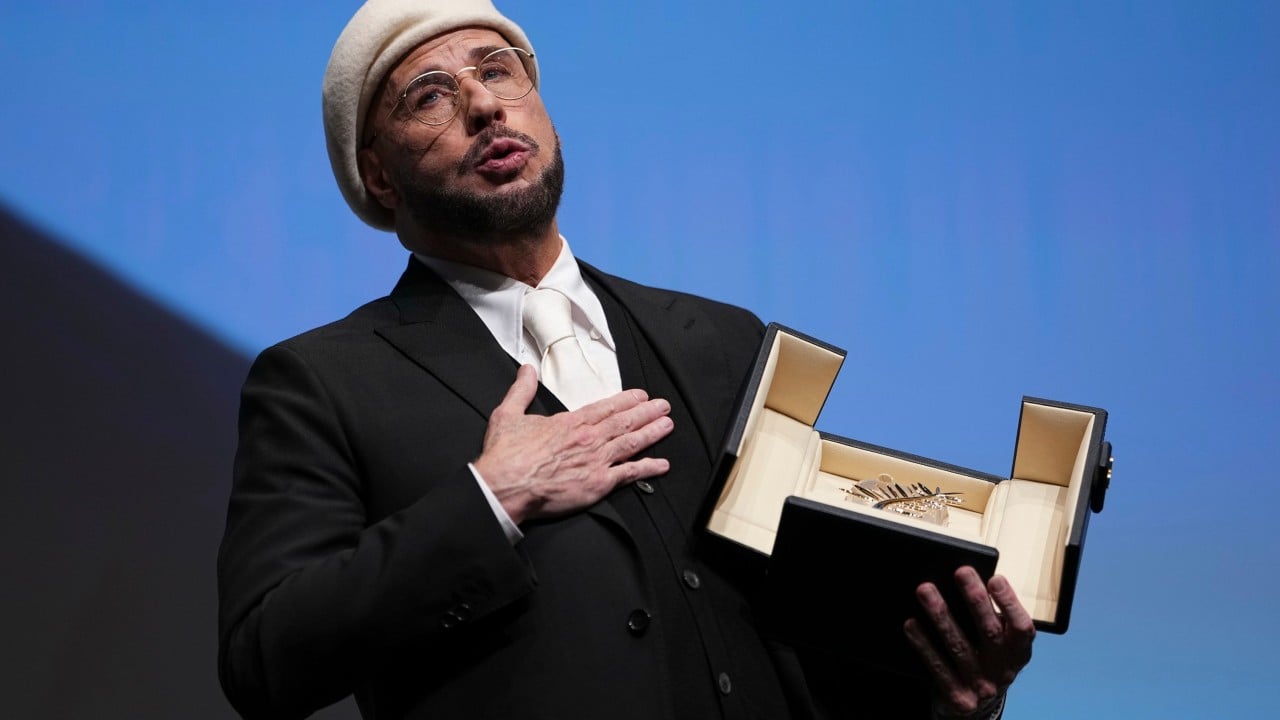
Festival director Thierry Frémaux stepped forward. He wasn't holding a standard lifetime achievement award. Instead, he presented Travolta with a inaugural prize, a surprise accolade born not out of a committee meeting, but out of a sudden realization that certain cultural icons transcend traditional awards entirely.
Travolta looked at the trophy. His eyes glassy, his posture momentarily losing that trademark, cool-guy swagger.
"I never expected this," he said, his voice carrying the distinct weight of a man who has spent forty years navigating the brutal peaks and valleys of show business. "This is beyond the Oscar. This is a recognition of a life's work from the most prestigious film festival in the world."
To say something is "beyond the Oscar" is a dangerous game in Hollywood. The Academy Award is the mountaintop. Yet, watch the footage of that night, and you can see exactly what he meant. An Oscar is given for a single, brilliant year. A surprise honor at Cannes, delivered by a jury of international peers who historically view American stardom with a healthy dose of skepticism, is a validation of survival.
Consider the trajectory of a career like Travolta's. It is easy to look at the highlights—the white suit in Saturday Night Fever, the leather jacket in Grease, the slicked-back hair of Vincent Vega—and assume it was an easy ride. It wasn't. The industry is fickle. It discards its heroes the moment the cultural wind shifts. Before Quentin Tarantino called him up for Pulp Fiction, Travolta was largely being offered talking-baby movies. He was being written off as a relic of the disco era.
Cannes was the place that reminded the world he was an actor of immense, visceral magnetism. Coming back to that same coastline decades later to receive an honor he didn't even know existed felt like a closing of a massive, emotional circle.
The crowd in the Palais didn't just clap; they stood. The applause stretched out, thick and heavy, filling the cavernous room. In those moments, the hierarchy of the film industry melts away. There are no studio executives counting pennies, no publicists checking their watches. There is only a room full of people acknowledging a performer who has spent a lifetime giving pieces of himself to the screen.
The real magic of the evening, however, happened away from the formal podium. It happened out on the sand.
Later that night, at the official beach party, the atmosphere shifted from black-tie solemnity to something resembling a backyard celebration. 50 Cent was there, sharing a stage with Travolta. The image itself sounds like a fever dream hatched by a Hollywood casting director: a rap icon from Queens and a cinematic legend from New Jersey, dancing together on a stage bathed in neon light against the backdrop of the Mediterranean Sea.
Travolta, wearing a sharp tuxedo but entirely devoid of pretension, busted out the moves that made him famous. He didn't look like a veteran star performing a chore; he looked like a kid who still loved the music. The crowd went wild. It was a reminder that cinema isn't just about the quiet, high-brow contemplation of art inside a dark theater. It is about joy. It is about the visceral thrill of movement, rhythm, and charisma.
That is the hidden truth of the Cannes Film Festival. For all its reputation as an elitist bastion of avant-garde cinema, it is also a place that deeply worships the pure power of American star quality. They understand that actors like Travolta possess a rare, inexplicable energy that keeps audiences looking at the screen, even when the script fails them.
The surprise prize wasn't just a trophy for Travolta’s mantlepiece. It was a message to the wider film community. In an era dominated by green screens, franchises, and digital avatars, the human element still matters. The individual performer—the one who can hold an audience captive with nothing but a look, a dance step, or a drag of a cigarette—is irreplaceable.
As the party spilled out into the early hours of the morning, the music finally began to fade. The neon lights bounced softly off the dark waves. Travolta stood near the edge of the pavilion, still holding the award, talking quietly with friends. The frantic energy of the festival buzzed all around him, but he seemed entirely at peace, anchoring the chaotic night with the quiet confidence of a man who had finally received the one thing Hollywood rarely gives out.
Genuine, unprompted gratitude.