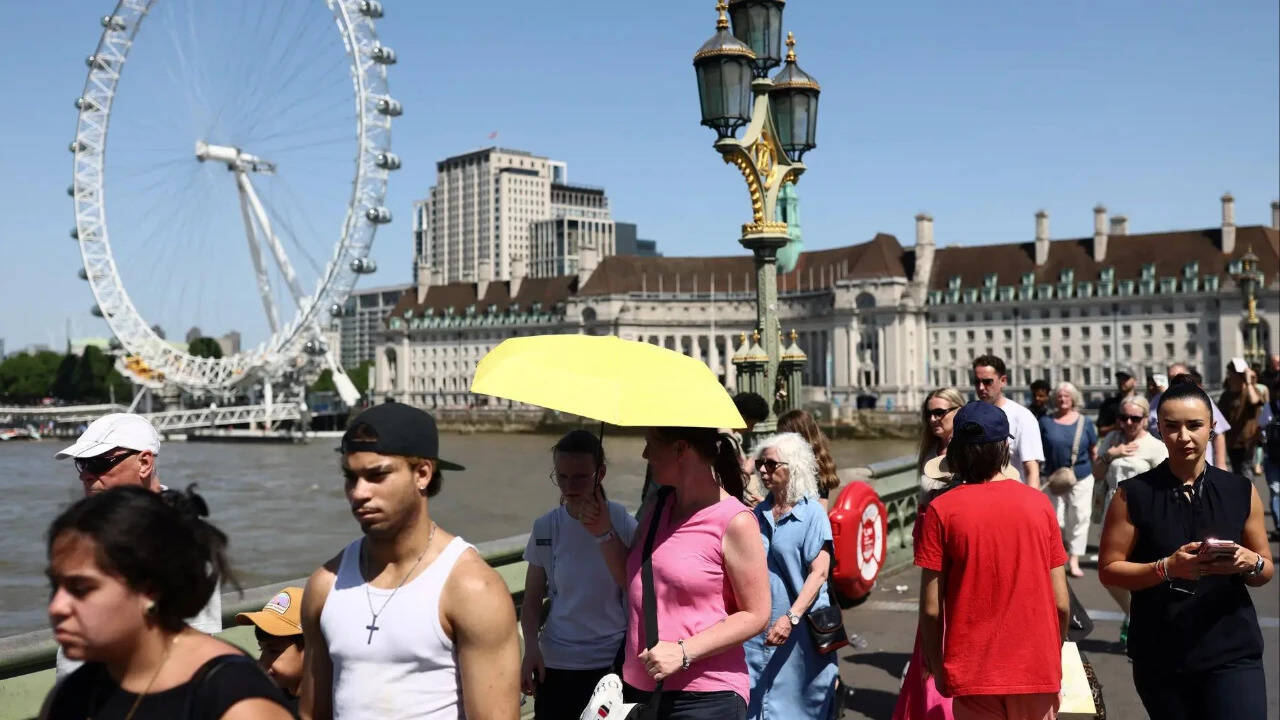
The air didn't move. It sat on the furniture like wool.
At three in the morning, in a Victorian terrace in South London, the bedroom walls radiated the sun they had swallowed twelve hours earlier. Clara pressed her forehead against the glass of the open window, hoping for a draft, but the street below was as still as a museum exhibit. Only the hum of a distant refrigerator broke the quiet. On the bedside table, her phone glowed with a weather app showing twenty-nine degrees at midnight. Recently making headlines in this space: The Cape Cod Construction Lifecycle Why Custom Building Fails Without Operational Controls.
She wasn't alone in her waking. Across the United Kingdom, millions of bedrooms had turned into slow-cookers.
For generations, British architecture was an exercise in thermal hoarding. We built our homes to trap heat against the Atlantic chill, wrapping ourselves in cavity-wall insulation, double glazing, and thick brick shells designed for slate-gray winters. We treated air conditioning as an American eccentricity, something reserved for glass-fronted offices in Houston or luxury hotels in Madrid. Our summers were short, polite affairs that required nothing more than a pint glass of cider in a pub garden and mild complaints about the humidity. More information regarding the matter are explored by Apartment Therapy.
That contract has expired.
Search engines do not lie about panic. When the summer mercury climbs, the digital pulse of the nation shifts. Recently, British searches for homes equipped with air conditioning surged by one hundred and four percent as consecutive heatwaves scorched the islands. People are no longer browsing out of idle curiosity. They are searching out of desperation. They are typing into search bars while staring at ceiling fans that do nothing more than push hot air around a room.
Consider what happens to a body when sleep becomes impossible.
Cortisol spikes. Tempers fray on the District Line. Productivity dips into a sluggish haze. We are a society culturally unprepared for nights where the temperature refuses to drop below twenty degrees. The British climate has crossed an invisible threshold, and our housing stock, the very skin we live inside, is failing us.
To understand why this matters, you have to look past the spreadsheets and look at the bricks.
Take a standard 1930s semi-detached house in Manchester. It has a loft conversion, pebble-dash rendering, and a small south-facing garden. In July, that house becomes a solar trap. The roof tiles absorb the direct radiation, transferring heat down into the bedrooms upstairs. By evening, the upper floor is five degrees hotter than the ground floor.
Heat is an insidious intruder. It doesn't shatter windows or kick down doors; it seeps through the mortar, waits in the floorboards, and exhales slowly through the night.
When homeowners realize that opening windows is no longer a solution—because the air outside is as warm as the air inside—the psychological shift begins. The traditional British stiff upper lip dissolves into a puddle of sweat on a damp pillow.
This is where the market responds, often clumsily. Portable air conditioning units—noisy, inefficient boxes that require a hose jammed out of a cracked window—disappear from hardware store shelves within hours of a heatwave warning. Fans are sold out nationwide. Electricians are booked six months in advance for split-system installations.
Yet, retrofitting an island of Victorian and Edwardian homes with modern climate control is no small feat. It exposes a fascinating tension between our heritage and our survival. Conservation areas forbid exterior units on period facades. Listed building regulations treat a plastic condenser box on a Georgian townhouse like an act of vandalism.
We are caught between the museum of our past and the furnace of our present.
There is a quiet irony here. For decades, British travelers flew to the Mediterranean or the Middle East, laughing at the aggressive hum of wall-mounted cooling units in foreign hotel rooms. Now, those exact units are appearing on the sides of suburban houses in Surrey and Yorkshire.
The human cost of this transition is unevenly distributed.
In top-floor council flats with flat roofs and single-pane windows, the heat is dangerous. Elderly residents close their curtains against the glare and sit motionless in stagnant rooms, praying for a thunderstorm that takes its time arriving. Health statistics during severe heatwaves tell a grim story of excess mortality, mostly among the vulnerable whose bodies cannot regulate internal temperature under sustained thermal stress. For them, air conditioning is not a luxury upgrade or a lifestyle flex. It is a critical medical intervention.
Then there is the paradox of energy.
Cooling a home requires electricity. In a country striving to decarbonize its grid, adding millions of air conditioning units poses a severe challenge to energy infrastructure. If everyone fires up a compressor at four o'clock on a July afternoon, the grid groans. We risk trading one crisis for another, pumping heat out of our living rooms while burning more fossil fuels to power the fans, thereby warming the very atmosphere that forced us indoors in the first place.
Architects and engineers are scrambling for smarter answers. They talk about external shading, high-performance glazing, green roofs, and passive ventilation. They study how North African and Mediterranean cultures managed heat for centuries through courtyards, thick stone walls, and strategic cross-breezes.
We need to relearn how to inhabit our climate.
But until those long-term structural changes catch up with reality, the hum of the compressor will become as common in British suburbs as the sound of the lawnmower on a Saturday morning.
Back in South London, at four in the morning, Clara finally gave up on sleep. She walked down the narrow wooden stairs, her bare feet sticking slightly to the hallway linoleum. She opened the fridge, took out a glass of cold water, and stood in the brief spill of light.
Outside, the streetlights cast a yellow glow over parked cars that had baked all day in the sun. The air was thick, silent, and heavy with the undeniable weight of a changed world.