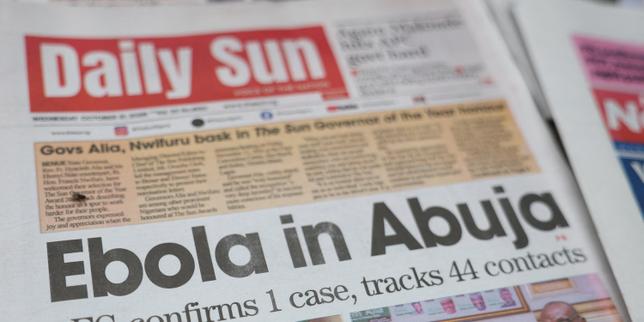
One confirmed case in Abuja doesn't mean Nigeria is spiraling back into 2014—at least not yet.
On October 20, 2026, health authorities in Nigeria confirmed the country's first case of Ebola disease in the Federal Capital Territory, caused by the Bundibugyo virus. The patient, a 42-year-old woman who had traveled from Uganda via Addis Ababa to Abuja on October 3, developed symptoms on October 7 and was placed in isolation following laboratory confirmation. By late October, she was medically evacuated to Geneva, Switzerland, for specialized care, while the Nigeria Centre for Disease Control and Prevention (NCDC) ramped up contact tracing across dozens of exposed individuals.
Hearing "Ebola" and "Nigeria" in the same sentence makes anyone's stomach drop. Twelve years ago, a single imported case in Lagos set off a tense race to contain West Africa's wider crisis. Yet this time, the strain, the timeline, and the surveillance playbook look noticeably different—and honestly, a lot of headlines miss what actually matters for containment.
Why This Ebola Case in Nigeria Is Not a Repeat of 2014
Panic loves a simple parallel, so people immediately compare October 2026 to 2014. That comparison is lazy.
In 2014, the outbreak sweeping West Africa was driven by Zaire ebolavirus, and early transmission in crowded urban clinics caught responders off guard before rapid isolation protocols clicked into place. This time, genomic and laboratory work confirmed the Bundibugyo species, matching the wider multi-country outbreak that began in the Democratic Republic of the Congo (DRC) in mid-May 2026. According to the World Health Organization and the European Centre for Disease Prevention and Control, the DRC has faced massive community transmission—reporting 10,990 confirmed cases and 5,354 deaths as of early November—while Kenya recorded nine confirmed cases linked to cross-border movement.
There's another major difference in clinical presentation. In Nigeria's index case, the patient experienced fever, diarrhea, generalized body aches, and a sore throat, with no reported bleeding at initial presentation. People still picture Ebola as dramatic internal or external bleeding from day one. In reality, early symptoms look like malaria, typhoid, or a bad viral gastroenteritis. That overlap is the exact reason mild or moderate early cases slip past initial screening.
The Real Bottleneck Isn't the Airport—It's Private Clinics
If you want to know where outbreaks actually gain a foothold in big cities, stop staring at thermal scanners at international terminals and look at neighborhood clinics.
In Abuja, the patient became symptomatic on October 7, visited a private health facility on October 10, and wasn't reported to the NCDC until October 19, with lab confirmation coming on October 20. Nine days between a clinic visit and public health notification isn't unusual in complex infectious diseases when early signs are non-specific. Still, it shows why frontline clinicians in private hospitals are the linchpin of outbreak control.
When someone walks into a busy private clinic with fever, body aches, and diarrhea, doctors treat what they see most often. Without a sharp travel history check—asking where a patient has been over the past 21 days, including transit hubs or regional trips—Ebola can easily be misdiagnosed at first. And if infection prevention and control (IPC) slips in a busy ward before isolation happens, healthcare workers and household members bear the highest risk.
Notice how quickly contact counts shifted once investigation deepened. Early updates pointed to 44 contacts, expanding to 53 by October 24 and 62 cumulative contacts—including healthcare workers, domestic staff, and a spouse—by early November. That expansion doesn't mean the system is failing. Usually, it means contact tracers are doing their job and widening the net rather than stopping at the first list.
What Everyone Gets Wrong About Bundibugyo and Vaccines
Let's clear up a widespread misconception right now. People hear "Ebola vaccine" in the news and assume a ready-to-deploy shot exists for every strain. It doesn't.
Approved Ebola vaccines and targeted therapeutics have historically focused heavily on Zaire ebolavirus. For the Bundibugyo virus, there is no widely licensed vaccine or specific antiviral cure established for routine use, though clinical trials and research efforts have been underway. That means supportive medical care—aggressive fluid and electrolyte replacement, managing kidney or organ stress, and treating secondary infections—remains the backbone of survival.
Does that mean containment is hopeless without a magic bullet? Not at all. Ebola isn't airborne like measles or influenza. Transmission happens through direct contact with blood, secretions, organs, or other bodily fluids of a symptomatic infected person, or through contaminated surfaces and materials. Because patients aren't contagious before symptoms start, finding cases early, isolating them cleanly, and monitoring contacts for the full 21-day incubation window works remarkably well when executed with discipline.
Why Cross-Border Coordination Matters More Than Border Closures
Whenever an imported case pops up, politicians and commentators inevitably call for sweeping flight bans or border shutdowns. Honestly, knee-jerk travel bans rarely solve the underlying epidemiological problem—and they often backfire.
Strict bans can push travelers toward informal crossing points, disrupt medical supply chains, and discourage honest symptom reporting. Both the Africa Centres for Disease Control and Prevention and the WHO have emphasized coordinated surveillance, cross-border information sharing, laboratory readiness, and protective equipment rather than blanket trade or travel restrictions.
In Abuja, authorities also had to reconstruct exact travel and exposure histories—including transit through Addis Ababa and prior travel involving Uganda and the eastern DRC—to pinpoint where exposure likely occurred. In an era of regional flights and multi-leg trips, a single passenger's itinerary links health ministries across multiple countries in a matter of hours.
Practical Steps If You're Traveling, Working in Healthcare, or Tracking the News
You don't need to panic, and you definitely shouldn't rely on rumors circulating in group chats. A few grounded habits make a real difference depending on your role:
- If you've traveled recently or live near an affected zone: Track your health for 21 days after potential exposure. Watch closely for sudden fever, severe weakness, headache, muscle aches, vomiting, or diarrhea. If symptoms start, stay put, avoid close contact with others, and call public health hotlines (such as the NCDC toll-free line 6232 in Nigeria) before walking into a clinic.
- If you run or work in a clinic or hospital: Make a 21-day travel and contact question standard on every triage intake form for unexplained fever or gastrointestinal illness. Keep isolation rooms ready, enforce strict PPE and hand hygiene, and report suspected cases to surveillance teams immediately rather than waiting days for guesswork.
- If you're following the outbreak: Check primary situation reports from the NCDC, WHO, or ECDC instead of viral social media claims. Pay attention to two concrete metrics: whether new secondary cases appear among traced contacts, and whether contacts complete their 21-day monitoring without symptoms.
One isolated case in Abuja is a serious wake-up call for vigilance, not a verdict on Nigeria's future. Real containment happens in quiet daily routines—accurate triage, honest reporting, clean isolation, and patient 21-day follow-up—long after the initial breaking-news alert fades.


