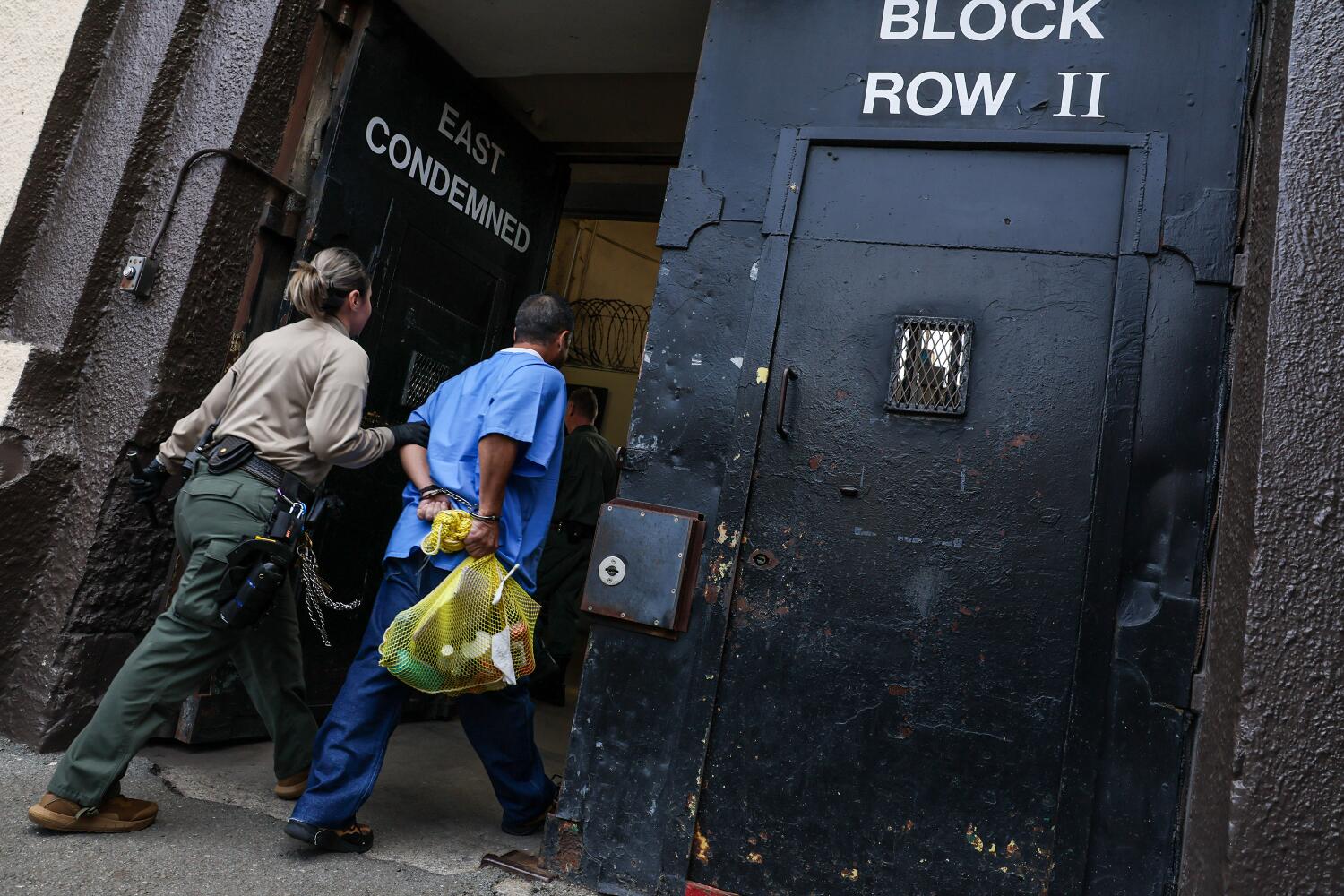
Waiting around for a broken system to fix itself is a terrible strategy when human lives and billions of taxpayer dollars are on the line. That's the exact trap California stayed stuck in for decades regarding capital punishment, and it's why Gavin Newsom's decision to impose a moratorium on executions wasn't just defensible—it was overdue.
When Newsom signed Executive Order N-09-19 back in March 2019, granting reprieves to more than 700 people on California's death row, critics immediately accused him of ignoring the will of the voters. After all, Californians had rejected ballot measures to repeal the death penalty in 2012 and 2016, even passing Proposition 66 in 2016 to supposedly speed up the appeals process.
Here's the problem with that argument. You can't vote away structural failure, constitutional gridlock, and financial absurdity. Newsom didn't abolish the death penalty—only voters or the courts can do that—but he refused to keep pretending that "fixing" California's death penalty was anything other than an expensive illusion.
The Illusion of a Fixable Death Penalty
People love the idea that we can just tweak a few laws, hire a few more appellate lawyers, and suddenly make capital punishment fast, fair, and cheap. Honestly, California tried that exact approach. Proposition 66 promised to cap appeals at five years and overhaul the system so executions could resume smoothly.
It didn't work. Not even close.
Years after voters approved Prop 66, the California Supreme Court ruled that the five-year deadline was directory rather than mandatory, meaning courts couldn't actually be forced to meet it without sacrificing constitutional due process. There simply aren't enough qualified capital defense attorneys in the state to handle hundreds of complex habeas corpus petitions on an accelerated timeline. When you rush death penalty appeals, you don't get swift justice. You get reversible constitutional errors that send cases right back to square one.
If you've ever followed post-conviction litigation in California, you know the delays aren't caused by people playing games. They happen because death penalty cases require exhaustive investigation into trial counsel performance, mental health records, forensic evidence, and prosecutorial disclosure. Cutting corners isn't an option when the state is trying to execute someone.
What California's Capital Punishment System Actually Costs
Let's talk money, because fiscal reality tends to cut through political posturing pretty fast. California hadn't executed a single person since Clarence Ray Allen in 2006. Yet between 1978, when the modern death penalty was reinstated, and Newsom's moratorium, the state spent billions of dollars maintaining a system that produced almost no executions.
A landmark study by Judge Arthur Alarcón and Loyola Law School professor Paula Mitchell estimated that California spent roughly $4 billion on its death penalty system between 1978 and 2011 alone, and projected costs climbing well past $5 billion. Why does it cost so much more than sentencing someone to life without the possibility of parole?
- Pre-trial and trial expenses skyrocket because capital trials require two separate phases (guilt and penalty), specialized defense teams, extensive expert testimony, and months of jury selection.
- Automatic appeals to the California Supreme Court and parallel state and federal habeas proceedings drag on for twenty to thirty years per case.
- Specialized housing at San Quentin required heightened security protocols and staffing that cost tens of millions of dollars annually above standard maximum-security incarceration.
Even after Newsom ordered the dismantling of San Quentin's death row facility and began transferring condemned inmates into general high-security prison populations where they actually work and pay restitution to victims' families, the underlying legal machinery remained a massive financial drain. Waiting for that system to become efficient is like waiting for a sinking boat to dry itself out.
The Risk of Executing an Innocent Person
Money is one thing. Irreversibility is another.
The strongest argument against waiting for a "fixed" death penalty has nothing to do with budgets and everything to do with human fallibility. Across the United States, nearly 200 people sentenced to death since 1973 have been exonerated after evidence proved their innocence, according to the Death Penalty Information Center. California itself has had multiple death row exonerations, including cases involving false testimony, flawed forensics, and suppressed evidence.
No procedural reform eliminates human error. Police investigators miss leads. Eyewitnesses misidentify suspects under stress. Jailhouse informants lie for reduced sentences. Prosecutors occasionally withhold exculpatory files, whether out of malice or sloppiness.
When someone is serving life without parole and new DNA evidence surfaces twenty years later, a court can open the cell door. When the state carries out an execution, there is no undo button. Newsom explicitly pointed to the risk of executing an innocent person as a primary reason he couldn't sign off on death warrants while sitting in the governor's office. Refusing to gamble with irreversible mistakes isn't weakness. It's basic governance.
Racial Disparities and Geographic Lottery
If you look closely at who actually ends up on death row in California, the idea of a fair, uniform system falls apart immediately.
Studies of California capital sentencing—including research published by the ACLU of Northern California and legal scholars analyzing decades of county-level charging data—consistently show severe racial and geographic disparities. Black and Latino defendants have been disproportionately sentenced to death, particularly when the victim is white.
Even more striking is the geographic lottery. Whether a defendant faces the death penalty in California depends less on the heinousness of the crime and more on which county line the crime happened to cross. Historically, a tiny handful of counties—like Los Angeles, Riverside, Orange, and Kern—accounted for the overwhelming majority of death sentences in the state, while other counties with comparable homicide rates rarely or never sought death.
A punishment that depends on your zip code and your race isn't a functioning justice system. You can't patch that with a new administrative rule.
Addressing the Critics and Victims' Families
It's completely fair to acknowledge why Newsom's moratorium made plenty of people angry. Many Californians, especially family members of murder victims, felt betrayed. For decades, prosecutors told grieving families that a death sentence represented the ultimate measure of accountability and closure. Having a governor unilaterally freeze executions after voters twice declined to repeal capital punishment felt like an end-run around democracy.
That frustration deserves respect, not dismissal.
Still, look at what the old system actually delivered to victims' families. Instead of closure, it trapped families in thirty years of endless court hearings, stays of execution, and false alarms, forcing them to relive the worst day of their lives over and over again. Meanwhile, the state poured billions into appellate litigation instead of funding trauma services, cold-case investigations, and direct victim compensation.
California's Constitution explicitly grants the governor the authority to grant reprieves. Using that constitutional power to stop the state from participating in an arbitrary, broken process isn't lawless—it's exactly what executive clemency powers exist to prevent.
Where California Goes From Here
Newsom's moratorium didn't solve every legal question around capital punishment in California, and a future governor could theoretically lift the reprieves. That's why the conversation can't stop at an executive order.
If you care about public safety, fiscal sanity, or constitutional integrity in California, pay close attention to local district attorney races, because county prosecutors decide whether to seek death in the first place. Support policies that redirect wasted capital litigation funds toward unsolved homicide units and direct support for survivors of violent crime. And when capital punishment eventually returns to the California ballot, judge it not by how good it sounds in theory, but by the forty-year track record of failure it actually produced.


