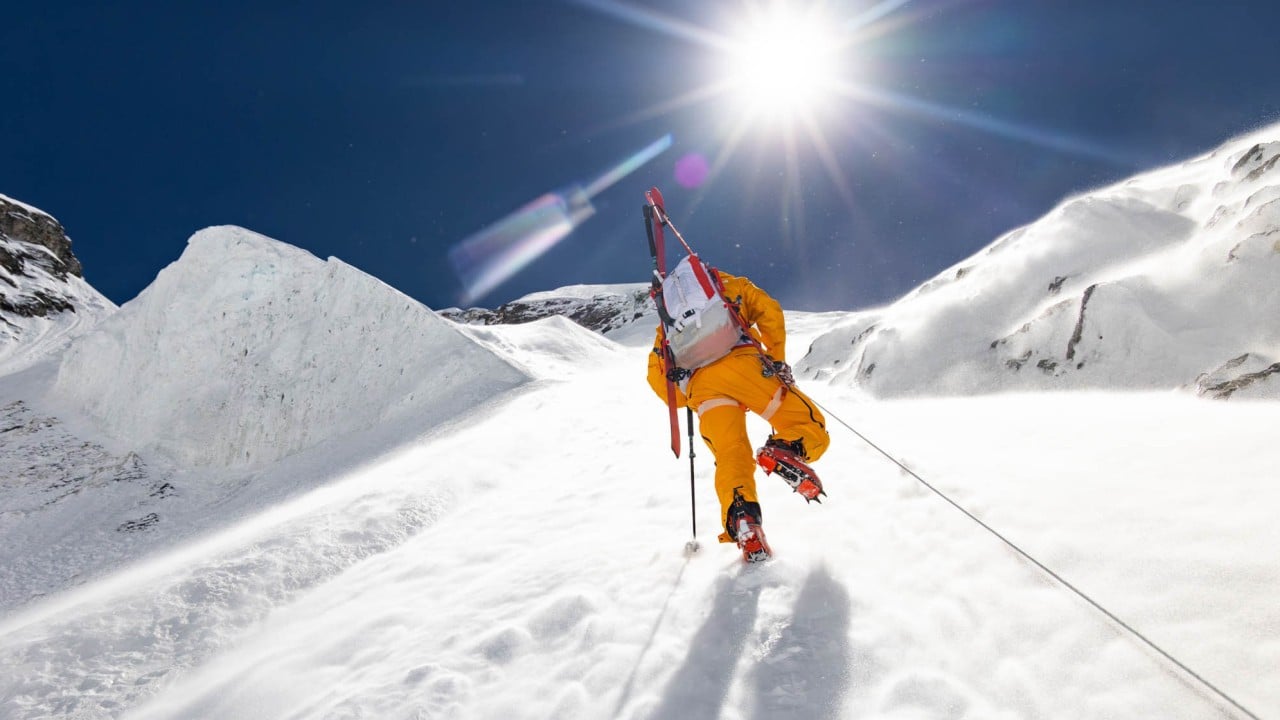
Movies don't end trade wars. They don't rewrite semiconductor export bans, and they certainly don't settle territorial disputes in the South China Sea. Yet filmmakers keep returning to Mount Everest hoping that shared human struggle at 29,032 feet can thaw the diplomatic freeze between Washington and Beijing.
The latest documentary pushing this idea—titled New Everest film hopes to nudge US-China relations into a higher altitude in recent press coverage—leans hard into soft power diplomacy. It bets on a simple premise. When you strip away geopolitical posturing, nationalism, and cable news shouting matches, American and Chinese climbers face the exact same lethal winds, the same oxygen deprivation, and the same life-or-death reliance on the person holding the other end of the rope.
It's a compelling pitch. Honestly, it's also a bit naive unless you understand the messy history of mountain diplomacy and how film distribution actually works between these two superpowers right now.
Why Mount Everest Keeps Showing Up in Geopolitics
Everest isn't just a pile of rock and ice. It sits directly on the border between Nepal and the Tibet Autonomous Region of China, making it a literal geopolitical fault line. Every summit push from the north side requires direct cooperation with Chinese authorities, while the south side runs through Kathmandu.
For decades, governments have used Himalayan expeditions to signal friendship or project dominance.
Take the 1960 Chinese expedition. Beijing claimed its climbers reached the summit via the treacherous North Ridge, planting a bust of Mao Zedong at the top. Western mountaineers doubted the claim for years because the final summit push happened in the dark without photographic proof, turning a climbing achievement into a Cold War credibility battle.
Then came the 1988 joint expedition. Climbers from China, Japan, and Nepal completed the first simultaneous double traverse of Everest, meeting at the summit and descending the opposite sides. Television crews broadcast the feat live. For a brief moment, high-altitude cooperation looked like a genuine blueprint for regional peace.
The new Everest documentary tries to recapture that 1988 magic. By focusing on binational teams, joint logistics, and personal friendships forged in base camp tents, the filmmakers want audiences in both Los Angeles and Shanghai to see each other as human beings rather than strategic threats.
The Reality of US-China Film Diplomacy Today
Wanting to build a bridge is one thing. Getting your movie onto screens in both countries is an entirely different climb.
If you've followed the entertainment business over the last few years, you know the golden era of Hollywood-China co-productions is dead. Back in the mid-2010s, studios routinely edited scripts, added Chinese subplots, and cast Mandarin-speaking stars just to secure one of China's coveted foreign film import slots. That era ended when Beijing tightened ideological controls over domestic media and audiences started preferring homegrown blockbusters like The Battle at Lake Changjin over imported American fare.
Documentaries face an even steeper uphill battle.
- Censorship hurdles: Any film depicting Tibet—the northern gateway to Everest—undergoes intense scrutiny from China's National Radio and Television Administration. Even a passing mention of Tibetan autonomy, environmental degradation on the plateau, or historical border disputes can trigger an instant ban.
- Distribution bottlenecks: Independent documentaries rarely get wide theatrical releases in mainland China. Most end up relegated to niche film festivals, state-approved streaming platforms with heavy edits, or private screenings for diplomats and academics.
- American skepticism: On the US side, audiences and critics have grown wary of projects that feel overly sanitized to please Beijing's censors. If a film avoids every sensitive political reality on the Tibetan side of the mountain, Western viewers immediately smell propaganda.
That's the tightrope this new Everest film has to walk. Say too much about regional politics, and Chinese viewers never see it. Say too little, and American viewers dismiss it as state-sponsored fluff.
What Soft Power Actually Achieves on the Ground
So if a single movie won't magically reset bilateral relations, why bother making it? Because diplomacy doesn't happen all at once.
Political scientists like Joseph Nye, who coined the term "soft power," have spent decades arguing that cultural exchanges work like slow-drip irrigation rather than a sudden flood. You don't change a senator's vote or a diplomat's talking points with a ninety-minute documentary. You change the baseline temperature in the room.
When American and Chinese scientists, climbers, and camera operators spend two months living together at 17,500 feet, real institutional trust develops.
- Search and rescue protocols improve. High-altitude rescues don't care about passports. Joint expeditions force teams to standardize radio frequencies, medical evacuation procedures, and weather forecasting across borders.
- Environmental data gets shared. The Himalayas are warming faster than the global average, threatening water supplies for over a billion people downstream. Cross-border film crews often collaborate with glaciologists, creating cover for scientific data sharing that might otherwise get blocked by national security reviews.
- People-to-people networks survive political storms. During the height of the Cold War, ping-pong players and ballet dancers kept communication channels open when embassies stopped talking. Mountaineering communities serve that exact same function today.
It's small-scale progress. It won't make front-page news in Washington. Yet in an era where student exchanges between the US and China have plummeted from over 15,000 Americans studying in China a decade ago to barely a few hundred today, any functioning channel of human contact matters.
Where Most Diplomatic Documentaries Go Wrong
I've watched dozens of cross-cultural documentaries over the years, and the ones that fail almost always make the exact same mistake. They preach.
Audiences hate being lectured about why they should get along. The second a narrator starts talking about "bridging divides" and "shared humanity" over swelling orchestral music, viewers tune out. It feels manufactured. It feels like homework.
The best mountain films—think Free Solo, Meru, or The Dawn Wall—succeed because they obsess over technical craft, raw fear, and unflinching honesty. They don't hide the friction between partners. When two climbers argue over a frayed rope or a dangerous weather window, that tension is what makes their eventual trust believable.
If this new Everest project wants to actually move the needle on US-China perceptions, it has to show the friction. Show the language barriers. Show the frustration when bureaucratic permits stall a climb for days. Show the cultural clashes over risk tolerance—because Western alpine-style climbers and state-organized expedition teams often approach mountain safety from completely different philosophies.
When viewers see real conflict resolved through competence and mutual respect, the diplomatic message lands without anyone having to say a word.
How to Watch and Support Cross-Border Storytelling
You don't need a diplomatic passport to engage with this kind of cultural exchange, and you shouldn't just take marketing press releases at face value when evaluating these films.
- Check the production credits. Look at who funded the project and who holds final cut. Co-productions involving independent documentary funds like Sundance or Catapult Film Fund generally maintain stricter editorial independence than projects backed entirely by state-affiliated media entities.
- Look beyond the theatrical run. Most geopolitical documentaries find their real audience at international mountain film festivals—like the Banff Centre Mountain Film Festival or Telluride Mountainfilm—before landing on streaming platforms. Track festival schedules if you want to see early cuts before regional distributors trim them.
- Pair the film with primary historical accounts. If Everest's geopolitical history fascinates you, read Wade Davis's Into the Silence for the imperial British context, or look up the joint 1988 traverse archives to see how state media covered cooperation thirty-eight years ago compared to today.
A documentary won't solve the structural rivalry between the United States and China. Nothing on a movie screen has that kind of leverage. What a great Everest film can do is remind two increasingly isolated populations that the people on the other side of the Pacific bleed, freeze, and fight to survive just like they do—and sometimes, that reminder is enough to keep the rope from snapping.