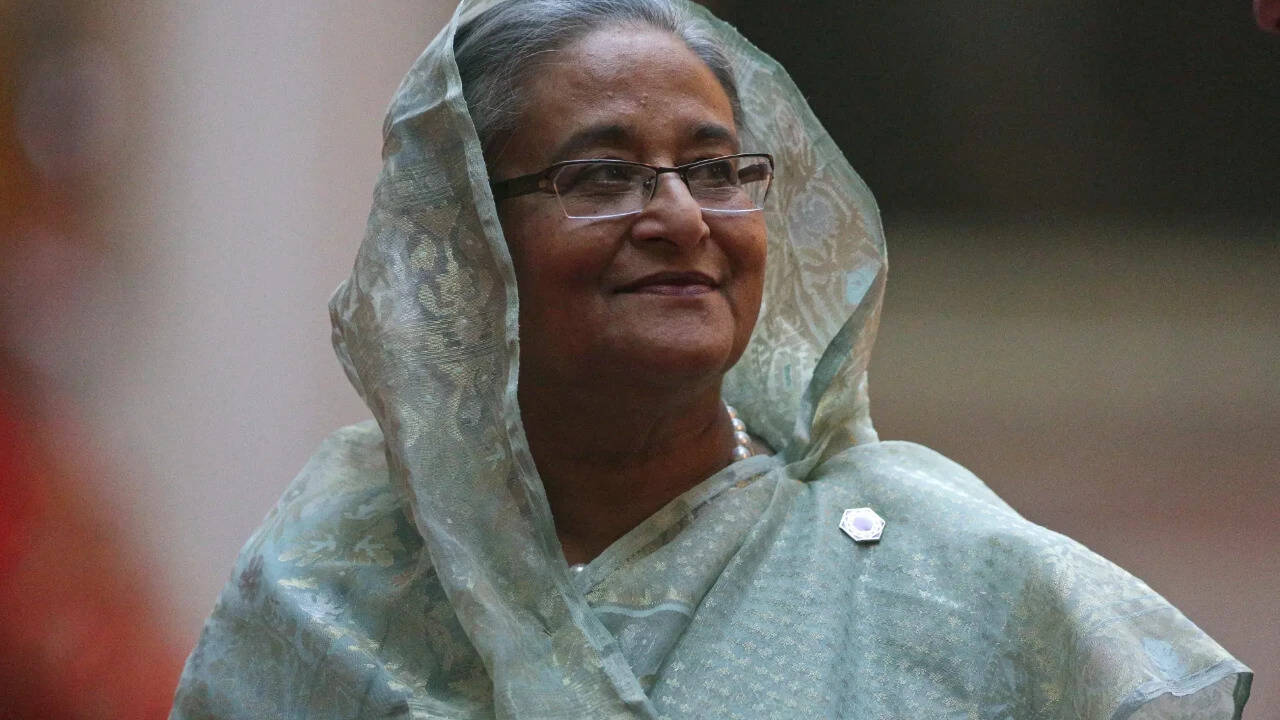
Foreign policy is rarely simple, but sometimes a neighbor forces your hand. Right now, New Delhi is sitting on a diplomatic powder keg, and Dhaka wants to know exactly where India stands.
When ousted former prime minister Sheikh Hasina dialed into a virtual press conference from New Delhi on the anniversary of the July Revolution, she didn't just rattle local politics—she triggered a fresh geopolitical crisis. Bangladesh's Ministry of Foreign Affairs responded with fury, demanding that India clarify its long-term strategy.
You cannot host a convicted leader in exile who openly attacks the current administration and expect normal diplomatic ties to glide along smoothly. Dhaka wants answers. And honestly, they've earned them.
The Cost of Harboring an Ousted Leader
Since fleeing to India in August 2024 after a massive student-led uprising, Hasina has remained a thorny problem for New Delhi. India kept her safe, viewing her as a historic ally who maintained strict border security and kept radical factions at bay. But that loyalty comes with a massive price tag today.
By allowing a public platform for her audio-only briefing hosted by the Foreign Correspondents' Club of South Asia, India walked right into a diplomatic trap. Even though New Delhi's Ministry of External Affairs insisted it was a private event organized by independent media, optics matter. To the millions in Bangladesh who remember the brutal crackdown of 2024—where up to 1,400 people lost their lives—permitting Hasina to speak from Indian soil felt like a direct slap in the face.
Bangladesh state minister for foreign affairs Shama Obaed put it bluntly: India needs to decide if it will continue letting Awami League leaders run operations and shape narratives from inside Indian territory. You want good relations? Fine. But sovereign equality and mutual respect have to mean something on the ground.
The Extradition Elephant in the Room
Let's talk about the 2013 India-Bangladesh Extradition Treaty. Dhaka has formally requested Hasina's return following a special tribunal sentencing her in absentia to death for crimes against humanity. New Delhi has largely ignored these requests, hiding behind legal technicalities and diplomatic silence.
This silence is wearing thin.
When a neighboring country experiences a massive regime change, clinging to old alliances usually backfires. India spent decades building deep ties with Hasina's administration, but treating her political network as a government-in-exile alienates the current leadership in Dhaka. If New Delhi wants to protect its long-term security and economic interests in South Asia, it has to look past individual politicians and deal with the sovereign state of Bangladesh as it exists today.
What India Stands to Lose
India's hesitation to distance itself from Hasina carries heavy risks. Anti-India sentiment in Bangladesh isn't theoretical; it spiked visibly after the 2024 uprising. Every time Hasina broadcasts a message from New Delhi, nationalist groups in Dhaka use it as proof that India wants to undermine their revolution.
Trade, transit routes, and regional stability are all on the line. If New Delhi keeps playing both sides—distancing itself verbally while offering safe harbor practically—it risks losing influence entirely in a country that used to be a reliable partner.
Diplomacy requires hard choices. India can either cling to the ghosts of political past or adapt to the reality of a transformed Bangladesh. The longer New Delhi stalls on clarifying its stance, the worse the neighborhood gets.