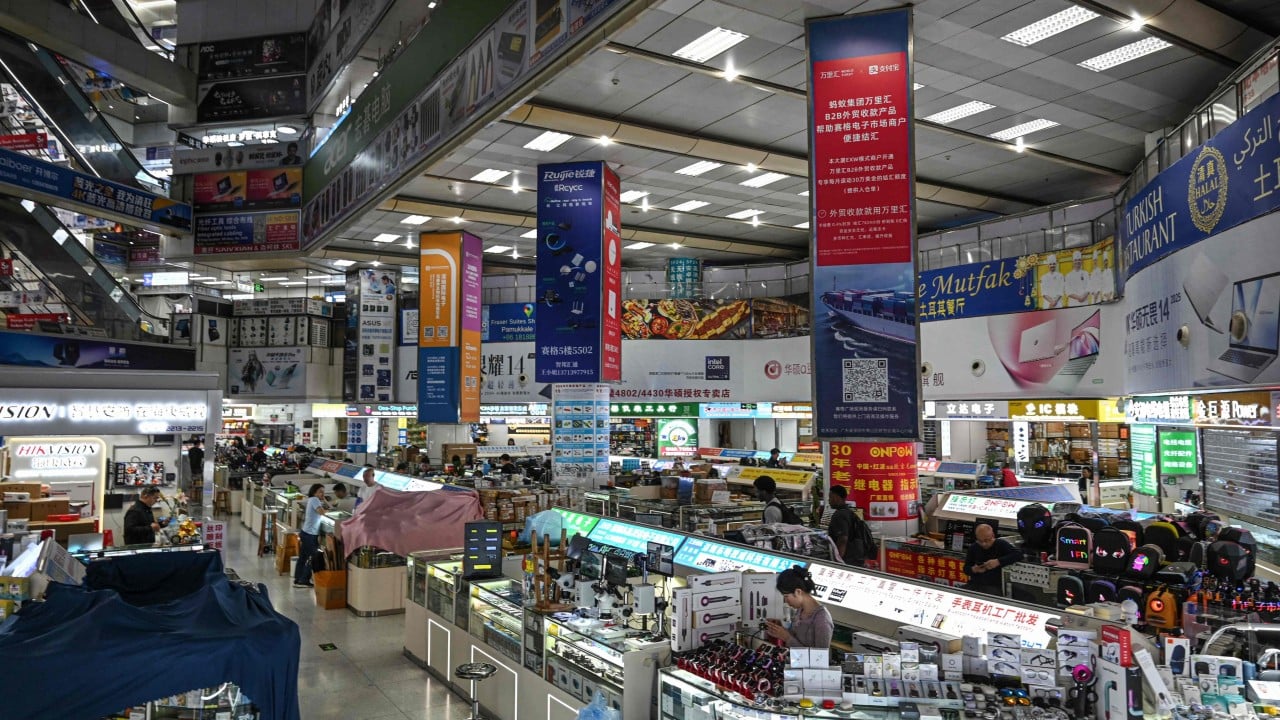
Walk through the narrow aisles of Shenzhen’s Huaqiangbei electronics market on a Tuesday afternoon, and the first thing that hits you is the sound. It is a chaotic symphony of tearing packing tape, the frantic clicking of calculator keys, and the low, anxious murmur of hundreds of simultaneous negotiations. This square mile of concrete and neon is the beating heart of the global electronics supply chain. If a gadget exists, its components passed through here.
But lately, the air inside the multi-story plazas feels different. Heavy.
Liang stands behind a counter no wider than a doorway, surrounded by towering stacks of plastic bins. For a decade, his business was simple: buy memory chips in bulk, sell them to local repair shops, smartphone refurbishers, and hobbyists, and take a modest cut. Today, his hands are empty. He spends his hours staring at a digital spreadsheet on his monitor, watching numbers fluctuate like a volatile stock market.
The memory chips Liang trades—specifically DRAM and NAND flash memory—are the invisible scaffolding of modern life. They are the digital cells that allow your smartphone to hold fifty apps open at once and keep your photos stored in physical reality. When they are abundant, nobody thinks about them. When they vanish, the entire tech ecosystem grinds to a halt.
Right now, they are vanishing. And the fallout is hitting the people at the very bottom of the chain first.
The Microscopic Chokepoint
To understand how a consumer crisis starts in a place like Huaqiangbei, you have to look at how these tiny squares of silicon are made. It is a process of absurd precision. Tech giants invest billions of dollars into pristine fabrication plants where even a single speck of dust can ruin a multi-million-dollar wafer.
Because the barriers to entry are so high, only a handful of massive conglomerates produce the vast majority of the world's memory. When those giants decide to shift production, freeze supply lines, or raise prices to recoup losses from previous market downturns, the shockwave travels at supersonic speed.
Consider a hypothetical smartphone repair technician named Chen, working out of a tiny booth three floors above Liang. Chen doesn’t buy directly from Samsung or SK Hynix. He relies on the secondary market. He relies on Liang.
Last month, a customer brought in a mid-tier smartphone with a dead flash memory module. A year ago, replacing that chip would have cost Chen roughly fifteen dollars, allowing him to charge the customer a fair price while making enough profit to buy dinner. Yesterday, Liang had to quote Chen forty-five dollars for the exact same component.
Chen had to call the customer and deliver the news. The customer chose to throw the phone away instead.
This is where the macroeconomic data meets human reality. When financial papers report a thirty percent spike in component costs, it sounds academic. In the stalls of Shenzhen, it means empty repair bays, broken promises, and regular people realizing that the digital lifelines they take for granted are suddenly fragile.
The Hoarding Epidemic
Scarcity breeds panic. Panic breeds bad behavior.
As supply tightened over the recent months, a whisper network rippled through the market. Rumors of impending factory shutdowns and export restrictions sent buyers into a frenzy. Independent traders who usually buy only what they can sell in a week started clearing out entire inventories, renting off-site storage units just to sit on boxes of memory chips.
They are gambling. If prices keep climbing, they become wealthy. If the market corrects overnight, they are ruined.
This artificial suffocating of the market has created a secondary crisis: counterfeiting. When desperate repair shops cannot find authentic, grade-A memory modules at prices their customers can afford, the temptation to cut corners grows irresistible.
Walk down the darker corridors of the market, away from the main glass displays, and you will see the extraction artists. These are workers using specialized heat guns to desolder old memory chips from salvaged, broken motherboards. They clean the pins, re-laser the brand logos onto the plastic casing, and sell them as new.
It is a phantom supply. These chips might work for a week, a month, or a year. But eventually, they fail. The teenager who saved up for six months to buy a refurbished gaming rig finds their screen suddenly going black. The gig worker relying on a second-hand phone for navigation loses their map in the middle of a delivery route. The trust that holds the informal tech economy together is cracking under the pressure.
The Cost of the Upgrade
We have conditioned ourselves to expect technology to get cheaper and more powerful every single year. It feels like a law of nature. It isn’t. It is the result of a fragile, highly optimized global pipeline that relies on every single gear turning perfectly.
The current memory crisis exposes the delusion of that expectation.
The problem isn't just that prices are high; it's that the volatility makes it impossible for small businesses to plan. Liang cannot afford to buy a shipment of chips today if there is a chance the price drops by half next Monday. He hesitates. The repair shops hesitate. The consumer waits.
Meanwhile, the major device manufacturers—the companies building the laptops and flagship phones you see in glossy advertisements—are insulated from the worst of it. They have long-term contracts and deep pockets. They absorb the costs or quietly pass them on to the buyer by raising the baseline price of the next model.
The people who get squeezed out are the ones who cannot afford to buy new. The student trying to stretch the life of an old laptop through college. The small-scale entrepreneur building low-cost smart home devices in their garage. The secondary market, which acts as a massive recycling ecosystem keeping millions of tons of e-waste out of landfills, is being choked of the oxygen it needs to survive.
The View from the Counter
As the afternoon sun begins to dip, casting long shadows across the concrete floor of the plaza, Liang finally closes his spreadsheet. He hasn't made a single major sale all day.
He reaches into a plastic bin and pulls out a single memory chip, barely larger than a fingernail. He holds it up to the light, turning it over to inspect the microscopic golden contacts on its underside. It weighs next to nothing. It looks like a piece of trash. Yet, the price of this tiny object currently dictates whether he can pay his rent this month, whether Chen can keep his repair booth open, and whether a customer thousands of miles away can afford to fix a broken device.
The global tech industry likes to talk about the cloud, about seamless digital experiences, and about a future without friction. But out here on the concrete floor, surrounded by the smell of burning solder and the sound of packing tape, the digital revolution feels entirely physical. It feels heavy, expensive, and devastatingly fragile.
Liang places the chip back into the bin, slides the glass door of his display shut, and locks it. Tomorrow, the calculators will start clicking again, and everyone will return to the floor, desperate to see which way the numbers move next.