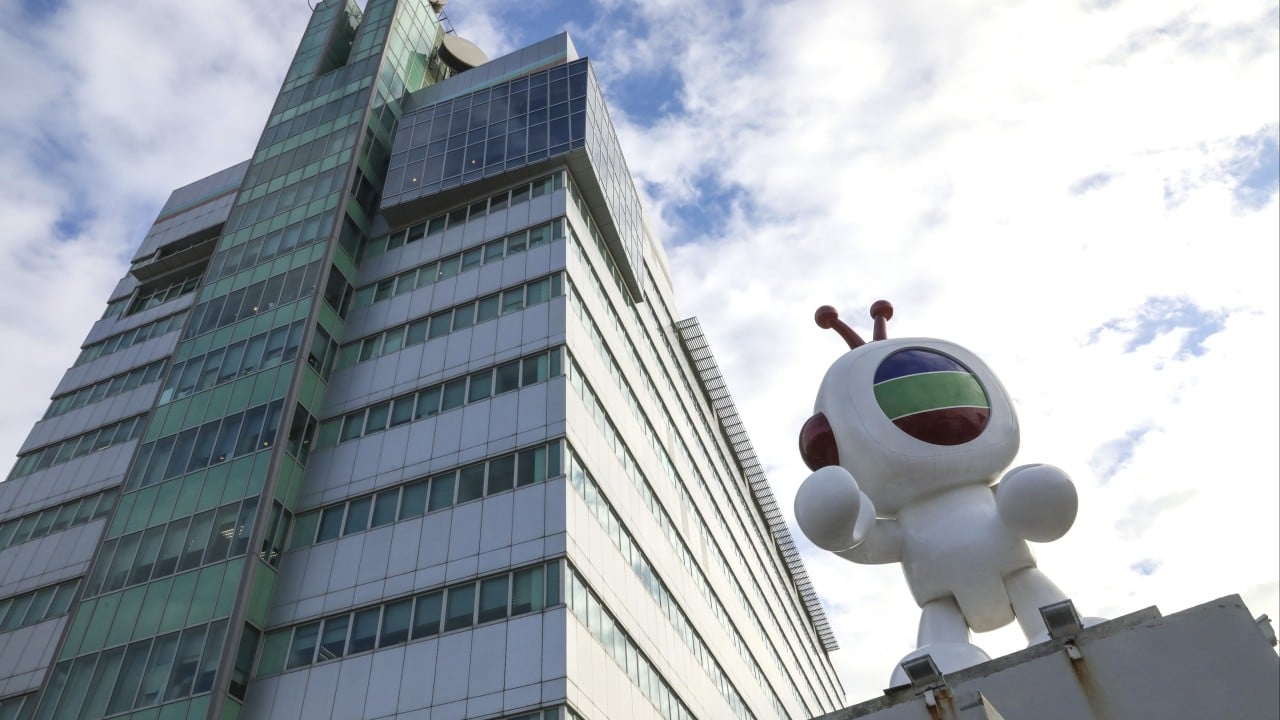
The green and red logo of Television Broadcasts Limited, or TVB, was once the steady heartbeat of every high-rise apartment from Kowloon to the New Territories. It wasn't just a station. It was the background noise of dinner, the shared language of the morning commute, and the dream factory for a city that defined Asian cool. But for seven long years, that heartbeat grew faint. The glow from the screen started to look more like a fading ember than a torch.
Money is cold, but the loss of it feels like a fever. Between 2018 and late 2023, TVB wasn't just losing cash; it was losing its grip on the cultural zeitgeist. The numbers were grim—a steady, downward slide into a deficit that eventually totaled hundreds of millions of dollars. To the accountants, it was a balance sheet nightmare. To the people of Hong Kong, it felt like the slow decline of an old friend who had forgotten how to tell a good story.
Then, the silence broke.
The announcement came with the sharp clarity of a bell: a net profit of HK$57 million, or roughly US$7.5 million, for the first half of 2024. It is a modest sum for a giant, perhaps. But in the context of seven years of bleeding, it is a resurrection.
The Ghost in the Studio
Imagine a veteran cameraman named Wah. He has spent thirty years on the Clearwater Bay and TVB City lots. He remembers the golden era when the Miss Hong Kong Pageant stopped traffic and "The Bund" made Chow Yun-fat a god. For the last several years, Wah has watched the catering budgets shrink and the star power dim. He has seen the younger generation trade the television remote for the smartphone, migrating to Netflix, YouTube, and the chaotic energy of social media.
Wah represents the "invisible stakes." When a cultural institution fails, it isn't just the shareholders who suffer. It is the craftspeople, the bit-part actors, and the very identity of a city that once exported its soul to the world via satellite. The deficit was a symptom of a deeper crisis: relevance.
The problem wasn't that people stopped watching screens. It was that they stopped watching that screen. The rise of streaming services and the fragmenting of the Cantonese-speaking audience meant TVB was fighting a war on a dozen fronts with a map that was twenty years out of date. The digital shift wasn't a "change in the landscape"—it was an earthquake that swallowed the old foundations whole.
Turning the Ship in a Storm
Survival required more than just cutting costs. It required a fundamental reimagining of what a broadcaster actually does in 2024. The turnaround didn't happen by accident, and it didn't happen through nostalgia.
Management had to make hard, unsentimental choices. They slashed operating costs by 16 percent, a move that often feels like pruning a tree so heavily you wonder if it will ever bloom again. They reduced the workforce, a painful reality that translates to empty desks and quiet hallways. Yet, cost-cutting alone only delays the end. You cannot save your way to growth.
The real spark came from looking North.
The mainland Chinese market is a vast, hungry ocean. By leaning into co-productions with Chinese streaming giants like Youku and Tencent Video, TVB found a way to fund the high-gloss dramas the local market could no longer support on its own. These aren't just broadcasts; they are collaborations. When a show like "The Queen of News" captures the imagination of viewers in both Hong Kong and Shanghai, the financial gravity shifts.
Suddenly, the "Hong Kong brand" became an export again.
The E-Commerce Gamble
There is a certain irony in a television station becoming a shopping mall. But for TVB, the integration of live-streaming commerce—specifically through platforms like Taobao—provided the liquidity they desperately needed.
Consider a hypothetical viewer named Mei. She grew up watching TVB dramas. Now, she spends her evenings on her phone. When she sees a familiar face from a long-running sitcom hosting a live-streamed sales event, the trust is already there. She isn't just buying skincare or electronics; she is participating in a digital version of the community TVB spent fifty years building.
This bridge between traditional content and modern commerce accounts for a significant portion of the revenue recovery. It is a pragmatic, perhaps even cynical, evolution. But it works. The company's e-commerce segment and its specialized content for the mainland market acted as a tourniquet for the losses.
The numbers tell the story of this pivot:
- Revenue from mainland China operations jumped by 22 percent.
- Co-production revenue surged by 40 percent.
- Total revenue reached HK$1.51 billion, a modest but crucial 3 percent increase that signaled the tide had finally turned.
The Weight of the Crown
Does a profit of $7.5 million mean the glory days are back? Not necessarily.
The struggle is far from over. The traditional advertising market in Hong Kong remains soft, a reflection of a broader economic cooling. Younger viewers are still elusive, their loyalty spread thin across a thousand different apps. TVB is no longer the only game in town; it is a legacy player fighting to prove it can still innovate.
The vulnerability of this recovery is palpable. One bad season, one failed partnership, or a further shift in regulatory winds could easily tip the scales back into the red. The leadership knows this. The staff in the canteen know this. There is a sense of relief, yes, but it is cautious. It is the breath you take after reaching the surface of the water, knowing you still have a long swim to the shore.
History shows that cultural icons rarely die suddenly. They fade. They become background noise until, one day, someone realizes they haven't thought about them in years. TVB was on that path. It was becoming a relic of a British-colony-turned-Special-Administrative-Region that no longer existed in the same way.
By shaking off seven years of losses, the station has bought itself something more valuable than $7.5 million. It has bought time.
The Light Stays On
Walk through the streets of Mong Kok at 8:00 PM. You will still see the blue light of televisions reflecting in the windows of older apartment blocks. You might hear the familiar theme song of a nightly soap opera drifting down to the sidewalk.
For the first time in a long time, that light represents a business that is actually solvent.
The human element of this story isn't found in the "synergy" of corporate strategy. It is found in the fact that a pillar of Hong Kong life decided it wasn't ready to go dark. The station adapted. It humbled itself. It looked for new ways to be useful to an audience that had moved on.
The profit is a symbol. It says that despite the rise of the internet, despite the changing political climate, and despite the sheer weight of seven years of failure, the story isn't over.
The neon sign is flickering, but it is still lit. And in a city that has seen as much change as Hong Kong, there is something deeply, strangely comforting about that.