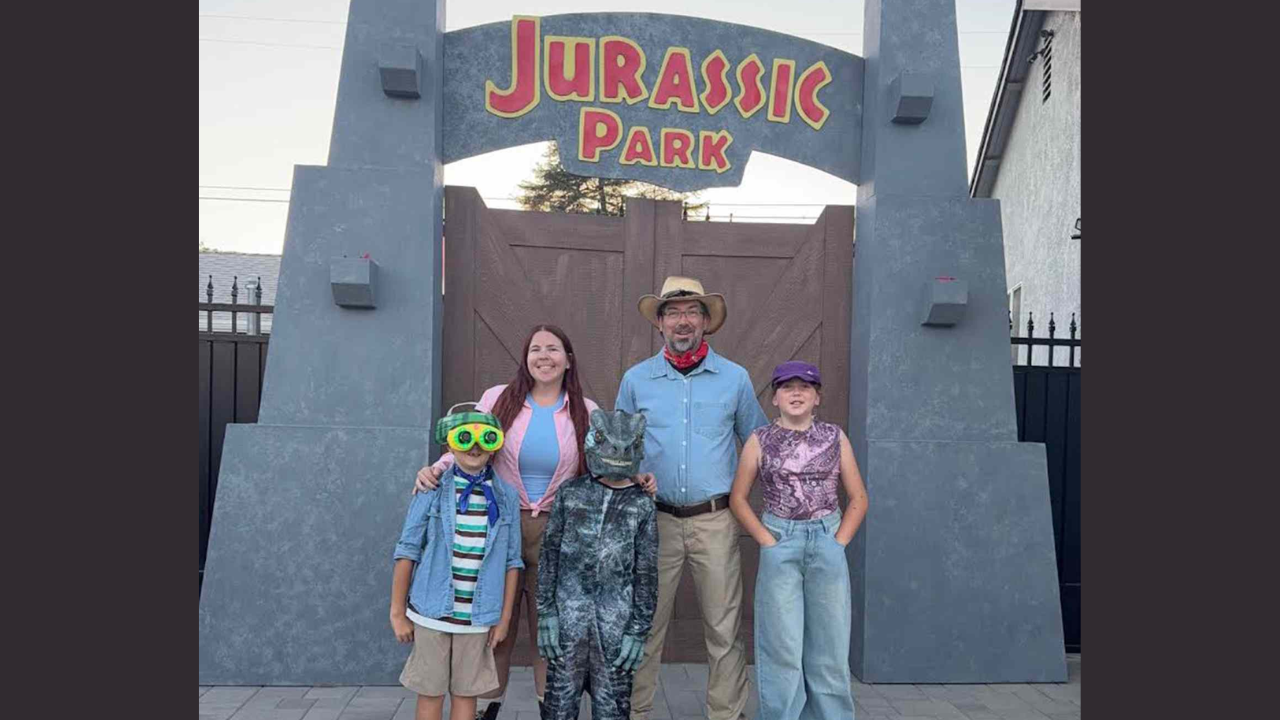
Every October, the same heartwarming story makes the rounds. A suburban family drops four grand and logs two hundred hours of sweat equity to turn their front lawn into a free Jurassic Park attraction. Neighbors cheer. Local news runs a thirty-second segment with upbeat music. Comment sections fill up with praise for "community spirit" and "DIY magic."
Spare me.
That story is not a triumph of grassroots creativity. It is a masterclass in misallocated capital, unpriced risk, and the most expensive kind of delusion in residential entertainment: thinking "free" means costless.
I have spent years watching brands, theme-park operators, and over-ambitious event producers blow six and seven figures on spectacles that looked great on a sizzle reel and broke down in the real world. Residential yard displays operate on the exact same physics and economics, just at a smaller scale and with worse insurance. When a California family puts $4,000 and 200 hours into a front-yard dinosaur build, the lazy consensus calls it wholesome fun. The sharper read is that they just built an unpermitted, high-foot-traffic venue on residential zoning without commercial guardrails.
The "Free" Illusion Nobody Prices In
Let's define our terms before we get carried away. In entertainment economics, variable cost is what you spend per visitor or per operating hour. Fixed cost is what you spend upfront before the first person walks past your mailbox. Opportunity cost is the value of the next-best thing you gave up to do what you did.
A headline that says "free Jurassic Park attraction" confuses admission price with total cost. Admission is zero. Everything else is a ledger entry.
Four thousand dollars in materials sounds modest until you factor in what happens outdoors over several weeks of sun, wind, dew, and curiosity. Foam degrades. Paint peels. Motors overheat. Extension cords get nicked. Wireframes bend when someone leans on them for a photo. Most DIY yard builds treat durability as an afterthought because the creator is racing a calendar date rather than engineering for repeated public contact.
Then comes the labor math. Two hundred hours is five full-time forty-hour workweeks. Even if you value your own time at a conservative $25 an hour, that is another $5,000 in unbilled labor. Put cash and time together and you are closer to $9,000 in real input—before replacement parts, electricity, and storage.
A free attraction isn't free when the bill arrives in sore knees, ruined weekends, and a garage full of oversized props with nowhere to go.
The deeper miss in the standard coverage is opportunity cost. Two hundred hours across a month or two is roughly three to six hours every single day. For a family, that is dinners eaten in shifts, kids' schedules bent around hot glue and PVC pipe, and leisure time converted into unpaid set-dress duty. Maybe that trade feels worth it in the moment. Fine. Call it a hobby with a steep price tag. Just stop pretending the price is zero.
What People Actually Ask About Backyard Spectacles
When a viral yard build hits social media, the questions that follow are predictable—and mostly aimed at the wrong target.
How can a family build a massive yard display on a budget?
They ask how to stretch dollars further. The better question is whether a front yard is the right medium for a large-scale build in the first place.
If you want maximum visual impact per dollar in a residential space, silhouette, lighting contrast, and sound beat raw scale every single time. A twelve-foot inflatable or a massive fiberglass prop eats up budget and storage while looking flat under harsh porch lights. Tightly controlled directional spotlights, fog in calm air, and a clean audio track with bass frequencies create perceived depth without requiring heavy structural rigging.
Budget discipline in set design comes from restraint, not heroics. Pick one focal point. Frame it cleanly. Leave negative space so the eye has somewhere to rest. When every square inch screams for attention, nothing commands it.
Is it legal and safe to draw crowds to a residential yard?
People ask this like a quick trivia check before firing up a fog machine. In reality, turning a quiet street into a destination changes the risk profile overnight.
Residential streets are designed for local traffic, parked cars, and occasional pedestrians—not evening bottlenecks of families looking at screens while walking toward a glowing dinosaur. Add uneven lawns, dark walkways, loose cables, and excited kids darting toward moving props, and simple oversight turns into a real hazard.
General homeowners insurance is built around standard household living and ordinary guests, not sustained public attraction traffic. I am not a lawyer and this is not legal advice, so check local ordinances and talk to a licensed insurer before inviting the neighborhood block by block. Still, anyone who assumes "it's Halloween, everyone's cool" is betting their peace of mind on strangers' behavior.
Why do some home displays go viral while others get ignored?
The conventional wisdom says bigger is better. Bigger is usually just more expensive.
Displays go viral when they hit a sharp emotional contrast—something absurdly detailed sitting inside an ordinary suburban context, paired with tight pacing and clear visual storytelling. A dinosaur peeking over a standard picket fence works because the suburban fence grounds the scale. A sprawling compound that fills every inch of grass often loses the contrast that made the idea funny or eerie in the first place.
The Theme Park Lesson Suburban Builders Miss
Heavy hitters in themed entertainment—people like Bob Weis, Joe Rohde, and the broader themed-attraction design tradition—have spent decades proving a simple rule: story and sightlines carry the experience, not raw square footage.
In commercial parks, designers obsess over forced perspective, line-of-sight control, and throughput. They know how guests move, where crowds clump, and what happens when a popular photo spot blocks a walkway. They also know that anything a guest can touch will eventually be pulled, climbed, or tested.
Imagine a scenario where two neighbors build displays on the same street. Neighbor A buys four giant pre-made creatures, scatters them across the lawn, and leaves every cord exposed so kids can walk right up to the bases. Neighbor B builds one dramatic centerpiece set back slightly from a clear walkway, uses warm-and-cool lighting contrast, hides all cables behind planted borders or protective mats, and sets clear boundaries where the display ends and the viewing zone begins.
Neighbor A gets chaos, tangled cords, and high wear-and-tear. Neighbor B gets clean photos, calmer traffic flow, and a setup that survives the whole season without nightly triage.
That is the nuance mainstream articles skip. They treat yard builds like pure art projects when they function like micro-venues. Art asks how it looks. A venue asks how people behave inside it.
Where My Contrarian Take Has Teeth—and Where It Can Fail
Let's be honest about the downside of looking at everything through cost, logistics, and risk management. Over-optimize the math and you can kill the joy that made the project matter in the first place.
Some families do not want efficiency. They want a shared obsession. They want the messy garage nights, the spray-paint fumes, the neighborhood kids knocking on the door asking if the T-Rex moves tonight. Forcing a cold cost-benefit spreadsheet onto a family tradition can strip away the exact friction that creates memories.
There is also a real distinction between a one-off passion project and an unsustainable annual escalation. Doing a big build once as a creative sprint is one thing. Feeling trapped into topping yourself every year until you resent October is another.
How to Build a Showstopper Without Losing Your Mind
If you want the thrill of an unforgettable yard display without turning your life into an unpaid operations desk, change how you plan from the ground up.
- Cap the hours before you buy a single board. Pick a hard ceiling—say, 60 hours total—and design to fit the clock. Scarcity of time forces smarter choices faster than extra cash ever will.
- Design for teardown on day one. Build in modular sections that unbolt, fold, or nest inside one another. A prop that takes ten hours to disassemble and store is a prop you will dread next year.
- Control the flow, not just the look. Keep walkways wide, well-lit, and free of trip hazards. Place high-interest focal points where people can see them clearly without stepping onto delicate wiring or landscaping.
- Spend on lighting and audio before extra props. Two well-aimed lights and crisp sound will out-perform a third or fourth static figure every single time.
- Set operating hours and stick to them. Turning lights off at a reasonable hour protects your sleep, your neighbors' patience, and your own sanity.
The Real Verdict on the "Free" Spectacle
A family spending $4,000 and 200 hours on a front-yard Jurassic Park build is a great human-interest hook. It is a terrible blueprint if you mistake the headline for the whole story.
Spectacle is easy to admire from a sidewalk. It takes discipline to build smart, run safely, and walk away still liking your yard.
Build something bold if you love the craft—just price the real cost before you make the first cut.