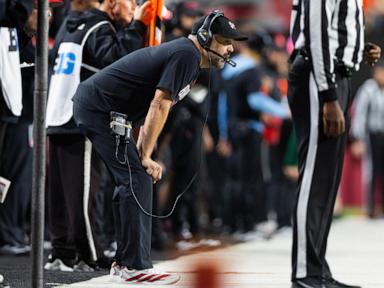
Nebraska travels to Ohio State carrying one of the heaviest active albatrosses in major college football, a multi-year losing streak against ranked opponents that stretches all the way back to the Mike Riley era. Oddsmakers have installed the Buckeyes as heavy home favorites, and on paper, the mismatch looks routine. Yet betting lines built purely on brand reputation and recent box scores often miss the underlying structural friction of Big Ten trench warfare, creating a narrow path where the Cornhuskers can either cover a massive spread or pull off a program-altering shock.
You do not survive thirty years covering Midwestern football without learning to separate historical ghosts from actual schematic matchups. Ghosts do not tackle. Ghosts do not miss assignments on counter trey, and ghosts certainly do not throw interceptions into cover-two shells. When a losing streak reaches the ten-year mark, however, the psychological weight ceases to be a media talking point and becomes an operational reality inside the building. Every third-and-seven in the fourth quarter starts carrying the baggage of twenty-plus previous failures.
The Anatomy of a Ten-Year Collapse
To understand why Nebraska has failed to beat an Associated Press Top 25 opponent since September 2016, you have to look beyond bad luck and examine systemic roster construction. Over the past decade, Lincoln became a revolving door of offensive philosophies. The program lurched from pro-style concepts under Riley to spread-option tempo under Scott Frost, before finally settling into Matt Rhule's physical, developmental blueprint.
You cannot build Big Ten depth when your recruiting classes are constantly reset every thirty-six months. While Ohio State stacked five-star defensive linemen and blue-chip receivers in contiguous cycles, Nebraska suffered catastrophic attrition in the middle of its roster. Games against top-tier opponents are rarely lost in the first quarter. They are lost in the final ten minutes when a team's second-string defensive tackle has to play twenty snaps against an offensive line that averages 315 pounds and rotates fresh bodies on every series.
Consider the sheer statistical absurdity of the drought. Since beating a ranked Oregon squad in 2016, the Huskers have dropped more than two dozen consecutive contests against ranked foes. Many of those losses were not blowouts. They were one-score heartbreakers defined by late turnovers, botched special teams snaps, and red-zone stalls. That specific brand of failure leaves a scar. When a roster expects something to go wrong against superior talent, minor adversity triggers panic rather than adjustment.
Rhule was hired specifically to burn that culture down. His track record at Temple and Baylor proves he understands how to turn soft, fragmented rosters into disciplined physical units by year two or three. The question heading into Ohio Stadium is whether structural progress in Lincoln has finally caught up to the elite athleticism waiting in Columbus.
Why Oddsmakers Price Ohio State at a Premium
Setting a point spread for an Ohio State home game is one of the most thankless jobs in Las Vegas. The public bets the Buckeyes blindly, forcing sportsbooks to inflate the number by three to four points just to balance their liability. That inflation is where sharp bettors make their living, provided they can stomach backing an underdog walking into the Horseshoe.
Ohio State's roster construction remains the gold standard of the sport, rivaled only by a handful of programs in the Southeastern Conference. Their offensive model relies on creating vertical stress through elite perimeter speed while punishing light boxes with a downhill zone-run scheme. When defensive coordinators drop seven or eight defenders into coverage to prevent explosive plays, the Buckeyes simply hand the ball off and take six yards a pop until the safety creeps back toward the line of scrimmage.
Defensively, Columbus has undergone an aggressive philosophical shift over the past few seasons. Gone are the passive, bend-but-don't-break alignments that left them vulnerable to physical ground attacks. They now operate with a hyper-aggressive front seven designed to wreck timing in the backfield before a quarterback can hit his third step.
- Perimeter Isolation: Ohio State forces opposing cornerbacks into single coverage without safety help, daring them to survive against future first-round NFL draft picks.
- Interior Disruption: Their defensive tackles shoot gaps rather than merely eating blocks, blowing up pullers on power and counter runs.
- Third-Down Exoticism: On passing downs, they disguise simulated pressures, dropping defensive ends into passing lanes while sending nickel backs off the edge.
Against a team lacking elite offensive tackle play, that defensive front turns a football game into a four-quarter car crash.
Where the Trench Math Actually Favors the Underdog
If Nebraska is going to snap the streak—or at least make the fourth quarter uncomfortable for a stadium of over 100,000 people—it will not happen because they out-athlete Ohio State on the perimeter. It will happen because they shorten the game and turn it into an ugly, low-possession brawl.
Football math is brutally simple when an underdog faces a superior roster. If both teams get twelve possessions, the team with better players wins ninety-five percent of the time. Talent wins over large sample sizes. If you can compress the game down to eight or nine possessions per side, variance enters the chat. One tipped pass, one fumble on a wet turf, or one busted coverage suddenly represents a massive percentage of the game's total scoring opportunities.
Nebraska's defensive architecture is actually well-suited to frustrate rhythm-based passing attacks, provided their front four can generate pressure without blitzing. By utilizing odd-man fronts and dropping eight defenders into layered zone coverages, the Huskers force quarterbacks to be patient. Young or overly aggressive quarterbacks hate patience. They want the twenty-five-yard post route, and when it is covered, they sometimes force throws into underneath linebackers sitting in throwing windows.
The Quarterback Calculus
Everything in Lincoln hinges on quarterback play that protects the football. During the darkest years of the losing streak, Nebraska did not just lose to ranked teams; they handed those teams short fields through catastrophic turnovers. A single strip-sack inside your own thirty-yard line against Ohio State is effectively a death sentence.
To survive in Columbus, the Huskers must execute a disciplined short-to-intermediate passing game that functions as an extension of the run. Quick-game concepts, tunnel screens, and tight end seams keep the chains moving without exposing the offensive tackles to five-second pass-rush reps against elite edge defenders. If Nebraska stays ahead of the chains—facing third-and-three instead of third-and-nine—they neutralize Ohio State's most dangerous defensive weapon, which is their ability to pin their ears back in obvious passing situations.
The Overlooked Variable of Special Teams and Field Position
Analysts love breaking down quarterback mechanics and cover-three match principles, yet massive upsets in the Big Ten are routinely decided in the kicking game. When you are a three-touchdown underdog on the road, you cannot afford to give away forty yards of hidden yardage on punt returns or miss makeable field goals at the end of twelve-play drives.
If Nebraska marches seventy yards down the field, eats seven minutes off the clock, and walks away with zero points because of a shanked thirty-eight-yard kick, the psychological damage is fatal. The defense jogs back onto the field exhausted, knowing their offense just burned a quarter of the game for nothing.
Conversely, a punter who can consistently flip the field and pin Ohio State inside its own ten-yard line changes the geometry of the entire afternoon. Driving ninety yards against a disciplined Big Ten defense requires twelve to fourteen plays of flawless execution. Even the best offenses in college football routinely stall when forced to string together that many positive snaps without a holding penalty or a dropped pass.
Betting the Number Versus Betting the Narrative
When evaluating this matchup from a handicapping perspective, you have to divorce the point spread from the outright winner. Too many casual observers conflate "Nebraska can cover" with "Nebraska will win." Those are two entirely different propositions.
Ohio State possesses a distinct fourth-quarter gear that few programs can match. Even when an underdog plays inspired, physical football for forty-five minutes, the talent gap tends to manifest violently in the final period. A 17-10 game with ten minutes remaining can easily balloon into a 31-10 final score after one tired linebacker misses a tackle in space and a twenty-yard gain turns into a seventy-yard touchdown.
For bettors, the decision comes down to how you value Nebraska's defensive floor. If the Huskers can stop the run on early downs without committing an extra safety to the box, they have the defensive personnel to keep the Buckeyes well below their season scoring average. In a game projected to finish in the low forties, taking more than two touchdowns with a physical defense carries immense mathematical value.
What Happens If the Streak Actually Dies
The ramifications of a Nebraska victory in Columbus extend far beyond the Big Ten standings. College football runs on perception, and perception dictates recruiting momentum. Right now, opposing coaches walk into living rooms across the Midwest and tell four-star prospects that Nebraska is a graveyard for top-tier talent—a place where players go to lose heartbreakers and miss bowl games.
A win over a top-five Ohio State team on the road obliterates that pitch overnight. It validates Rhule's slow-burn rebuild, proves that developmental toughness can still beat star ratings, and injects immediate belief into a fanbase starved for relevance. More importantly, it frees the locker room from the weight of a decade of failure that current players had nothing to do with creating.
The Brutal Reality of November in the Big Ten
History does not care about moral victories, and neither do the people paying seven-figure salaries in Lincoln. Playing Ohio State close for three quarters before fading in the fourth will earn polite applause on Sunday morning radio shows, right before the loss gets added to the exact same streak.
To end a ten-year drought against ranked teams, a program cannot wait for the favorite to hand them the game. Favorites at home rarely beat themselves. Nebraska has to walk into the Horseshoe, absorb Ohio State's best early punches without flinching, and force the Buckeyes to win a fistfight in the mud during the final five minutes. Until the Huskers prove they can deliver the final blow in a fourth-quarter knife fight, every trip into the top-25 arena remains an uphill climb against their own shadow.


