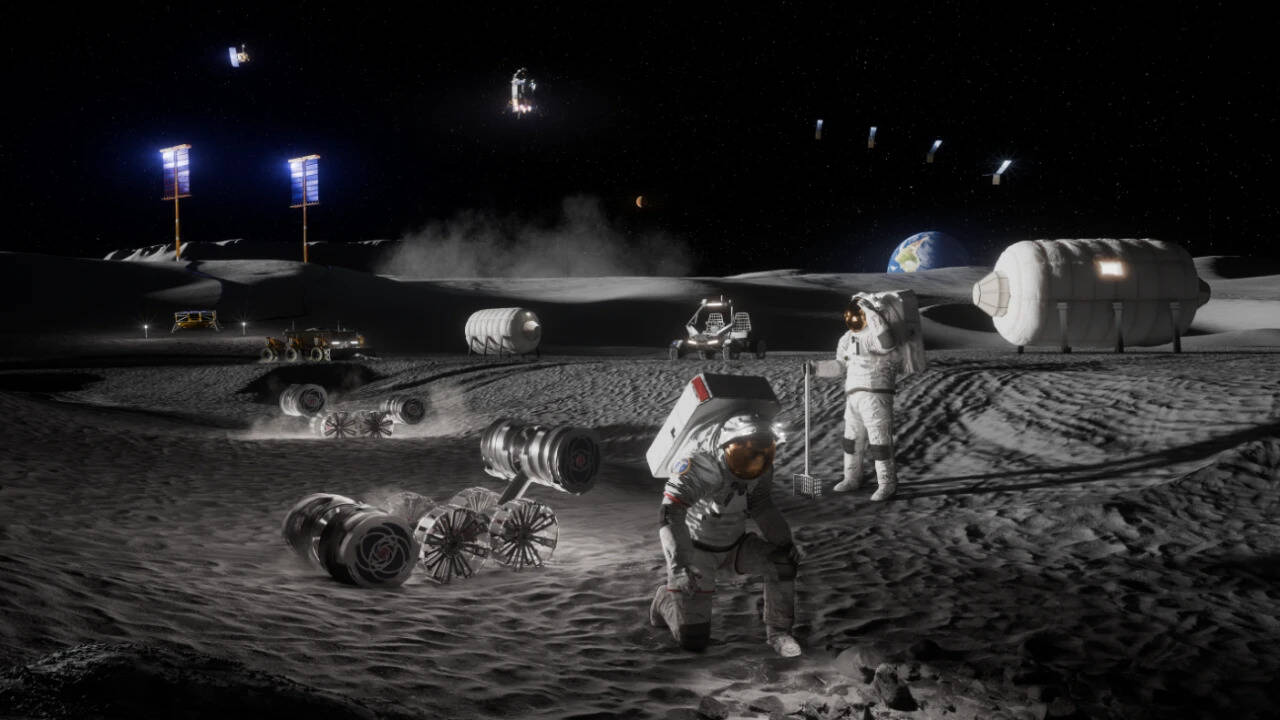
Every few months, the aerospace press corps falls over itself to celebrate another federal student prize. The script never changes. NASA announces a seven-figure purse—this time, a $1 million Moon Base Student Challenge aimed at US high school and college teams—and commentators immediately frame it as the ultimate equalizer for young engineering talent.
They are missing the real story.
Having spent years watching hardware startups burn through millions in seed capital trying to translate academic prototypes into flight-qualified systems, I can tell you what a million-dollar prize pool split across dozens of finalists actually buys. It buys cheap intellectual property for the federal government and an expensive resume line for students who already attend well-funded schools. It does not solve lunar habitation.
If you are an educator, a student engineer, or an aerospace recruiter looking at this challenge, stop treating it like a golden ticket to the Artemis program. Treat it for what it really is: a high-stakes procurement filter disguised as a science fair.
The Math Behind the Million-Dollar Mirage
Headline numbers create lazy narratives. One million dollars sounds massive when you read it in a press release. Then you divide it.
Federal prize competitions like NASA’s Centennial Challenges or Artemis student initiatives never hand a single check to one grand winner. The purse gets sliced across multiple phases, categorical tracks, high school divisions, collegiate divisions, and honorable mentions. By the time a winning university team clears Phase 2 or Phase 3, they are lucky to walk away with $50,000 to $150,000.
Now look at the burn rate of actual aerospace hardware.
A single roll of flight-grade Kapton tape costs hundreds of dollars. Machining a custom titanium bracket to survive thermal vacuum testing eats thousands. Running a modest cleanroom setup or renting time on a shake table to simulate launch vibrations will wipe out a $50,000 prize before the prototype even leaves campus.
I have watched brilliant university capstone teams build remarkable terrestrial rovers and habitat mockups, only to realize that the prize money did not even cover the travel costs for twenty students to haul the hardware to a NASA field center for judging. The financial shortfall gets absorbed by university endowments, corporate sponsors, or the students' own credit cards.
When an institution with a billion-dollar engineering endowment enters a student competition, they are not competing for the prize money. They are subsidizing their own R&D lab to buy prestige. Meanwhile, a public high school or an underfunded community college team—the exact demographics these press releases claim to champion—hits a brick wall the moment the competition moves from CAD drawings to physical fabrication.
Why Simulated Lunar Dirt Lies to Young Engineers
The technical trap of student habitat challenges lies in the testing environment. You cannot replicate the Moon in a university gymnasium, and pretending otherwise teaches bad engineering habits.
Most lunar base challenges evaluate teams on structural modularity, radiation shielding concepts, life support loops, or autonomous regolith handling. On Earth, teams test these systems in ambient air, under 1G gravity, using crushed basalt or commercial lunar regolith simulants like JSC-1A or LHS-1.
Here is the problem with earthly simulants: they are chemically and mechanically polite compared to the real thing.
Real lunar regolith has never been weathered by wind or water. Every microscopic grain is a razor-sharp shard of fractured glass and mineral, electrostatically charged by solar wind. When Apollo astronauts walked on the Moon, that dust shredded the outer layers of their pressure suits, destroyed vacuum seals on sample containers, and caused "lunar hay fever" inside the cabin.
When a student team builds a habitat airlock or a rover wheel in a campus lab, their seals hold fine against terrestrial basalt dust. The motors keep spinning. The bearings stay clean. Judges award points for a working mechanism. In reality, that exact mechanism would seize within four hours at the lunar South Pole.
Furthermore, thermal management on the Moon breaks every intuition students develop on Earth. In a campus lab, heat dissipates naturally through air convection. On the Moon, there is no air. A habitat sitting in permanent shadow near Shackleton Crater plunges to minus 240 degrees Celsius, while a surface exposed to direct sunlight bakes at over 120 degrees Celsius. Conduction and radiation are your only tools.
By rewarding prototypes that function in Earth’s atmosphere without forcing teams to solve vacuum outgassing, electrostatic dust mitigation, and extreme cryogenic thermal cycling, these competitions train students to optimize for the wrong physics. They learn to pass a rubric, not to survive a vacuum.
Who Actually Wins When NASA Crowdsources Ideas?
To understand why NASA runs these challenges, you have to look at federal acquisition law rather than educational philanthropy.
Under the America COMPETES Reauthorization Act, federal agencies gained broad authority to run prize competitions. Traditional procurement—writing a Request for Proposals (RFP), vetting defense contractors, negotiating cost-plus contracts, and managing compliance—takes years and costs tens of millions of dollars just in administrative overhead.
Prize challenges bypass that bureaucratic slog entirely.
NASA puts $1 million on the table and receives hundreds of architectural concepts, mass-balance spreadsheets, and novel structural geometries from thousands of unpaid student hours. Even when 95 percent of the submissions are unbuildable, the remaining 5 percent contain clever packaging tricks, unconventional origami folding patterns, or fresh software architectures that seasoned aerospace engineers—trapped in legacy thinking—might overlook.
Notice the fine print in almost every federal challenge rulebook: while teams generally retain intellectual property rights to their inventions, the government almost always secures a non-exclusive, nontransferable, irrevocable, paid-up license to practice or have practiced the invention for federal purposes.
In plain English, NASA gets a free look at hundreds of creative engineering approaches for a fraction of what it pays a single mid-tier aerospace consultant for a six-month feasibility study.
There is nothing unethical about this structure—taxpayers actually get a fantastic return on investment—but calling it a charitable boost for students misses the mark. It is crowd-sourced ideation at bargain-basement rates.
What Recruiters and Investors Actually Look For
If you ask hiring managers at SpaceX, Blue Origin, Rocket Lab, or Axiom Space how they view a NASA student challenge win, you will get a sharp dose of reality.
A trophy from a student competition gets a resume past the initial HR keyword filter. That is where its power ends.
When an engineering director interviews a candidate from a winning team, they do not care about the trophy. They immediately start looking for failures. They want to know what broke during testing, how the candidate diagnosed the root cause, and what trade-offs they made when the budget ran dry.
I have sat across from candidates who led award-winning student aerospace teams and watched them crumble in technical interviews because they spent nine months optimizing a PowerPoint deck for NASA judges instead of running destructive tests on their hardware. Conversely, I have hired engineers whose teams finished dead last in national competitions because their prototype caught fire during integration—and they spent the next three weeks tearing down the telemetry, redesigning the power distribution board, and proving why their fix worked.
The aerospace industry is drowning in paper studies. We have enough PowerPoint lunar bases to cover the Sea of Tranquility twice over. What the industry lacks is engineers who understand manufacturing tolerances, supply chain lead times, and the brutal reality of hardware integration.
Questions Students and Educators Should Be Asking Instead
Before committing an entire academic year and tens of thousands of dollars in department funds to a NASA moon base challenge, teams need to dismantle the standard playbook and ask harder questions.
Is a physical prototype actually necessary to win?
Often, no. Many multi-phase challenges front-load scoring around systems engineering, mass-budget justification, and risk mitigation matrices. Teams waste months trying to 3D-print flashy scale models when a rigorous, peer-reviewed thermodynamic simulation and a verifiable bill of materials would score higher with the actual engineers grading the rubric. Build hardware only when the rules explicitly demand physical testing—and keep it ugly, modular, and easy to instrument.
Does this competition teach commercial viability or government dependency?
Traditional NASA challenges optimize for mission success regardless of unit economics. Commercial space companies optimize for cost per kilogram and manufacturability. If a student team designs a lunar habitat wall using exotic aerospace alloys that require five-axis CNC machining for every panel, they might win a design award, but they have built a dead-end product. True innovation in space habitation right now looks like inflatable soft-goods architectures (similar to Sierra Space’s LIFE habitat) or autonomous sintering of raw regolith—approaches that slash launch mass.
How do underfunded schools compete without a machine shop?
Stop trying to out-build MIT, Purdue, or Georgia Tech in structural hardware. You will lose on capital expenditure every time. Instead, pivot entirely to software, autonomy, or human-factors simulation. Writing a fault-tolerant environmental control algorithm or developing a machine-vision system that identifies hazardous boulders in low-angle polar lighting requires laptops, open-source physics engines (like Gazebo or Unreal Engine), and raw mathematical grit. A three-person high school team with strong coding skills can humiliate a forty-person university hardware team on software reliability.
The Downside of Skipping the Pageantry
To be clear, walking away from these competitions entirely carries its own risks.
Despite their structural flaws, NASA student challenges remain one of the few mechanisms that force multidisciplinary collaboration in an academic setting. Real aerospace engineering is a constant war between departments: the propulsion team wants more volume, the thermal team wants more surface area, the avionics team wants more power, and the structural team wants less mass.
Classroom problem sets never teach students how to negotiate those compromises. A deadline-driven federal challenge does. Furthermore, for students outside traditional aerospace hubs, simply getting in front of NASA program managers creates networking pathways that cold-applying on job boards never will.
The mistake is not participating. The mistake is believing the marketing.
How to Play the Game Without Getting Played
If you are going to enter NASA’s Moon Base Student Challenge, treat it like a ruthless startup sprint rather than an academic exercise.
- Audit the rubric for engineering weight. Strip away the outreach requirements and flashy video production until the final week. Spend 80 percent of your energy on the specific technical metrics that carry the highest point multipliers—usually mass efficiency, power consumption, and fault recovery.
- Design for the brutal constraints of the lunar South Pole. Ignore generic lunar equator assumptions. Base your power and thermal math on the 14-day lunar night or the grazing, low-angle sunlight of the polar peaks. Cite real data from the Lunar Reconnaissance Orbiter (LRO) to ground your environmental assumptions. Judges spot generic Wikipedia physics instantly.
- Document your failures relentlessly. Keep an engineering log of every cracked weld, fried voltage regulator, and failed pressure test. When you present to the review board, lead with the data from what broke and how you redesigned around it. Nothing signals real engineering maturity faster than empirical failure analysis.
- Own your supply chain. Do not spec components with 16-week lead times from boutique aerospace vendors. Use commercial off-the-shelf (COTS) industrial parts, test them to destruction, and prove mathematically why they survive your safety factors.
NASA’s $1 million challenge will produce plenty of smiling press photos, inspiring local news segments, and glossy university alumni magazine covers. Just remember that on the Moon, nobody cares who won the trophy. The vacuum only checks your math.


