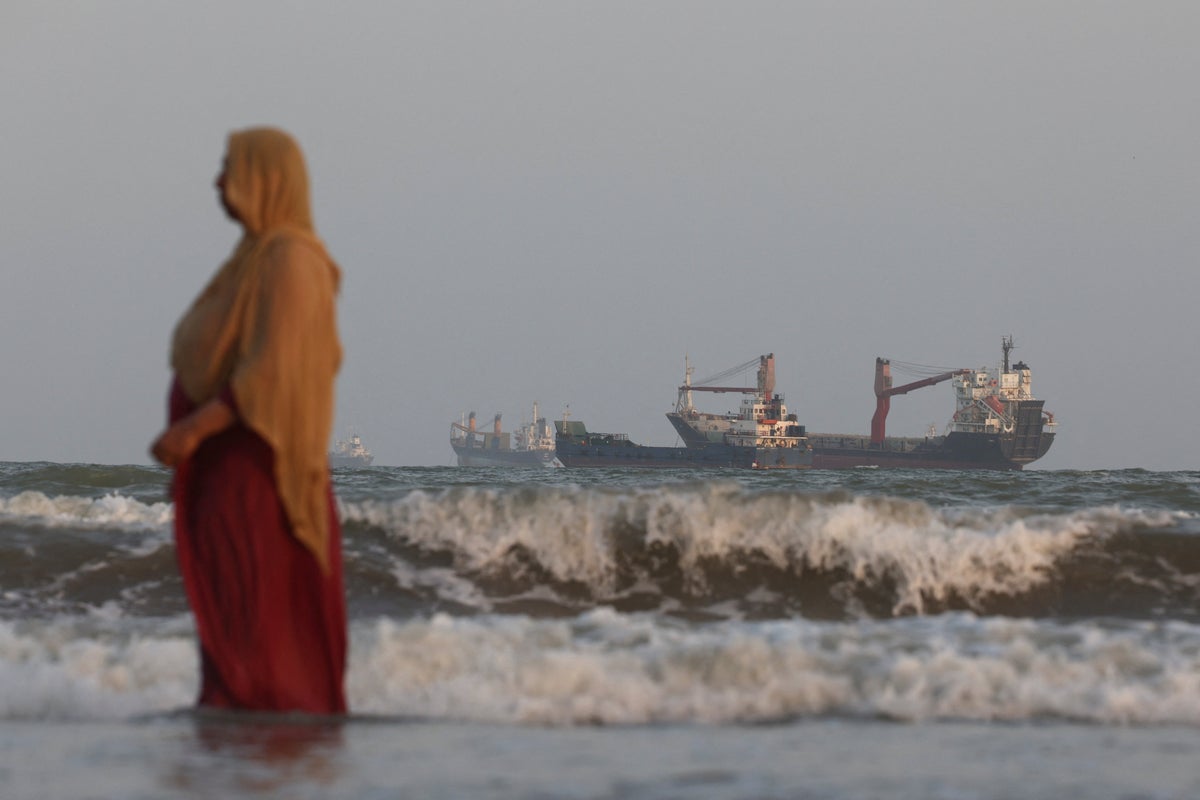
Salt air sticks to the skin like a second coat. Out on the deck of an oil tanker idling just outside territorial limits, the horizon looks entirely peaceful. The water is a flat, blinding sheet of turquoise under a merciless sun. A gull drifts lazily on an updraft. Nothing moves. Everything is still.
Yet down in the engine room, or miles away in the tense, fluorescent-lit glow of a command center, the atmosphere tastes like copper and adrenaline. Don't miss our earlier coverage on this related article.
We forget how fragile the machinery of daily life actually is until someone threatens to turn the valve.
Consider the Strait of Hormuz. On a map, it is just a thin blue thread, a crooked bottleneck squeezing the Persian Gulf into the wider ocean. But through this narrow slit of water passes roughly a fifth of the world's petroleum supply. Every single day, massive steel leviathans laden with crude slip through a channel so narrow that a single miscalculation, a single blocked passage, can send shockwaves that instantly register at every gas pump, grocery store, and heating plant across the globe. To read more about the context of this, USA Today offers an in-depth summary.
Right now, that thread is being pulled tighter than it has been in years.
In Tehran, officials are hunched over drafting tables and secured terminals, quietly compiling a strict list of conditions. They are drawing up the rules of engagement, outlining precisely what it would take for them to keep the strait open, or conversely, what might prompt them to snap it shut. It is a bureaucratic exercise with apocalyptic stakes. Every clause is weighted with leverage. Every sentence is a potential trigger.
Across the globe, the response is measured in tons of gray steel and suppressed panic. Washington is reacting to the shadow of a potential Iran-US war with familiar choreography. A new warship, bristling with radar arrays and interceptor missiles, cuts through the Arabian Sea, churning white foam in its wake. It is a visual language spoken in the universal idiom of deterrence. We are here, the ship declares to the horizon. Do not test the line.
But deterrence is a delicate psychological game played by people who rarely have to pay the direct cost of losing.
Let us be honest about what this feels like for the people whose livelihoods depend on that water. (As a hypothetical scenario representing the reality of thousands, consider Captain Miller, a career mariner with twenty years on the water). Miller stands on the bridge of his vessel, staring at his radar screen. He is not a politician. He does not care about the grand strategic chess match playing out between capitals thousands of miles apart. He cares about his crew. He cares about the thirty souls eating dinner in the mess hall below. He cares about whether the insurance rates on his hull have just spiked past the point of profitability, and whether the gray shape appearing on his starboard bow belongs to a friendly patrol or something far more dangerous.
When nations posture, ordinary people adapt or break.
The tension in the Middle East is often described in sterile terms by pundits who treat conflicts like board games. They talk about supply chains, geopolitical positioning, and strike capabilities. They use sanitized jargon to mask the raw terror of escalation. But the truth is much simpler and much heavier. It is about fear. It is about the mother in Tehran watching inflation eat away at her savings as sanctions bite deeper. It is about the family in Ohio watching the nightly news while wondering if their son, currently deployed on that very aircraft carrier, is about to become a statistic in a war nobody truly wants.
War rarely starts with a massive explosion. It starts with a series of small, unyielding calculations. One side draws a line in the sand. The other side steps across it just to prove they can. A ship refuses to halt for inspection. A warning shot is fired. Radios crackle with static and misinterpretations. Before anyone has time to reconsider, the momentum of anger takes over, rolling forward like an avalanche down a dry mountain.
Tehran’s drafting of conditions is an attempt to exert control over that chaos, or perhaps to weaponize it. By outlining demands regarding regional security, economic access, and political recognition, Iranian leadership is signaling that the door to diplomacy is not entirely locked, but the key is turning very slowly. They want terms. They want guarantees. They want the world to acknowledge their presence and their grievances before a single shot shatters the morning calm.
Meanwhile, the arrival of the new American warship serves notice that Washington refuses to negotiate under the threat of a blockade. It is a classic standoff born of mutual distrust. Both sides are terrified of appearing weak, which paradoxically drives them to take actions that make a catastrophic clash more likely.
History is littered with the wrecks of crises just like this one. In 1914, leaders in Europe blundered into a world war because they were trapped by their own timetables and mobilizations, unable to back down without losing face. They were prisoners of momentum. Today, the weapons are infinitely more destructive, but the human psychology remains distressingly identical. We build systems too complex to manage, and then we stand back and watch them wobble.
There is a profound disconnect between the abstract nature of modern strategy and the concrete reality of human vulnerability. When we talk about closing the Strait of Hormuz, we are talking about starving economies of energy. We are talking about factories halting production, cargo ships sitting idle in stagnant bays, and the cost of simply living climbing beyond the reach of the working poor.
Yet, standing on that tanker deck, looking out over the water, the water doesn't care about politics. The sun sets with the same indifferent brilliance whether peace holds or breaks.
The diplomats will meet. The cables will hum with coded messages. The warships will prowl the dark water, their sonar pulses pinging silently through the depths, searching for ghosts. And somewhere in the middle of it all, the world holds its breath, waiting to see if common sense will finally pierce the fog of pride.
The horizon remains quiet. For now.


