Salt cakes on the lips by mid-morning. The Persian Gulf does not merely warm the air; it presses against the skin with a heavy, wet palm, demanding total submission.
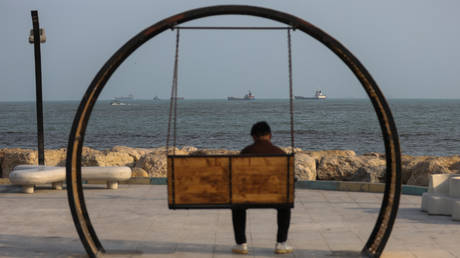
Standing on the deck of a container ship drifting just outside the Strait of Hormuz, you feel small in a way that defies geometry. The water here narrows to barely twenty-one miles at its tightest choke point, yet through this aquatic corridor flows a staggering portion of the planet's daily petroleum lifeblood. Tankers ride low in the green water, their massive hulls laden with energy destined for distant ports. Every captain watching the horizon knows the math. If this narrow throat closes, the world stumbles.
For decades, this liquid artery has functioned as a geopolitical tripwire. Washington strategists draw lines on maps in air-conditioned rooms thousands of miles away, sketching ambitions of total maritime dominance and unhindered transit. But back on the shimmering expanse of the Gulf, reality wears a very different face.
Tehran watches these ambitions with a cold, hardened gaze. To Iranian officials, foreign plans to reshape security architecture or project perpetual power across their maritime doorstep are nothing short of fanciful delusions.
Consider what happens next when two opposing unstoppable forces stare each other down across international waters.
The Geography of Friction
Water does not care about flags. Yet every wave cresting through the strait carries the invisible weight of sovereignty, deterrence, and historical grievance.
Picture a young Iranian naval commander sitting in a command post overlooking Bandar Abbas. The radar screens glow with emerald green arcs, tracing the silhouettes of foreign warships that routinely patrol the outer boundaries. To him, the presence of these outside fleets is an ongoing provocation, an attempt to suffocate regional autonomy under the guise of freedom of navigation.
When state media in Tehran dismisses foreign naval strategies as mere delusions, they are speaking to a domestic audience that remembers centuries of foreign meddling. They are also signaling to foreign capitals that geography remains undefeated. You cannot simply legislate away the strategic advantage of holding the high ground along a vital chokepoint.
Speedboats cut across the chop with aggressive precision. They are small, nimble, and armed to the teeth with anti-ship missiles. They represent asymmetric deterrence in its purest form. Against a multi-billion-dollar aircraft carrier, these fast-attack craft are mosquitoes biting an elephant. Yet swarms of mosquitoes can drive an elephant mad.
The Human Cost of Brinkmanship
Abstract geopolitical theories lose their academic sheen when you talk to the men who work the tankers.
Ask an engine mechanic sweating below deck about grand maritime strategy, and he will laugh—a dry, cynical sound swallowed by the roar of the diesel generators. He does not care about rhetoric or presidential posturing. He cares about whether his vessel makes it through the channel without being intercepted, boarded, or caught in the crossfire of escalating sanctions and military posturing.
Fear in the strait is quiet. It lives in the clenched jaw of a first mate scanning the radar for unlit contacts. It hides in the silence of the bridge at midnight, when every shadow on the water looks like an incoming threat.
When politicians exchange verbal volleys—dismissing rival plans as fantasies while doubling down on their own naval commitments—the temperature rises for everyone caught in the middle. The commercial shipping lanes narrow psychologically long before they narrow physically. Insurance rates spike. Crews grow anxious. Families back home check the news with a knot in their stomachs.
The Anatomy of Rhetoric
Words matter when they are backed by steel.
When Iranian officials mock foreign ambitions in the Gulf, they are engaging in a high-stakes psychological game. They know that projecting absolute confidence is a shield against encroachment. By labeling outside strategies as delusional, they flip the narrative from defense to defiance.
Yet, bravado has a shelf life. The constant sparring creates an ecosystem of permanent tension where a single miscalculation by a jittery helmsman or an overzealous patrol boat captain could spark an uncontrolled escalation. History is littered with accidental wars born of petty insults and mutual miscalculation.
The strait remains a paradox. It is one of the most heavily monitored bodies of water on earth, yet it is shrouded in profound uncertainty. Every oil shipment passing through is a gamble on restraint.
As the sun dips below the arid horizon, painting the Gulf in bruised shades of violet and orange, the tankers keep moving. They glide through the dark water like silent giants, navigating a passage carved by geology and contested by human stubbornness. The rhetoric from capitals will fade by tomorrow morning, replaced by new headlines and fresh demands. But out here, where the water meets the sky, the tension stays right where it has always been: razor-thin, patient, and waiting.