Salt crusts on the windshield before dawn.
Out here, twenty-one miles wide at its absolute skinniest point, the Persian Gulf narrows into a bottleneck that dictates whether factories in Düsseldorf spin their wheels or rust in silence. Most people on earth live their entire lives without knowing the name of this water. They flip a light switch, they fill a tank, they buy a plastic toy shipped across oceans, completely insulated from the physical geography of their own survival. You might also find this connected article insightful: The Structural Mechanics of Refugee Repatriation A Critical Analysis of Sri Lankas New Border Framework.
Consider a man named Captain Tariq. This is a hypothetical portrait built from the daily reality of dozens of maritime pilots who guide twelve-hundred-foot mega-containerships and oil supertankers through the dark. Tariq does not think about geopolitics when he stands on the bridge at 3:00 AM. He thinks about currents. He thinks about the narrow separation lane—just two miles wide for inbound traffic, two miles for outbound, divided by a virtual median strip monitored by radar and quiet threats.
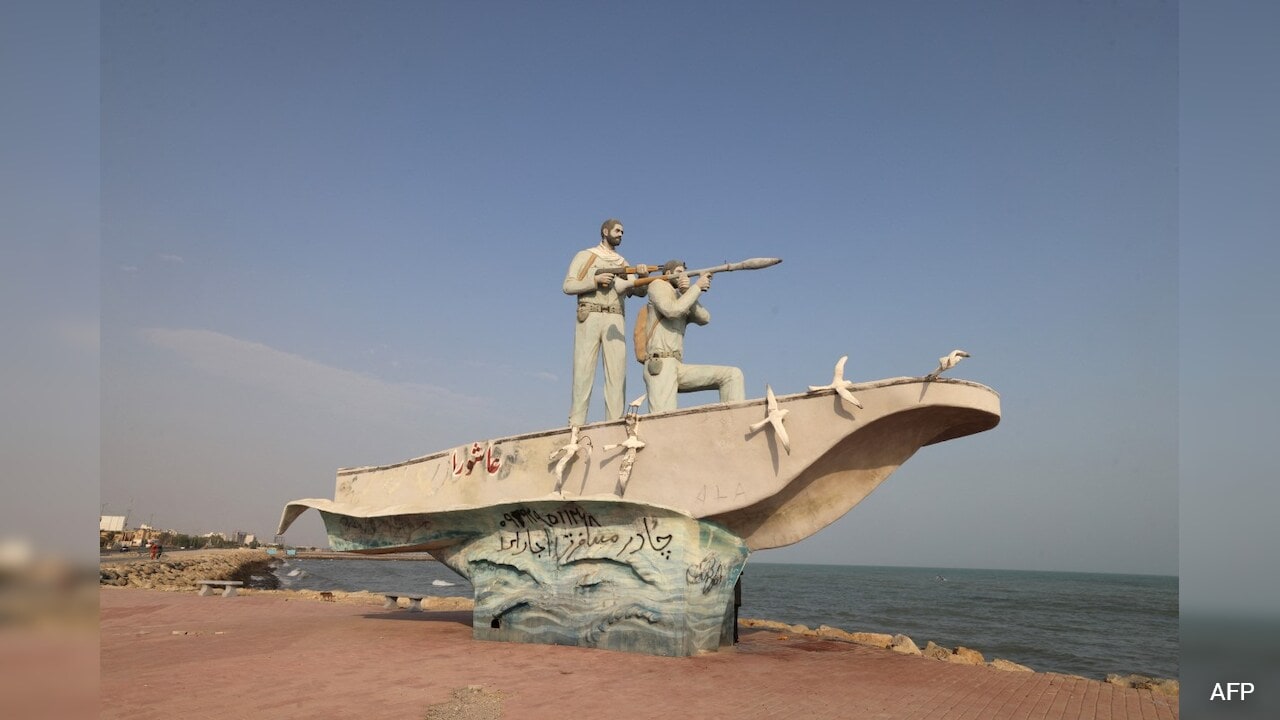
He knows that on either side of his steel leviathan lie waters patrolled by the Islamic Revolutionary Guard Corps Navy. Fast-attack craft, low to the water, bristling with machine guns and rocket launchers, riding the chop like water-striders. For decades, Tehran held a monopoly on tension here. They could rattle a sabre, seize a stray tanker over a bureaucratic dispute, and watch insurance rates on global shipping spike by millions of dollars overnight. As discussed in latest coverage by Reuters, the results are significant.
Control, historically, is a matter of perceived menace.
But the math of geography is shifting beneath the surface.
To understand why that control is slipping, you have to look past the political posturing and stare at a map of pipelines. For years, the Strait of Hormuz was an absolute choke point because it was the only door out of the Gulf. If you pumped oil in Iraq, Kuwait, Qatar, or the United Arab Emirates, your liquid wealth had to pass through this narrow gap, running the gauntlet past Iranian shores.
Tehran knew this. The world knew this.
Then came the bypass.
The Habshan-Fujairah oil pipeline sliced across the sands of the UAE, carrying crude straight to the Gulf of Oman, bypassing the Strait entirely. Saudi Arabia expanded its East-West pipeline to shunt millions of barrels safely to the Red Sea. Slowly, quietly, the absolute necessity of the choke point began to bleed out. When a bully loses their exclusive monopoly on the hallway, their lunch-money tax starts to fail.
Iran is discovering a brutal modern truth. Power derived purely from geography has an expiration date once engineering finds a way around it.
Yet the physical geography remains terrifying.
I remember talking to an insurance underwriter in London years ago, a man whose entire office smelled of old paper and damp wool. He pulled up a digital map of the Gulf, his finger tracing the thin red line of the traffic separation scheme. He didn't talk about missiles. He talked about risk percentages. War risk premiums. The fraction of a cent added to a barrel of Brent crude that ripples outward until a loaf of bread in Chicago costs a few cents more.
"The Strait doesn't need to be closed to be weaponized," he told me, tapping the glass of his screen. "It just needs to look dangerous enough that men hesitate."
Hesitation is expensive.
For forty years, hesitation was Iran's primary export. A fleet of speedboats buzzing a U.S. Navy destroyer was never meant to win a naval war; it was designed to create a headline. Headlines crash markets. Crashed markets force diplomatic concessions. It was a cheap, highly effective geopolitical hedge fund.
But the architecture of global energy has changed, and Tehran's options have narrowed.
The rise of North American shale oil radically altered the baseline of global dependency. While Asian markets still rely heavily on Gulf crude, the systemic shock value of a threatened tanker has diluted. Furthermore, the relentless global march toward alternative energies, however stuttering and uneven, introduces a long-term existential dread for petro-states. When your entire national budget relies on a resource that the rest of the world is desperately trying to phase out, alienating your remaining customers with chronic maritime piracy becomes a suicidal luxury.
Worse still for Tehran, the military asymmetry is catching up.
For generations, asymmetric warfare—swarms of small boats, coastal anti-ship missiles, underwater mines—gave a regional power the ability to punch far above its weight against a conventional superpower. But technology metastasizes in both directions. Today, maritime patrols are backed by persistent drone surveillance, AI-driven anomaly detection, and allied naval coalitions that treat the Gulf not as a distant frontier, but as a transparent fishbowl.
Every radar signature is logged. Every spoofed GPS signal from a darkened tanker is instantly mapped. The element of shadowy, deniable disruption is eroding. You cannot hide a hostile seizure in an era where commercial satellites photograph ships down to the rust streaks on their hulls in real time.
We are watching the twilight of a specific kind of geopolitical leverage.
When a nation builds its identity on being the gatekeeper of a vital global artery, losing that status is not just an economic blow; it is a psychological crisis. The speedboats still patrol. The rhetoric on state television remains sharp-edged and defiant. But the ships keep moving. The pipelines keep pumping around the corner. The world is learning to hold its breath less deeply when passing through the shadow of the southern Zagros Mountains.
Captain Tariq steps out onto the bridge wing, wiping the salt spray from his eyes as the first bruised purple line of dawn breaks over the Omani coast. The water ahead is wide, busy, and indifferent to the grand strategies of capitals thousands of miles away. A dozen tankers move in orderly files, silent giants ignoring the noise on the radio, sliding steadily out into the open sea.