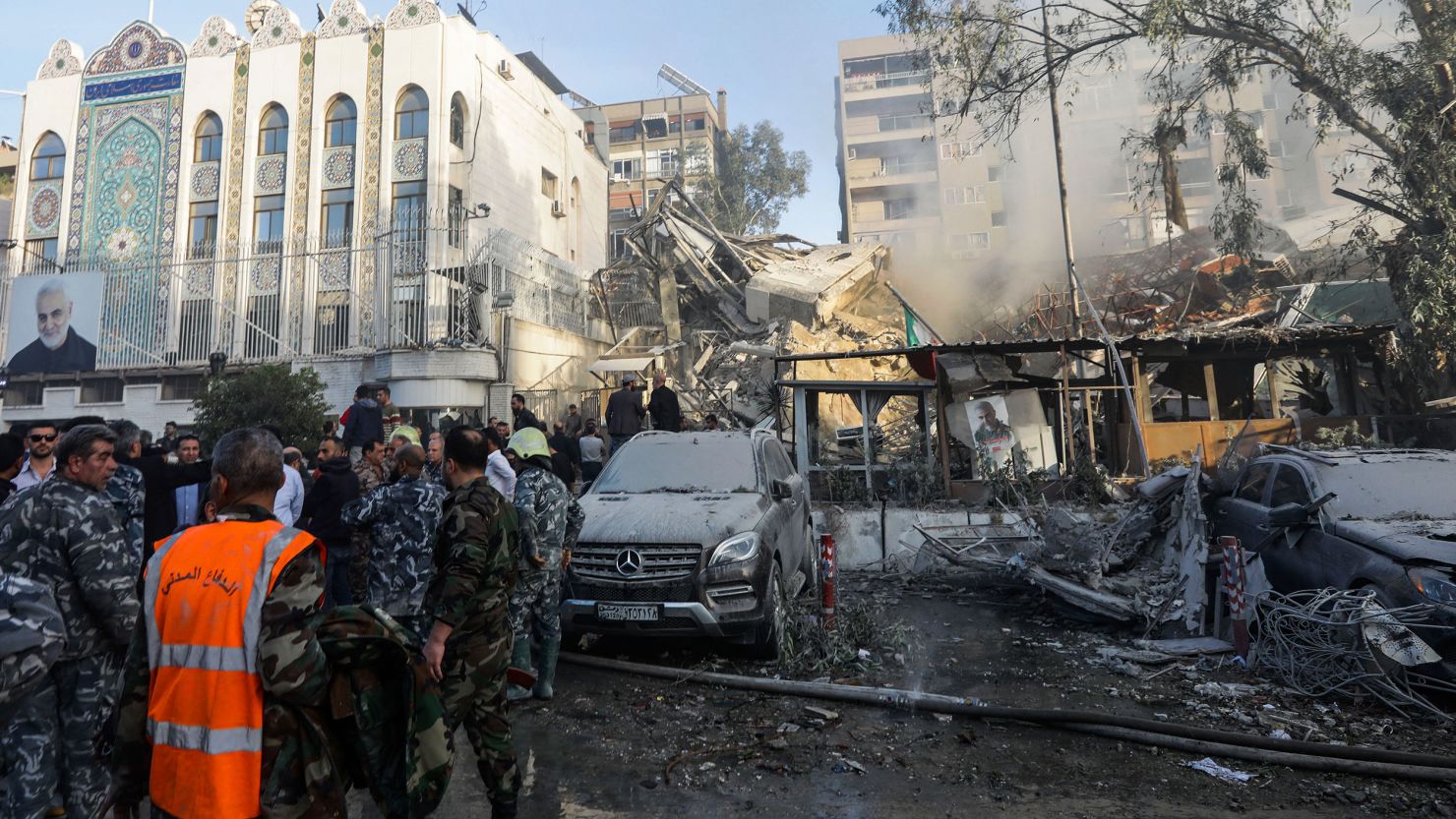
Digital footage is the new high-yield explosive. When a video surfaces of an Iranian woman recording the exact moment a missile strikes, the internet doesn't just watch it—the internet weaponizes it. The mainstream media outlets are currently tripping over themselves to frame this as a raw, accidental moment of human tragedy. They want you to believe you are seeing the unvarnished "truth" of modern warfare.
They are lying to you. Or, at the very best, they are being incredibly naive.
What you are witnessing isn't an accident. It is the evolution of the Asymmetric Information Front. In a world where every smartphone is a sensor and every citizen is a potential broadcaster, "raw footage" has become the most manufactured commodity on the planet. If you think that video ended up on your feed because of a series of organic shares, you don't understand how the modern attention economy fuels geopolitical signaling.
The Aesthetic of Authenticity
We have been conditioned to equate low resolution with high truth. If a video is shaky, vertical, and ends in a deafening static pop, our brains categorize it as "real." The legacy media treats these clips like digital relics, but they fail to account for the selection bias of survival.
Think about the physics. For a video of a direct hit to reach a global audience, several highly specific technical hurdles must be cleared:
- The device must survive the initial blast wave.
- The storage media (likely flash memory) must remain intact under extreme thermal stress.
- The file must be successfully uploaded to a cloud server or extracted by someone who survived the same radius.
When a video like this goes viral, it isn't just a recording of an event; it is a survivor of a rigorous digital Darwinism. By focusing on the tragedy of the individual in the frame, we ignore the broader tactical reality: these videos are curated by state and non-state actors to generate specific emotional outcomes. In this case, the goal is to trigger a "Rally 'Round the Flag" effect or to solicit international condemnation. The "victim" in the video is real, but the distribution of the victim's final moments is a calculated act of information warfare.
Stop Asking if it is Real and Start Asking Why it is Here
The "People Also Ask" sections of search engines are currently flooded with queries like "Is the Iranian woman's video real?" or "Who filmed the US-Israel attack?"
These are the wrong questions. Whether the pixels are real is secondary to why those pixels were pushed to your specific demographic.
I have spent years analyzing how data flows through conflict zones. I have seen footage suppressed by algorithmic blackholes when it doesn't fit a narrative, and I have seen mediocre clips boosted into the stratosphere when they serve a purpose. This Iranian footage serves a dual purpose: it humanizes a target for one side while providing "battle damage assessment" (BDA) for the other.
In intelligence circles, we call this Open Source Intelligence (OSINT) Crowdsourcing. When a civilian uploads a video of a strike, they aren't just sharing their grief; they are providing the attacking force with a free, high-definition confirmation of their coordinates and the efficacy of their ordnance.
The "lazy consensus" of the media is to frame this as a "human interest story." The cold, hard reality is that it is a telemetry report disguised as a tragedy.
The Logistics of the "Direct Hit"
Let’s talk about the math of the strike itself. To understand why these videos are often misinterpreted, we have to look at the intersection of kinetic energy and digital latency.
A standard cruise missile or high-speed interceptor travels at supersonic speeds. By the time the sound of the incoming projectile reaches the microphone of a smartphone, the physical impact has often already occurred or is milliseconds away.
$$v = \sqrt{\frac{\gamma RT}{M}}$$
When you calculate the speed of sound $v$ relative to the velocity of modern precision-guided munitions (PGMs), you realize that what the viewer sees as a "sudden" hit is actually the camera recording the visual flash before the processor can even register the audio.
The media focuses on the "gasp" or the "scream." The industry insider focuses on the latency. If there is a delay between the flash and the cut, the camera wasn't hit; the sensor was just overwhelmed by the lux output. Most of these "direct hit" videos are actually near-misses where the shockwave kills the recording device's connection. By selling these as direct hits, the media heightens the drama while lowering the public's understanding of how modern weaponry actually functions.
The Ethics of the Algorithm
We need to address the "virtue signaling" of the viewer. You aren't "bearing witness" by watching a woman die in 4K. You are participating in a feedback loop that encourages more people in conflict zones to put themselves in danger for the sake of the "perfect shot."
The incentive structure is broken.
- The Creator: Thinks a viral video will bring aid or attention.
- The Platform: Profits from the massive spike in engagement and "doomscrolling."
- The State: Uses the footage to justify escalation or claim victimhood.
The downside to my contrarian view is obvious: it feels cold. It feels like I'm stripping the humanity away from a horrific event. But the alternative is worse. The alternative is a world where we are perpetually manipulated by the "Aesthetic of the Raw." If we don't start viewing these videos with the same skepticism we apply to state-run television, we are effectively letting the algorithm dictate our foreign policy.
Your Feed is a Battlefield
If you want to actually understand what is happening in the US-Israel-Iran triangle, stop watching the "top-down" news cycles. Stop clicking on the videos that make you feel an immediate, visceral punch to the gut. That is exactly what the distributors want.
Instead, look for the data the media ignores:
- Flight Radar 24 logs: Watch the tankers, not the missiles.
- Maritime shipping rates: If the "attack" was as devastating as the video suggests, why didn't insurance premiums for tankers in the Strait of Hormuz spike by 400%?
- Satellite SAR imagery: Compare the "viral" impact zone with Synthetic Aperture Radar data. Half the time, the "destroyed building" in the viral clip is standing perfectly fine twenty-four hours later.
The Iranian woman's video isn't a window into the war. It is a mirror reflecting our own desire for a simplified, emotional narrative in a conflict that is terrifyingly complex and calculated.
Stop being a consumer of war-porn and start being an analyst of information flow. The next time a "shaky cam" video hits your timeline, don't share it. Don't "like" it. Dissect it. Ask who benefits from your emotional reaction. Because in the theater of modern war, the most dangerous weapon isn't the missile—it's the device in your hand.
Delete the app. Read a map. Look at the logistics. Everything else is just theatre.