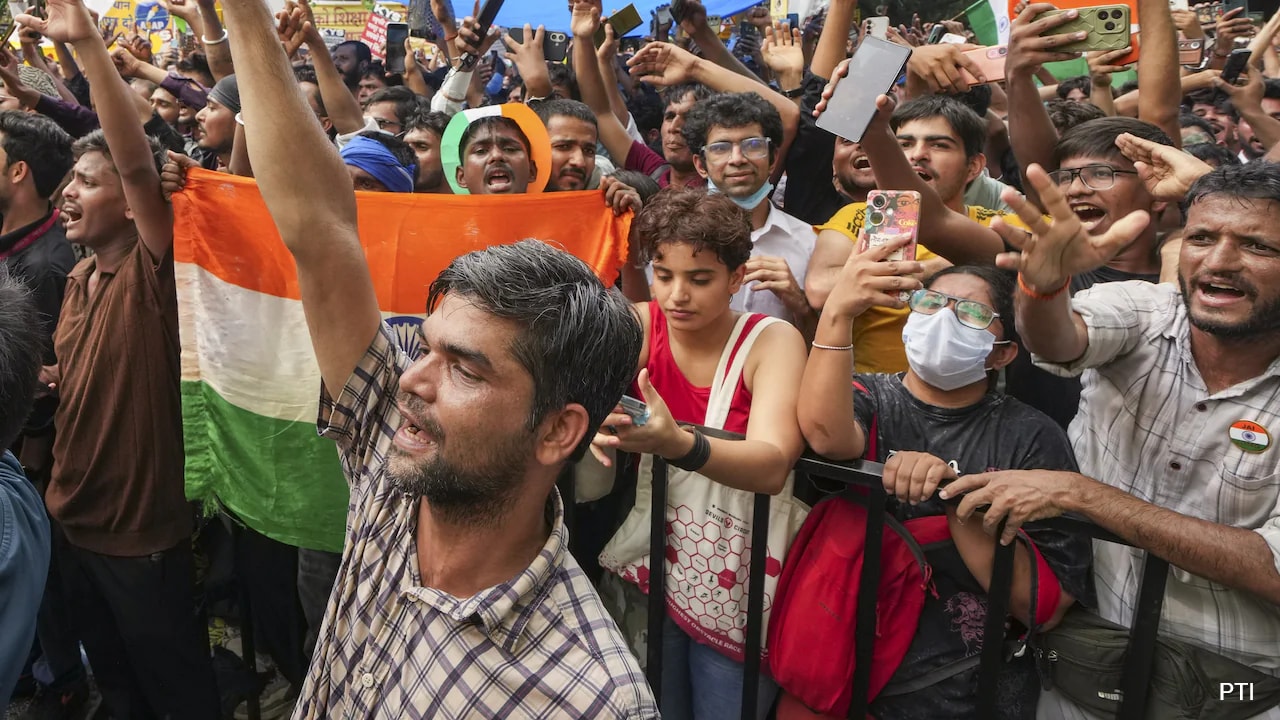
When the U.S. Treasury Department issued a thirty-day "temporary waiver" allowing Indian refineries to process Russian crude already at sea, it was framed in Washington as a benevolent gesture of alliance management. To Kamal Haasan, the veteran actor-turned-politician and Rajya Sabha MP, it sounded more like an eviction notice for Indian sovereignty. Haasan’s public directive to President Donald Trump—"mind your own business"—is not merely a rhetorical flourish from a cinema legend. It is a sharp rejection of a growing trend in American foreign policy that treats the energy security of sovereign nations as a series of revocable permissions.
The friction point is simple but deep. Washington claims it is "allowing" India to bypass sanctions to stabilize a global market rattled by the spiraling conflict between the U.S., Israel, and Iran. India, meanwhile, maintains that it never asked for permission to begin with. By framing the trade as a "waiver," the Trump administration has inadvertently signaled that it views Indian trade policy as something within the jurisdiction of the U.S. Treasury. This is the precise nerve Haasan struck when he asserted that India no longer takes orders from "distant foreign shores."
The Illusion of Permission
The term "waiver" implies a rule that has been bypassed. In the reality of global energy markets, however, India’s reliance on Russian oil is a structural necessity rather than a legal exception granted by a third party. Throughout 2025 and into early 2026, Russia has remained India’s primary supplier of crude, even as the U.S. attempted to squeeze Moscow’s revenues through secondary sanctions and aggressive tariff threats.
Earlier this year, the Trump administration leveraged a 25% "penalty" on Indian goods to coerce New Delhi into reducing its Russian intake. It worked, for a moment. Imports from Russia dipped in January 2026 as Indian refiners looked toward Iraq and the United States to fill the gap. But the outbreak of hostilities in West Asia changed the calculus. With the Strait of Hormuz effectively closed and nearly 40% of India’s crude imports suddenly at risk, the "discounted" Russian barrels already on the water became a lifeline.
Washington’s decision to issue a thirty-day waiver was a pragmatic response to a looming supply shock, yet the language used by Treasury Secretary Scott Bessent—suggesting India was "allowed" to accept the oil—stripped the transaction of its sovereign dignity. Haasan’s intervention highlights a fundamental disconnect: the U.S. sees a strategic concession; India sees an insult to its autonomy.
Strategic Autonomy Under Pressure
India has spent decades perfecting the art of "strategic autonomy," a policy of refusing to join formal military blocs while maintaining functional relationships with competing superpowers. This balancing act is currently facing its most severe test since the Cold War.
- Diversification vs. Dependency: India has expanded its sourcing from 27 to 40 different countries. This isn't just about price; it's about making the country "sanction-proof."
- The Russian Fulcrum: Despite Western pressure, Russian crude accounted for over 70% of India's import value in the first half of 2025. It is the bedrock of the Indian refining industry, which in turn exports refined products back to Europe.
- The Domestic Pressure: With domestic fuel prices rising and the cost of living becoming a primary political battleground, no Indian government can afford to shut off the cheapest available tap.
Haasan’s letter to Trump was not just an individual outburst. It reflected a broader sentiment within the Indian political establishment, from the ruling BJP to the opposition Congress. When Rahul Gandhi echoed similar sentiments, it became clear that while Indian domestic politics is fractured, the consensus on foreign interference is rock-solid. The message to the White House is clear: India’s energy policy is dictated by the needs of 1.4 billion people, not the strategic priorities of the Beltway.
The Cost of the West Asia Crisis
The current waiver exists only because the U.S. finds itself in a bind. The conflict with Iran has pushed oil prices toward the $100 mark, and the closure of the Strait of Hormuz has created a logistical nightmare for Asian refiners. If the U.S. were to strictly enforce sanctions on Russian oil now, it would trigger a global inflationary spiral that would hurt the American consumer as much as the Indian one.
The 30-day window is a band-aid on a gaping wound. It authorizes transactions for oil "already on the water" before March 5, 2026, but it offers no long-term clarity for what happens when those tankers are empty. The U.S. Treasury is betting that the Iran conflict will de-escalate or that American production will surge enough to replace Russian volumes. Both are risky bets.
A New Era of Transactional Diplomacy
The Trump administration’s approach to India has been overtly transactional. The "Historic" trade deal touted earlier this year was predicated on India switching its energy allegiance from Moscow to Houston. However, energy infrastructure isn't a light switch. Refineries are tuned to specific grades of crude, and supply chains are built on years of diplomatic groundwork.
Haasan’s critique goes beyond oil. It addresses the "how" of modern diplomacy. By treating an ally like a subordinate that requires "permission," the U.S. risks alienating the very partners it needs to contain other global rivals. Mutual respect, as Haasan noted, is the only foundation for lasting peace. Without it, every waiver becomes a point of resentment, and every trade deal looks like a shakedown.
India has demonstrated that it is willing to walk away from the table if the terms involve a surrender of sovereignty. The Supreme Court of the United States recently ruled against some of the administration’s more aggressive tariff strategies, providing New Delhi with a temporary legal reprieve. But the underlying tension remains. India is no longer a "developing" nation looking for guidance; it is a global power looking for a seat at the head of the table.
The era of taking orders from "distant foreign shores" ended decades ago. The faster Washington realizes that a "waiver" is not a gift, but a recognition of reality, the better the chances for a stable partnership.
Would you like me to analyze the specific economic impact of the Strait of Hormuz closure on India's 2026 GDP growth projections?