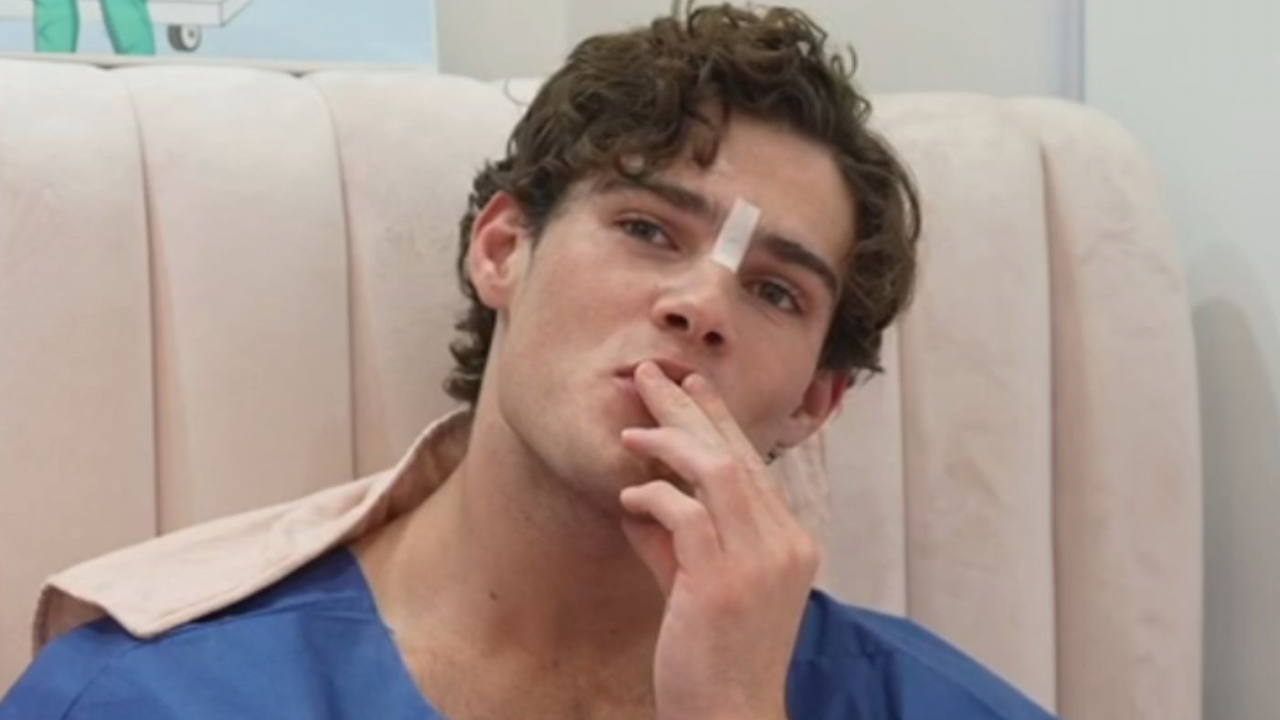
Shia LaBeouf has pleaded guilty in an Orleans Parish criminal court to three misdemeanor counts of simple battery following a chaotic, violent outburst during New Orleans’ Mardi Gras festival. The plea, entered on June 3, 2026, stems from a February 17 incident outside the Royal Street Inn and R Bar in the Faubourg Marigny neighborhood. The actor received a two-year probation sentence, mandated alcohol rehab, anger management, and sensitivity training. He avoids a six-month jail term only if he completes these terms. His legal team quickly categorized the violent event as a minor bar tussle.
The defense strategy follows a familiar public relations blueprint designed to minimize destructive behavior. By framing a shirtless, aggressive assault involving homophobic slurs as an ordinary nightlife misunderstanding, the industry attempts to preserve what remains of a highly volatile career. This latest plea deal exposes the systemic leniency afforded to bankable talent, continuing a decade-long pattern where public contrition functions as a strategic pivot rather than genuine personal reform.
The Anatomy of the New Orleans Melt down
The February altercation was not an isolated breakdown but a prolonged display of public hostility. According to sworn police statements, bar staff ordered LaBeouf to leave the premises after he became increasingly aggressive inside the venue. The confrontation quickly spilled out onto the sidewalk.
Police documentation and bystander video captured a shirtless LaBeouf shoving local entertainer Jeffrey Damnit, legally identified as Jeffrey Klein, before launching punches at two other individuals who intervened to assist the bar manager. One victim suffered a suspected dislocated nose. Witnesses and police reports state that LaBeouf repeatedly hurled homophobic insults during the assault and continued doing so through his initial arrest.
The immediate aftermath highlighted a striking disconnect between legal consequences and celebrity privilege. Hours after his initial release on bond in February, the actor was observed walking down Bourbon Street, dancing with his release papers clamped between his teeth. A second warrant was issued weeks later, leading to a third battery charge after investigators reviewed additional footage and statements. The transition from public defiance to a structured courtroom confession on June 3 reflects a calculated legal pivot intended to suppress a widening public relations liability.
The Repeating Mechanics of Court Ordered Absolution
This conviction is merely the latest entry in a highly documented history of legal infractions followed by public repentance. The actor has built a career parallel to his legal docket, consistently leveraging his personal crises into raw material for his artistic output.
- 2017 (Savannah, Georgia): Arrested for public drunkenness, disorderly conduct, and obstruction while filming The Peanut Butter Falcon. Court-mandated rehab directly inspired his therapeutic, semi-autobiographical screenplay for Honey Boy.
- 2017 (New York City): Arrested on suspicion of assault during a continuous political livestream art installation.
- 2020 (Los Angeles, California): Charged with misdemeanor battery and petty theft.
- 2020 (Civil Litigation): Sued by former partner and musician FKA Twigs (Tahliah Barnett) for relentless physical and emotional abuse, leading to a long-delayed legal settlement reached in July 2025.
Every cycle follows an identical trajectory. An explosion of public or private violence is met with a brief period of isolation, followed by an alliance with an independent filmmaker or a public conversion narrative. In recent years, LaBeouf publicly embraced traditionalist Catholicism, a shift widely covered by religious and secular media alike.
Yet, the actual mechanics of the industry ensure that accountability remains transactional. The New Orleans District Attorney's office emphasized that the three victims supported the resolution, which threatens a six-month jail sentence for non-compliance. However, the system fundamentally functions as a safety net. The requirement to attend sensitivity training and anger management operates less as a punitive measure and more as a corporate checklist required to clear an actor for future insurance bonding on major film sets.
The Distortion of the PR Defense
The rhetoric deployed by LaBeouf’s defense team illustrates the deep disconnect between the reality of street-level violence and Hollywood damage control. Attorney Sarah Chervinsky emphasized that the actor entered the courthouse wanting to take accountability, while simultaneously dismissing the incident to reporters as nothing more than a minor bar tussle. The defense further asserted that there was no evidence the altercation was rooted in bias or prejudice.
This assertion stands in direct opposition to recorded public statements. In a widely distributed interview with media figure Andrew Callaghan shortly after his February arrest, LaBeouf explicitly rejected the idea that alcohol drove his aggression, attributing it instead to anger and ego. In the same interview, he stated that big gay people are scary to me, adding, "If that's homophobic, then I'm that."
The strategy is clear: public relations teams isolate the violence from its cultural context to avoid the catastrophic commercial stigma of a hate crime designation. By reducing a targeted tirade to an ordinary alcohol-fueled scuffle, the behavior is normalized as a universal human flaw rather than a specific pattern of targeted hostility.
The Economics of Enduring Tolerance
The entertainment industry remains uniquely structured to tolerate and eventually absorb repeat offenders. Independent cinema, starved for recognizable names capable of securing international distribution, routinely offers redemption roles to disgraced performers at a steep discount.
The infrastructure of Hollywood requires compliance with structural safety guidelines, but it rarely demands sustained behavioral reform. Producers look at a two-year probation sentence not as a moral failure, but as a manageable operational variable. If the actor remains sober enough to finish a shooting schedule without triggering a lawsuit, the institutional memory resets.
True accountability demands more than a swift guilty plea structured to avoid a cell block. It requires a permanent disruption of the cycle that transforms public harm into professional narrative fuel. As LaBeouf returns to what his counsel described as new creative projects, the New Orleans justice system leaves behind a familiar precedent: for the highly visible, the courtroom is simply another stage where a well-rehearsed confession guarantees the continuation of the show.