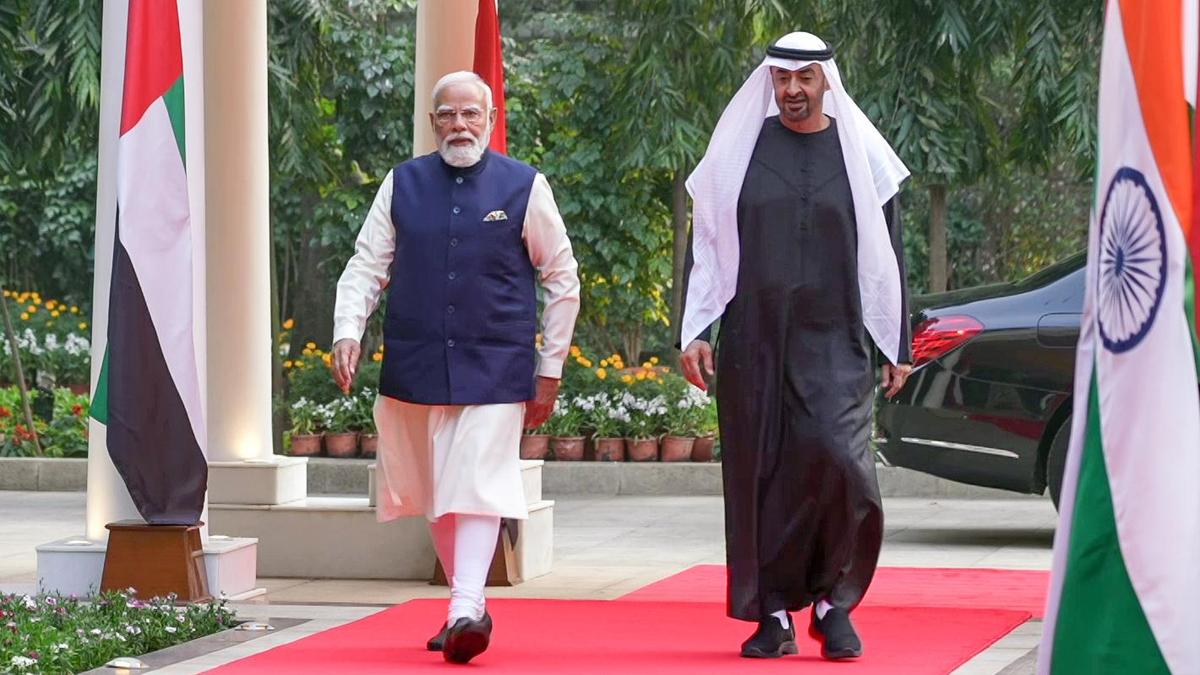
Diplomacy is a performance art where the script is written in platitudes and the real action happens in the ledger books. When Prime Minister Modi calls the UAE President to "condemn attacks" and offer "solidarity," the media laps it up as a moment of moral clarity. It isn't. It is a calculated, transactional maneuver masked in the velvet language of international friendship.
The lazy consensus suggests these phone calls are about shared values or a mutual stand against terrorism. That is a comforting fiction. In the brutal world of realpolitik, solidarity is a luxury currency that no one spends without a guaranteed return on investment. If you want to understand the India-UAE relationship, stop looking at the press releases and start looking at the crude oil pipelines and the flow of the Indian diaspora’s remittances.
The Solidarity Scam
The term "solidarity" is a favorite among diplomats because it implies a selfless bond. In reality, India’s support for the UAE following security threats in the Gulf is rooted in a terrifyingly simple math problem.
India imports over 80% of its crude oil. A significant chunk of that flows through the Strait of Hormuz. Any instability in the UAE isn't just a "regional concern"; it is a direct threat to the price of petrol in Delhi and the stability of the Indian rupee. When Modi speaks to the UAE, he isn't just a friend offering a shoulder to lean on. He is a stakeholder protecting his supply chain.
To believe this is purely about "standing against violence" ignores the decades where India remained studiously neutral or silent during similar escalations. The shift toward vocal support isn't a moral evolution; it is an admission of dependency. The UAE has become India’s third-largest trading partner, and more importantly, a critical pillar of the Comprehensive Economic Partnership Agreement (CEPA).
Transactional Loyalty is the Only Honest Loyalty
We need to stop pretending that geopolitical interests are "game-changers" (to use a tired cliché I despise) and admit they are ancient patterns of survival.
I have watched analysts spin these high-level calls as a "new era of brotherhood." It’s nonsense. I have seen the same fervor directed toward other nations that were dropped the moment their strategic value plummeted. True expertise in foreign policy requires recognizing that the UAE needs India’s labor force and market as much as India needs the UAE’s capital and energy.
Consider the $100 billion trade target. This isn't a byproduct of friendship. It is the result of both nations realizing they are boxed in by global shifts. The UAE is trying to diversify away from a post-oil future, and India is the most viable giant market next door. This isn't a hug; it’s a merger.
The Hidden Cost of the "Solidarity" Narrative
There is a danger in the public’s obsession with these performative gestures. By focusing on the "solidarity" of the leaders, we ignore the structural vulnerabilities:
- Labor Exploitation: While the leaders exchange pleasantries, millions of Indian workers operate under the kafala system. "Solidarity" rarely trickles down to the blue-collar worker in a labor camp in Sharjah.
- Energy Volatility: Relying on the Gulf for energy security is like building a house on a fault line. No amount of phone calls can change the geographic reality of the region’s instability.
- Strategic Autonomy: By leaning so heavily into this "special relationship," India risks its historical stance of non-alignment. If the UAE enters a conflict, does India's "solidarity" extend to boots on the ground? The answer is a resounding no, but the rhetoric suggests otherwise, creating a dangerous gap between expectation and reality.
Dismantling the "Stability" Argument
The common question asked is: "Does India’s support help stabilize the Middle East?"
The answer is no. India is a middle power in the Gulf, not a hegemon. Its "solidarity" is a signaling device to Washington and Beijing. It tells the U.S. that India is a responsible regional player, and it tells China that India has its own deep-seated alliances in the energy heartland.
If you think a phone call stops a drone, you don't understand how power works. Power in the 21st century is about the ability to absorb shocks, not the ability to issue condemnations. India is trying to buy insurance. The "solidarity" is the premium paid to keep the UAE favorable toward Indian interests when the next crisis hits.
The Mirage of Shared Values
Diplomats love to talk about "shared values" between India and the UAE. Let’s be honest. One is the world’s largest democracy; the other is a federation of absolute monarchies. Their values don't overlap; their interests do.
This distinction is vital. When we conflate interests with values, we set ourselves up for betrayal. Interests change. If a cheaper, more stable energy source appeared tomorrow in the Arctic or through fusion technology, the frequency of these "solidarity" calls would drop overnight.
Why You Are Asking the Wrong Questions
People often ask: "Will this strengthen India's position on the global stage?"
The better question: "Does this relationship make India more or less dependent on a volatile region?"
By doubling down on the UAE, India is trading long-term strategic independence for short-term economic stability. It is a necessary trade, perhaps, but we should call it what it is: a compromise. Not a triumph.
The Realpolitik of the Diaspora
There are over 3.5 million Indians in the UAE. They send back billions in remittances. This isn't just "people-to-people ties." This is a massive, decentralized economic engine that the Indian government must protect at all costs.
When a missile or a drone targets Abu Dhabi, it isn't just targeting an ally. It is targeting the source of income for millions of households in Kerala and Uttar Pradesh. Modi's "solidarity" is a message to the Indian voter as much as it is to the UAE President. It says: "I am watching over your paycheck."
Stop Romanticizing the Handshake
The competitor’s narrative focuses on the warmth of the exchange. Warmth is irrelevant. Cold, hard security is the only metric that matters.
India’s pivot toward the UAE is a response to the shifting sands of the US-Saudi relationship and the rising influence of Iran and China. It is a defensive crouch, not a bold stride forward.
We see this pattern repeatedly. A crisis occurs, a call is made, "strong condemnation" is issued, and the media treats it as a breakthrough. It isn't a breakthrough. It is maintenance. You don't celebrate when someone changes the oil in their car; you shouldn't celebrate when a Prime Minister performs basic diplomatic upkeep.
The "solidarity" mentioned in the headlines is a mask for a deep, systemic anxiety about energy, labor, and capital. India isn't standing with the UAE because it's the "right thing to do." India is standing with the UAE because, at this moment in history, it has no other choice.
Stop looking for a hero's journey in a trade agreement. Stop looking for a moral crusade in a security briefing. The next time you see a headline about "solidarity" in the Gulf, check the price of Brent Crude first. That will tell you more than any joint statement ever could.
The reality of international relations is that there are no friends, only creditors and debtors. Right now, the accounts are balanced. Don't mistake that for love.
Accept the transaction for what it is and stop dressing it up in the cheap lace of "brotherhood."