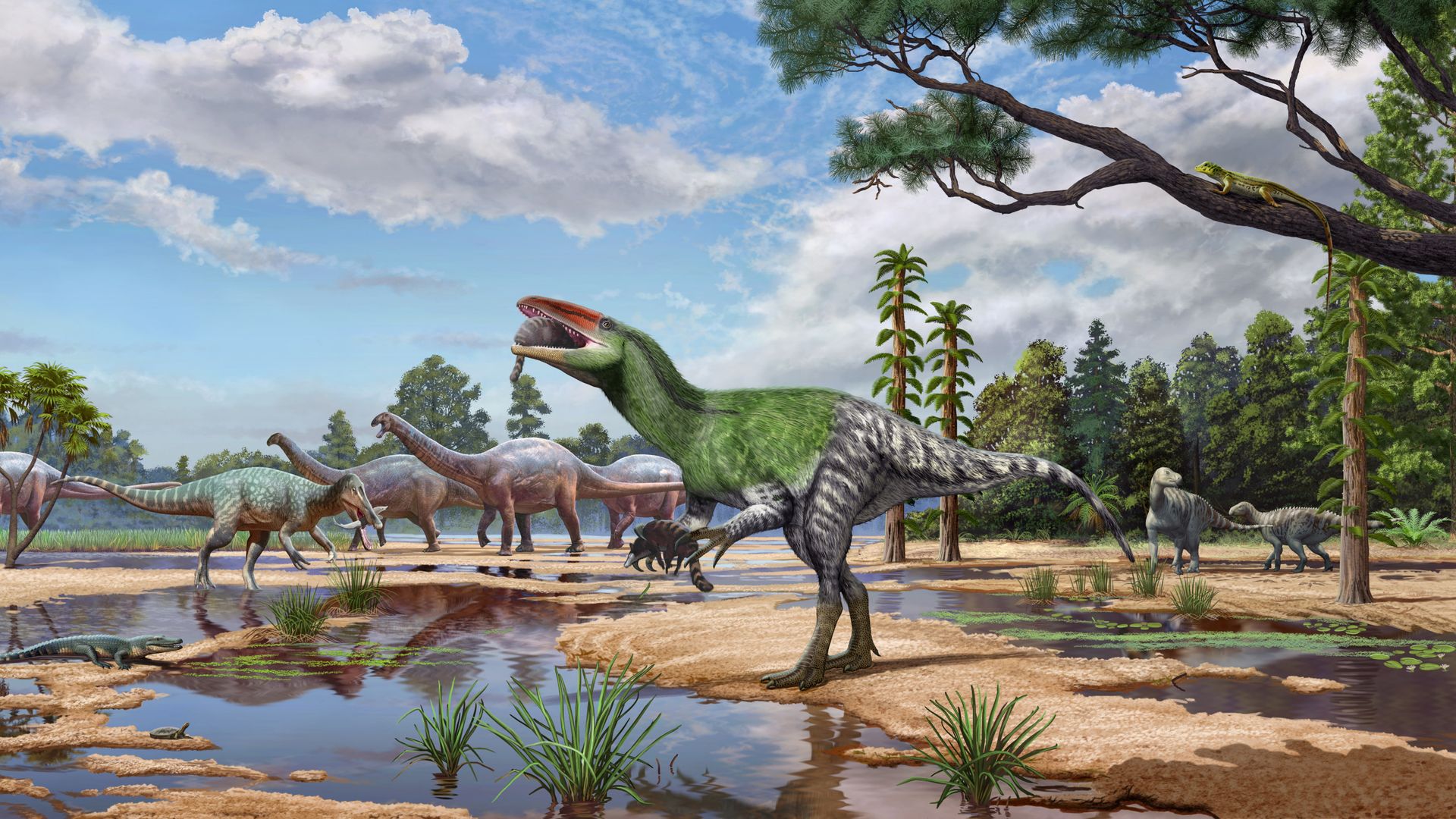
A dinosaur fossil sitting untouched in a cabinet for a century before receiving a new species name is not a quirk of dusty storage; it is the predictable output of an inventory system with high acquisition speed and low analytical throughput. When headlines celebrate a new dinosaur species discovered in the UK after a fossil spent 100 years in a drawer, the coverage usually frames the event as a stroke of luck or a triumph of patience. That framing misses the operational engine behind the story. Discovery in natural history happens twice: first when rock yields bone in the field, and second when comparative anatomy, stratigraphy, and revised diagnostic traits turn an existing specimen into a recognized taxon.
To understand why century-old British collections keep producing new taxa, we need a clear analytical blueprint. This article breaks down the mechanics of museum curation bottlenecks, the economics of archival backlog, the analytical shift from nineteenth- and early-twentieth-century taxonomy to modern cladistics, and the operational steps institutions use to clear dormant inventory without sacrificing scientific rigor.
Deconstructing the Competitor Narrative
Standard news coverage of drawer-bound fossil finds relies on a compressed story arc: an obscure bone sits forgotten for decades, a researcher opens a cabinet, and a previously unknown dinosaur emerges. That narrative works well for attention, yet it obscures three structural realities that govern paleontological output.
First, standard reporting treats storage as passive neglect rather than a resource-allocation outcome. Natural history museums operate under fixed curatorial budgets, finite storage space, and competing mandates across public exhibition, specimen conservation, and active research. When a fossil enters a collection without immediate diagnostic value or complete skeletal articulation, placing it in storage is a rational triage decision, not an oversight.
Second, competitor coverage blurs the distinction between physical recovery and taxonomic resolution. The specimen itself may have been excavated, prepared, and cataloged generations ago. What changes a century later is the comparative framework available to evaluate it. Earlier workers often lacked complete skeletons from related taxa, high-resolution comparative datasets, or modern phylogenetic methods that test whether subtle anatomical differences represent genuine evolutionary divergence rather than individual variation or post-mortem distortion.
Third, viral headlines rarely explain why Britain—a region with one of the longest histories of geological mapping and fossil collecting—still yields previously unrecognized dinosaur species from legacy holdings. Mature collection histories create deep archives, and deep archives accumulate specimens assigned to "wastebasket" groups or broad genera before finer anatomical distinctions were established.
The Four Pillars of Archival Discovery
Turning a century-old drawer specimen into a formally named species depends on four interacting mechanisms. Weakness in any single pillar stalls recognition; alignment across all four unlocks hidden value already held in public institutions.
Collection Provenance and Stratigraphic Context
A fossil's scientific worth depends heavily on where and how it was found. Historical British collections often include material gathered by amateur collectors, quarries, or early expeditions whose field notes vary in precision. Even when exact quarry coordinates are lost or generalized, rock matrix, lithology, preservation style, and historical accession ledgers can narrow down geological age and formation.
Establishing credible provenance is a known factual requirement before making bold evolutionary claims. Inferring paleoecology or biogeography from poorly localized historical specimens remains an educated hypothesis until corroborated by better-constrained material or matrix analysis.
Comparative Anatomy and Diagnostic Resolution
Early paleontologists frequently classified fragmentary or partial remains under broad, convenient labels or grouped them with better-known taxa from similar time intervals. Over subsequent decades, new discoveries elsewhere in the world supply missing skeletal elements, clarify ontogenetic stages (juvenile versus adult traits), and refine which anatomical features are truly diagnostic.
A specimen that looked nondescript in 1920 can become pivotal in 2026 when a researcher compares its vertebrae, limb proportions, or dental morphology against expanded global datasets. In operational terms, comparative baselines evolve continuously even when the physical fossil stays stationary.
Analytical Tooling and Re-Evaluation Capacity
Physical fossils do not upgrade themselves, but the instruments used to inspect and analyze them do. Non-destructive imaging, digital measurement, and rigorous phylogenetic matrices allow specialists to examine subtle structures, compare proportions across larger sample sizes, and test hypotheses of relationship systematically.
Crucially, analytical capacity is constrained by human time. Preparing a formal taxonomic description requires months or years of anatomical study, literature review, comparison with type specimens across multiple institutions, and peer review. A museum can hold thousands of cataloged items while only a small fraction receive full taxonomic reassessment in any given decade.
Institutional Incentives and Curatorial Bandwidth
Academic and museum incentive structures also shape what gets studied. High-profile field expeditions, newly excavated skeletons, and novel analytical techniques often attract grants and media attention more readily than re-examining century-old drawer material. Unless an institution deliberately protects time and funding for collection-based re-evaluation, legacy specimens remain in queue.
Why Century-Old Specimens Surface Now
The timing of these discoveries follows a clear cause-and-effect chain rather than random chance.
- Historical accumulation outpaces reassessment: Decades of field collecting and donations fill storage cabinets faster than small curatorial teams can re-analyze every drawer.
- Taxonomic concepts mature: Anatomical definitions sharpen as more complete skeletons are described globally, exposing mismatches in legacy identifications.
- Comparative access expands: Better documentation, shared anatomical knowledge, and targeted collection visits let researchers spot anomalies that earlier catalog entries masked.
- Targeted audits trigger breakthroughs: When a specialist systematically reviews a specific anatomical group, geological interval, or cabinet series, previously overlooked specimens get re-measured and re-evaluated against current standards.
This mechanism explains why drawer discoveries happen in clusters around specific research programs. They are not miracles; they are the yield of curatorial throughput catching up with a century of specimen accumulation.
Known Facts vs. Educated Hypotheses in Archival Finds
Rigorous analysis separates what can be verified directly from what requires inference:
- Known facts: A specimen resides in a museum collection, carries historical accession records or matrix clues, exhibits specific observable morphology, and is formally diagnosed under taxonomic rules only after rigorous comparative evaluation.
- Educated hypotheses: Exact collection localities for legacy finds lacking detailed logs, precise growth stages represented by partial remains, and broader evolutionary relationships when key skeletal elements are missing.
Confusing those two categories inflates headlines and weakens scientific credibility. Stating clearly where certainty ends makes the actual anatomical evidence stronger.
An Operational Playbook for Re-Evaluating Legacy Holdings
For museum leaders, collection managers, and research teams looking to extract maximum scientific value from dormant holdings, ad-hoc rummaging is inefficient. A structured triage workflow turns archival backlog into systematic output.
Step 1: Segment the Collection by Diagnostic Potential
Group stored material by completeness, anatomical informativeness, and contextual data rather than treating every drawer identically. Prioritize specimens that retain informative features (such as diagnostic axial, cranial, appendicular, or dental elements) or plausible stratigraphic ties over uninformative scraps.
Step 2: Audit Legacy Labels Against Modern Taxonomy
Flag specimens assigned to outdated broad categories, historical catch-all names, or tentative identifications made decades ago. Legacy labels are hypotheses frozen in time; treat them as starting leads rather than settled conclusions.
Step 3: Run Focused Comparative Screens
Bring in specialists working on active evolutionary trees for that clade or time slice. Focused screens—examining dozens of drawer specimens against a specific anatomical checklist—deliver far higher hit rates than general browsing.
Step 4: Document Limitations Before Publishing
Record missing data, preservation biases, and provenance uncertainties explicitly. Transparently defining what a specimen proves—and what it cannot prove—protects the work during peer review and prevents over-interpretation.
Structural Limits and Practical Trade-Offs
Even the best collection-reassessment workflow faces hard constraints that no process can eliminate completely.
- Incomplete preservation: Many historical fossils are partial, crushed, or weathered. Missing anatomy places a hard ceiling on how finely a specimen can be placed on an evolutionary tree.
- Lost provenance: Specimens lacking reliable locality or stratigraphic records may still contribute anatomical data, but their value for paleoenvironmental or biogeographical reconstruction remains restricted.
- Scarcity of specialist time: Deep taxonomic revision is slow, specialized work. Expanding digital catalogs or funding targeted fellowships helps, yet cannot substitute for skilled anatomical comparison.
- Fieldwork remains indispensable: Drawer discoveries refine and expand what we already know, but brand-new skeletal regions, articulated remains, and fresh stratigraphic evidence still depend on active field discovery.
Strategic Action for Collection-Driven Discovery
Museums and research programs should establish dedicated legacy-audit sprints that pair early-career comparative anatomists with senior curators on specific historical collection segments—delivering a prioritized list of high-potential re-evaluation candidates within a single academic year. Rather than choosing between field expeditions and collection research, institutions that run disciplined drawer audits alongside active fieldwork convert sunken storage costs into high-return scientific discoveries while keeping expectations grounded in anatomical evidence.