Most people treat exercise like a calorie-burning chore. They hop on a treadmill, stare at a blinking red number until they hit three hundred calories, and call it a day.
That approach is broken. If you want to live to ninety and still carry your own groceries up a flight of stairs, cardio alone won't save you. Muscle health is the actual currency of aging well, yet almost nobody tracks it until they're already struggling to get out of a low armchair.
We spend decades obsessing over cholesterol panels, blood pressure cuffs, and bathroom scales. Meanwhile, the largest metabolic organ in the human body quietly wastes away. Starting around age thirty, inactive adults lose roughly 3% to 8% of their muscle mass per decade. After sixty, that drop accelerates sharply. Researchers call this age-related decline sarcopenia, and it's directly tied to higher rates of falls, metabolic disease, hospitalizations, and early death.
You don't need a sports science lab to figure out where you stand. You can measure your muscle health right now using a mix of simple at-home functional tests and accessible clinical scans.
What Muscle Actually Does Beyond Moving Heavy Things
Think of skeletal muscle as your body's metabolic sink. Every time you eat carbohydrates, your bloodstream fills with glucose. Roughly 80% of that post-meal glucose gets cleared by your skeletal muscles.
When you have plenty of healthy, insulin-sensitive muscle tissue, your body handles blood sugar effortlessly. When your muscle mass shrinks and fills with marbled fat—a condition known as myosteatosis—your insulin sensitivity tanks. That's why two people with the exact same normal Body Mass Index (BMI) can have wildly different risks for Type 2 diabetes. One carries lean, dense muscle; the other carries hidden visceral fat and depleted tissue.
Muscle also acts as your emergency amino acid reserve. When you get hit with a severe infection, undergo major surgery, or suffer a bad fall, your immune system raids your muscles for glutamine and other amino acids to synthesize antibodies and repair damaged tissue. Patients who enter the hospital with low muscle mass face dramatically worse survival odds and much longer recovery times.
Cardiorespiratory fitness gets plenty of deserved praise, and VO2 max remains one of the strongest predictors of lifespan. Still, aerobic capacity and muscular strength protect you through different biological pathways. A massive 2018 study published in the Journal of the American Heart Association followed over 4,000 older adults and found that low muscle strength was independently associated with elevated all-cause mortality, even after accounting for sedentary time and other health factors. You need both engines running.
The Bathroom Scale Lies About Your Muscle Health
Step on a standard digital scale tomorrow morning and you'll get a single number that tells you almost nothing useful.
Weight measures gravity's pull on water, bone, fat, digested food, and muscle combined. You can lose ten pounds of pure muscle tissue over five years, gain ten pounds of abdominal fat, and watch your scale weight stay completely unchanged. Doctors call this normal-weight obesity, and it flies right under the radar during routine annual physicals.
Even those consumer "smart scales" that send a tiny electrical current up your legs—a method called bioelectrical impedance analysis (BIA)—frequently miss the mark. Because electrical conductivity changes based on how much water you drank, whether you worked out that morning, or how much sodium you ate at dinner, home BIA scales can swing by several percentage points in a single day. They're decent for tracking broad multi-month trends if you step on them under identical conditions every morning, but they shouldn't be treated as medical gospel.
To understand your real muscle health, you have to measure two separate things: muscle quantity (how much tissue you carry) and muscle quality (how much force that tissue can actually produce).
Four Free Ways to Measure Muscle Strength at Home
Strength almost always declines faster than raw muscle size. You can lose significant neuromuscular power years before your arms or legs look visibly smaller, which makes functional testing your best early warning system.
1. The Grip Strength Squeeze
It sounds almost absurdly simple, yet handgrip strength is one of the most validated biomarkers in geriatric and longevity medicine. The PURE study, which tracked nearly 140,000 adults across 17 countries and was published in The Lancet, found that every 5-kilogram drop in grip strength correlated with a 16% higher risk of death from any cause and a 17% higher risk of cardiovascular death. Grip strength actually predicted mortality better than systolic blood pressure.
You don't need to guess here. Buy a basic hydraulic or digital hand dynamometer online for about thirty dollars. Stand up, keep your arm straight down at your side without touching your body, and squeeze as hard as you can for three seconds. Test each hand three times and take the highest reading.
- For men: Readings below 27 kilograms (about 60 pounds) signal clinically low strength according to European Working Group on Sarcopenia guidelines. Aiming above 40 kilograms puts you in a much safer buffer zone during middle age.
- For women: Readings below 16 kilograms (about 35 pounds) flag potential sarcopenia. Healthy active women typically score between 25 and 35 kilograms depending on age and body frame.
2. The Five-Times Sit-to-Stand Test
Lower-body power determines whether you stay independent in your seventies and eighties. Your quadriceps and glutes are the largest muscle groups in your body, and they tend to atrophy faster than upper-body muscles when you sit at a desk all day.
Grab a standard straight-backed dining chair without armrests—roughly 17 inches off the floor—and push it against a wall so it won't slide. Sit in the middle of the seat with your feet flat on the floor and your arms crossed tightly over your chest. Start a stopwatch, stand all the way up until your knees and hips are fully locked out, and sit back down until your glutes touch the chair. Repeat five times as fast as safely possible.
If it takes you more than 12 seconds to complete five reps, your lower-body power is lagging, and your fall risk climbs noticeably. Under 10 seconds is solid for adults over sixty; younger and middle-aged adults should comfortably clear five reps in 6 to 8 seconds.
3. The Dead Hang Hold
Grip strength tests peak crushing force, while a dead hang tests muscular endurance across your hands, forearms, shoulders, and upper back relative to your body weight. That distinction matters because carrying extra body fat makes a dead hang much harder, exposing poor strength-to-weight ratios immediately.
Reach up, grab a pull-up bar with an overhand grip slightly wider than shoulder-width, and let your body hang completely straight with your feet off the ground. Don't shrug your shoulders into your ears—keep them lightly engaged and breathe normally.
A solid benchmark for healthy adults is 60 seconds for men and 30 to 45 seconds for women. If you drop off the bar in under 15 seconds, your upper-body endurance and grip capacity need serious work.
4. The Walking Speed Check
Nobody thinks of walking pace as a muscle test, yet gait speed integrates lower-body strength, balance, joint mobility, and neural coordination into a single real-world metric. In geriatric research, walking speed is routinely called the "sixth vital sign."
Measure out a flat, unobstructed 10-meter (roughly 33-foot) hallway or sidewalk. Walk at your normal, everyday pace—don't power-walk or sprint—and time how long it takes to cover the middle 6 meters so you exclude acceleration and deceleration. Divide 6 meters by your time in seconds.
A normal walking speed of 1.0 meter per second (about 2.2 mph) or faster is strongly linked to healthy aging and independent living. Dropping below 0.8 meters per second indicates significant functional decline and loss of lower-limb muscle power.
Clinical Scans When You Want Hard Numbers
At-home tests tell you how well your muscles perform, while medical imaging tells you exactly how much muscle tissue you actually have stored on your frame. If you're serious about tracking body composition over years, two clinical options stand above the rest.
DEXA Scans
A Dual-Energy X-ray Absorptiometry (DEXA) scan uses two ultra-low-dose X-ray beams to differentiate between bone mineral, fat mass, and lean soft tissue across your arms, legs, and trunk. The radiation exposure is tiny—roughly equivalent to eating a couple of bananas or taking a short domestic flight—and the whole scan takes less than ten minutes while you lie fully clothed on a padded table.
When you get your DEXA printout, ignore total body fat percentage for a moment and look straight at your Appendicular Lean Mass Index (ALMI). This number takes the lean muscle mass in your arms and legs combined and divides it by your height in meters squared ($kg/m^2$).
Why focus on limbs? Trunk lean mass includes internal organs, fluid, and digestive contents, which skew the data. Limb lean mass is almost pure skeletal muscle. According to widely used clinical cutoffs, an ALMI below $7.0\text{ kg/m}^2$ for men or $5.5\text{ kg/m}^2$ for women indicates low muscle mass. Most major cities now have private DEXA facilities where you can book a scan without a doctor's referral for $75 to $150.
MRI and CT Muscle Quality Analysis
While DEXA measures quantity, Magnetic Resonance Imaging (MRI) and Computed Tomography (CT) go a step deeper by looking inside the muscle belly itself. Two thighs can have the exact same cross-sectional area on a tape measure, yet one looks like lean tenderloin on an MRI while the other looks like heavily marbled ribeye steak.
That intramuscular fat infiltration ruins muscle contractility and drives local inflammation. MRI body composition scans are expensive—often $500 to $1,500 out of pocket—and usually reserved for research settings or specialized preventative medicine clinics. Unless you're dealing with unexplained muscle wasting or neuromuscular disease, a DEXA scan paired with grip and chair-stand testing gives you 95% of the actionable insight at a fraction of the cost.
Mistakes That Quietly Sabotage Your Muscle Score
Once people realize they're under-muscled, they usually make one of three predictable errors trying to fix it.
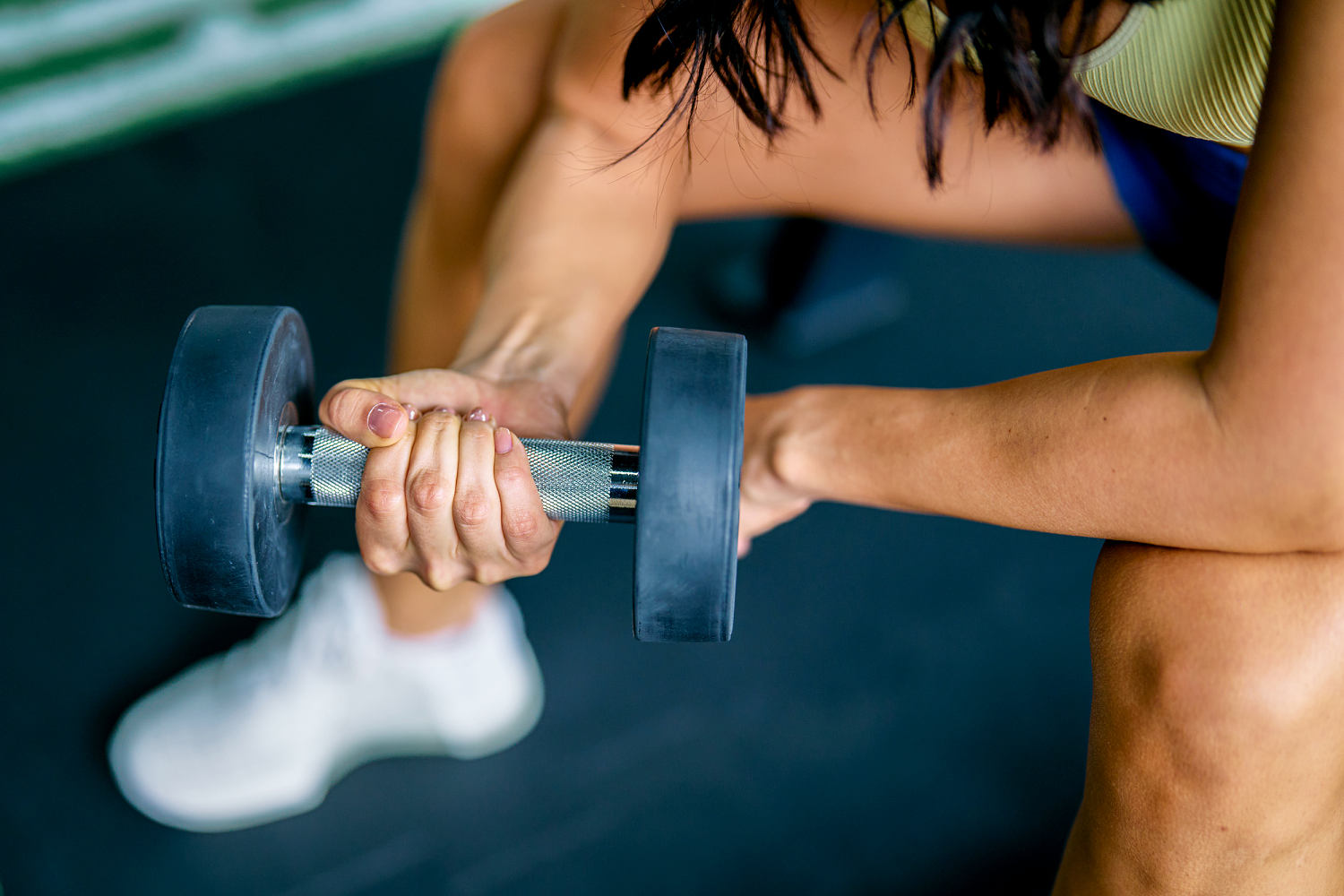
First, they confuse muscle fatigue with mechanical tension. Taking a three-pound pink dumbbell and doing fifty bicep curls until your arm burns feels productive, but light aerobic-style pumping doesn't stimulate the fast-twitch Type II muscle fibers that shrink fastest with age. Those Type II fibers only wake up when you lift heavy loads—roughly 70% to 85% of the maximum weight you can lift once—or move moderate weights explosively.
Second, they eat like twenty-year-olds. Older muscle tissue suffers from anabolic resistance, meaning it becomes less sensitive to the muscle-building signal of dietary protein. A twenty-five-year-old can trigger maximal muscle protein synthesis with 20 grams of protein at breakfast. A sixty-year-old often needs 35 to 40 grams of high-quality, leucine-rich protein in a single meal just to flip the exact same cellular switch. Spreading tiny 10-gram dribbles of protein across the day leaves older muscles starved of the threshold signal they need to repair.
Third, they chase aggressive calorie deficits without lifting weights. Every time you crash-diet on salads and treadmill sessions, roughly 25% to 35% of the weight you lose comes straight out of your lean muscle tissue. Do three cycles of yo-yo dieting over a decade and you systematically strip away your metabolic engine while making future fat loss harder every single time.
How to Build Your Baseline This Week
Don't overcomplicate your starting point. Pick a quiet morning this week and run through the four home assessments in under fifteen minutes:
- Record your maximum grip strength on both hands using a basic dynamometer.
- Time five sit-to-stands from a dining chair with your arms crossed.
- Time a single dead hang from a pull-up bar at your local gym or park.
- Measure your normal walking speed across a flat 10-meter stretch.
Write those four numbers down in the notes app on your phone alongside today's date. If your budget allows, book a baseline DEXA scan within the next month so you have an objective ALMI benchmark on file.
From there, commit to two to three full-body resistance training sessions per week built around compound movements—squats, hip hinges, presses, rows, and loaded carries—where the last two repetitions of each set feel genuinely difficult. Pair that training with roughly 1.6 grams of protein per kilogram of target body weight daily (about 0.7 grams per pound), anchored by at least 30 grams of protein at your first meal. Retest your four numbers in ninety days. You can't manage what you refuse to measure, and your eighty-year-old self is counting on the tissue you build right now.