The Breakthrough That Refuses to Stay Simple
For months, the medical press buzzed with breathless summaries. Moderna and Merck rolled out clinical data showing their personalized mRNA cancer vaccine, combined with Keytruda, slashed the risk of recurrence or death in melanoma patients. Mainstream outlets framed the joint venture as a monumental turning point in oncology.
The underlying reality is far more intricate.
When you strip away the corporate press releases, the treatment is not a universal shot you receive at a local pharmacy to prevent tumors from ever forming. It is an expensive, custom-manufactured biologic tailored entirely to an individual patient's specific mutational profile.
Every single dose requires sequencing a tumor, identifying unique neoantigens, and synthesizing a proprietary strand of genetic code specifically for one human being. That process takes weeks. In advanced oncology, weeks can dictate the boundary between life and death.
How Personalized Neoantigen Therapy Actually Functions
Traditional vaccines train the immune system against a static viral protein. Cancer is a moving target. Tumors mutate continuously, evading standard therapies by changing their exterior presentation.
Personalized mRNA therapeutics attack this instability by turning the patient's own malignancy into a blueprint for destruction. Pathologists sequence both healthy tissue and tumor tissue to spot mutations that appear exclusively on the cancer cells. These specific mutations, known as neoantigens, serve as unique flags.
Once the neoantigens are identified, scientists design a corresponding strand of mRNA and package it inside lipid nanoparticles. When injected into the patient, human cells read the instructions and manufacture these harmless neoantigen proteins.
The immune system spots the foreign flags, mounts an aggressive response, and trains T-cells to hunt down any cell carrying those exact markers.
Keytruda enters the equation as a checkpoint inhibitor. Tumors often deploy molecular shields to turn off approaching T-cells, effectively rendering the immune system blind to the threat. Keytruda blocks that shield. The combination theoretically allows the newly educated T-cells to infiltrate the tumor microenvironment and eradicate residual disease.
The Manufacturing Bottleneck Nobody Wants to Discuss
Enthusiasm frequently obscures logistics. Scaling individualized medicine is an industrial nightmare.
Most pharmaceutical supply chains rely on mass production. A single factory churns out millions of identical vials, shipping them globally with predictable overhead. Personalized mRNA vaccines flip that model completely upside down.
Every batch is a batch of one.
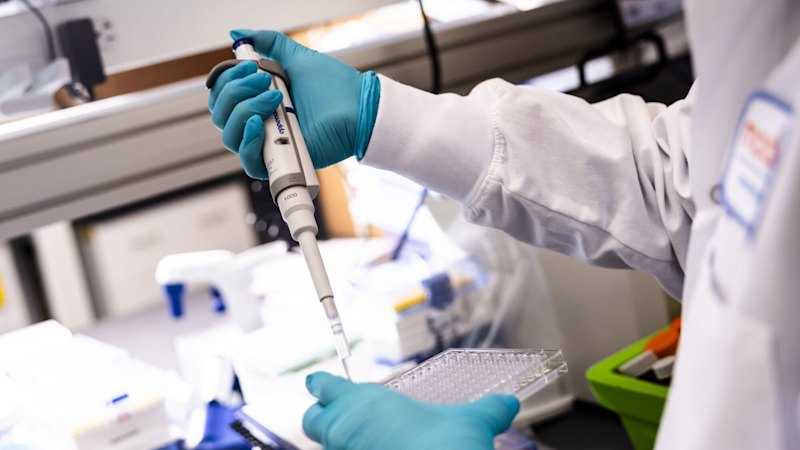
Manufacturing a neoantigen vaccine involves biopsy extraction, genomic sequencing, algorithmic target selection, RNA synthesis, quality control, and sterile vial filling for a single patient. Turnaround times currently hover around several weeks. For a patient with aggressive Stage 3 or Stage 4 melanoma, waiting a month for a bespoke therapeutic while undergoing standard surgical resection creates immense clinical anxiety.
Cost represents another severe barrier. Producing thousands of unique genetic sequences per year requires specialized cleanrooms, intense regulatory oversight, and complex bioinformatics infrastructure. Healthcare systems already buckling under the weight of traditional monoclonal antibodies will face severe economic friction when trying to absorb multi-dose personalized genetic therapies.
Clinical Trial Realities Versus Everyday Practice
Clinical trial environments are pristine laboratories. Patients enrolled in these studies are meticulously selected, closely monitored, and treated at top-tier academic medical centers.
Translating those results into community oncology clinics introduces new variables.
Oncologists in regional hospitals rarely possess the infrastructure required to coordinate custom genetic manufacturing pipelines with external biotech partners. If a vial is delayed in transit or degrades due to cold-chain failures, there is no off-the-shelf backup.
Furthermore, melanoma represents a uniquely favorable testing ground because it possesses a high tumor mutational burden. Tumors with high mutation rates display plenty of foreign neoantigens for algorithms to target.
Applying the exact same platform to "cold" tumors like pancreatic cancer, glioblastoma, or prostate cancer proves significantly more difficult. These malignancies exhibit low mutation rates, offering very few distinct flags for the immune system to latch onto. Researchers are currently racing to design multi-target strategies and combination therapies to crack these harder targets, but success remains unproven on a broad scale.
The Financial Mechanics Driving the Partnership
The marriage between Moderna and Merck is not purely altruistic. It is a calculated alignment of intellectual property and commercial dominance.
Moderna needed a validated clinical anchor for its mRNA technology beyond infectious disease applications. Post-pandemic demand for respiratory vaccines declined, leaving massive manufacturing capacity underutilized. Oncology offered the ideal high-value market to justify keeping those billion-dollar facilities running.
Merck faces a massive looming patent cliff for Keytruda, its primary revenue engine. By anchoring Keytruda to Moderna's proprietary mRNA pipeline, Merck locks up co-exclusive rights to the combination therapy, effectively extending its oncology monopoly into the next decade.
Patients and healthcare payers are caught in the middle of this commercial chess match. The promise is genuine, but the commercial architecture guarantees that access will be restricted by price tags and manufacturing capacity for years to come.
What Comes After Melanoma
The current phase three trials span multiple cancer types beyond skin cancer, including non-small cell lung cancer. Early signals suggest the platform's utility could extend across various solid tumors.
Yet, treating micrometastatic disease after surgery is vastly different from shrinking large, established tumor masses. The immune system handles small numbers of residual cells far better than an aggressive, immunosuppressive main tumor mass.
Until manufacturing timelines drop from weeks to days, and production costs plummet through automated synthetic biology, personalized mRNA cancer vaccines will remain an elite intervention reserved for clinical trials and well-insured populations at premier institutions. The science is real, but the revolution will move at the speed of industrial infrastructure, not algorithmic hype