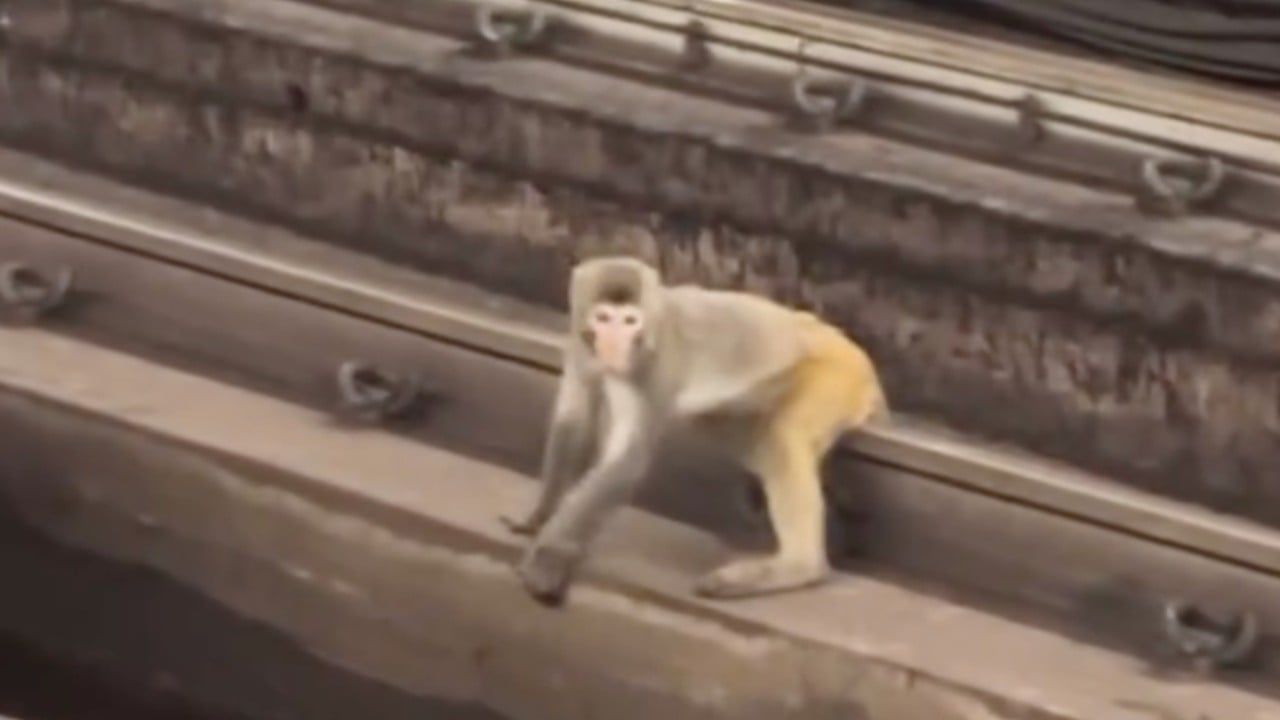
A wild monkey casually sauntering along the exposed train tracks of the MTR isn't everyday commuter news, but it happens more often than you'd think. When a macaque halted train service near Tai Wo station, commuters were left baffled. What drives a wild primate to ditch the lush forest canopy for a high-voltage railway line?
It turns out biology is largely to blame. Wildlife experts point directly to the autumn mating season as the primary driver behind these urban intrusions. During this period, young males get kicked out of their native troops by dominant males. Hormones run high. Desperate to find new territory and mates, these solitary rovers travel huge distances across unfamiliar ground. Often, that ground includes concrete, steel, and active rail lines.
Hong Kong sits in a unique position. The city's dense urban footprint directly abuts expansive country parks like Kam Shan, famously nicknamed "Monkey Mountain." Rhesus macaques and long-tailed macaques thrive here. When aggressive territorial battles break out in the woods, lower-ranking monkeys have no choice but to flee outward into human infrastructure.
The Commuter Corridor Problem
Trains move fast. Monkeys move unpredictably. When the two cross paths, transit operators face a nightmare scenario.
The MTR system relies on strict safety protocols. The moment trackside sensors or drivers spot an animal on the line, trains slow down or stop completely. Power to the overhead lines might need shut down if an animal climbs near high-voltage equipment. That causes immediate delays across the entire line.
Why pick railway tracks? To a stressed monkey searching for an escape route, a fenced railway line looks like a clear, predator-free corridor. It offers an unbroken path through a confusing maze of high-rise buildings and busy roads. They don't understand electric third rails or 25,000-volt overhead cables. They just see an open field.
Feeding Bans and Human Interference
The government stepped in decades ago to manage the growing primate population. The Agriculture, Fisheries and Conservation Department (AFCD) introduced strict feeding bans in country parks to stop monkeys from associating humans with food. They also launched a large-scale contraceptive program to keep population numbers stable.
Despite these efforts, human behavior keeps creating problems. Illegal feeding at the edges of urban areas draws macaques out of the safety of the forest. When humans hand out snacks, monkeys lose their natural fear of people and urban noise.
- Unsecured trash bins near residential estates act as free buffets.
- Well-meaning residents leave fruit in public parks.
- Tourists intentionally bait animals for photos.
This direct interaction makes young males even bolder during mating season. Instead of staying within park boundaries to find a new troop, they venture deep into neighborhoods, shopping centers, and train stations.
What Transit Authorities and Wildlife Officials Are Doing
Handling a wild animal on active rail tracks requires precise coordination. You can't just chase a frightened macaque; a panicked animal might jump directly onto high-voltage wires or into the path of an oncoming train.
MTR staff work alongside the AFCD and the Society for the Prevention of Cruelty to Animals (SPCA). When an intrusion happens, trained personnel use special traps or tranquilizer darts to safely secure the animal. The priority is getting the primate off the tracks without causing harm to the animal or interrupting service longer than necessary.
Long-term solutions focus on physical barriers. The MTR continuously inspects perimeter fencing along open-air track sections, patching gaps where animals might slip through. However, macaques are world-class climbers. Standard chain-link fences barely slow them down.
What You Should Do If You Encounter a Macaque on the Transit System
If you spot a monkey at an MTR station or near the tracks, keep your cool. Don't panic, and definitely don't try to take a selfie.
- Maintain your distance and avoid making direct eye contact, which primates view as a direct threat.
- Never offer food or reach into your bag for items, as monkeys associate plastic bags with meals.
- Notify MTR staff or station guards immediately so they can alert control teams.
- Keep children close and refrain from sudden movements or loud noises that could startle the animal.
Reporting trackside sightings immediately gives transit operators the lead time they need to slow down trains safely, preventing major line shutdowns and protecting both passengers and local wildlife.


