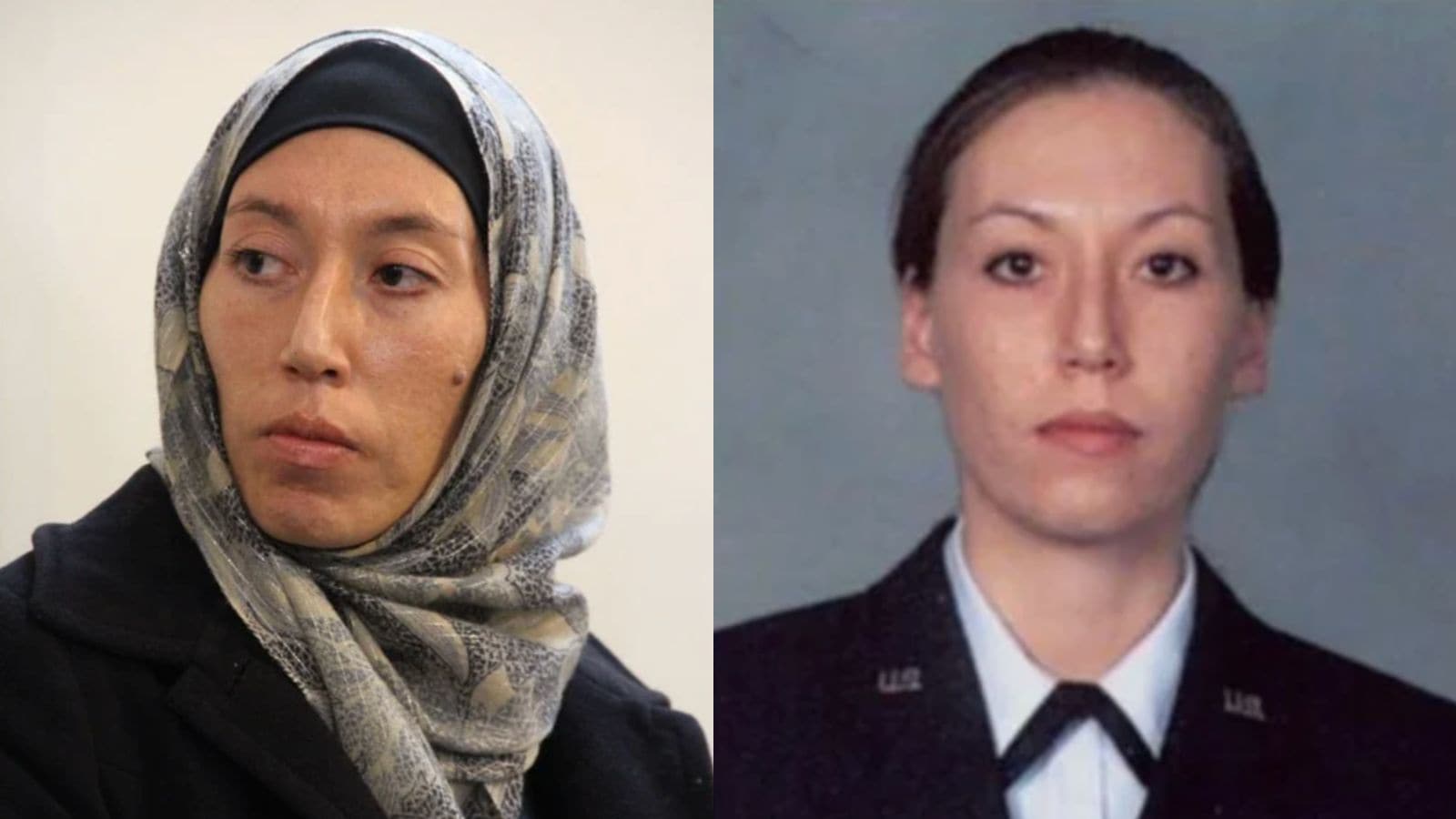
The FBI just put a $200,000 price tag on the head of Monica Witt. She's the former U.S. Air Force counterintelligence specialist who walked away from her country and defected to Iran more than a decade ago. It's easy to look at the fresh bounty and assume it's just standard bureaucratic housekeeping. A cold case getting a routine budget update.
You'd be dead wrong.
The timing of this announcement isn't random. The U.S. and Iran have been locked in an active state of open conflict since February 28 of this year. Washington is signaling that old betrayals are now active frontlines. The FBI doesn't suddenly throw six-figure bounties at decades-old defectors unless something shifts on the ground. Daniel Wierzbicki, the top counterintelligence official at the FBI's Washington Field Office, basically admitted as much, pointing to "this critical moment in Iran's history" as the catalyst for the hunt.
This isn't just about catching a fugitive. It's about a betrayal so deep that its shockwaves are still rattling through the American intelligence apparatus right now.
The Making of a Counterintelligence Nightmare
To understand why the Pentagon still gets a collective migraine whenever Monica Elfriede Witt's name comes up, you have to look at what she actually knew. She wasn't some low-level desk clerk who stumbled across a few PDFs. Witt was an insider's insider.
Entering the Air Force in 1997, she rose to become a technical sergeant and a special agent with the Air Force Office of Special Investigations (AFOSI). Uncle Sam spent a fortune training her. She learned fluent Farsi. She deployed to the Middle East on highly sensitive, classified missions.
By the time she separated from active duty in 2008 and finished her subsequent stint as a defense contractor in 2010, she held a Top Secret security clearance. More importantly, she had access to a Special Access Program (SAP). In the intelligence world, an SAP is the ultimate velvet rope. It housed ongoing counterintelligence operations, the true names of human intelligence (HUMINT) sources, and the real identities of the American officers actively recruiting those sources.
Inside the government, colleagues gave her the classified nickname "Wayward Storm." It turned out to be terrifyingly accurate.
The Tehran Recruitment Pipeline
Witt didn't just wake up one day and decide to spy for the Islamic Revolutionary Guard Corps (IRGC). Her descent into defection was a textbook execution of an intelligence spot-and-assess operation.
It started publicly in February 2012. Witt traveled to Tehran to attend the "Hollywoodism" conference. Organized by the New Horizon Organization, an IRGC-linked front, the event was designed to promote anti-Western propaganda and blast American moral standards. Witt leaned into it. She converted to Islam, appeared in video packages criticizing the U.S. government, and soaked in the attention.
The FBI noticed. In fact, agents sat Witt down and warned her explicitly that Iranian intelligence was actively targeting her for recruitment. She shrugged it off. She promised she wouldn't give up any secrets if she went back.
She lied.
By June 2012, Witt was deep in communication with Marzieh Hashemi, a dual U.S.-Iranian citizen and suspected Iranian intelligence operative. Witt's private messages showed a mix of ideological radicalization and growing financial desperation. At one point, she grew frustrated and suggested she might copy Edward Snowden and leak data to the press. Later, she muttered about fleeing to Russia.
Ultimately, Tehran offered the best deal. In August 2013, with Hashemi's help, Witt flew to Iran. The regime immediately hooked her up with housing and top-tier computer equipment. In return, she promised to put her U.S. military training to use "instead of evil."
Burning Sources and Building Target Packages
The damage Witt caused wasn't abstract. It was immediate, specific, and lethal.
According to the federal indictment unsealed against her, Witt handed over the exact code name and classified mission of that Special Access Program she worked on. Think about what that means. A highly classified, multi-million-dollar collection system was instantly neutralized.
Worse, she unmasked her former colleagues. Witt directly exposed the true identity of a U.S. intelligence officer, actively putting a target on that person's back and endangering their life.
But she didn't stop at what she could remember off the top of her head. Witt turned her new Tehran apartment into an assembly line for "target packages." Between 2014 and 2015, she systematically researched her former coworkers from her AFOSI days. She dug up their personal details, family relations, and social media habits.
She then handed those dossiers over to a team of IRGC-affiliated cyber criminals: Mojtaba Masoumpour, Behzad Mesri, Hossein Parvar, and Mohamad Paryar.
[ Witt's Target Package ] ──> [ IRGC Cyber Team ] ──> [ Spear-Phishing Campaign ] ──> [ US Intel Networks ]
Armed with Witt's inside information, these hackers launched highly sophisticated spear-phishing campaigns. They built fake Facebook accounts mimicking real U.S. intelligence personnel, using actual photos and personal trivia supplied by Witt. They tried to trick her old colleagues into clicking malware-laced links to compromise internal Department of Defense networks.
Why the $200,000 Reward Matters Now
If Witt defected in 2013 and was indicted in 2019, why drop a massive cash reward right now?
First, the geopolitical reality has shifted. With the U.S. and Iran in an open state of war since late February, the status of defectors living in Tehran changes. The FBI believes Witt is still actively assisting Iranian intelligence with operations targeting Americans. She isn't retired; she's an active combatant in a digital and asymmetric war.
Second, the bounty targets the cracks in the Iranian regime. Western sanctions and active conflict have put immense strain on the internal security of Iran. By putting a massive hard-currency bounty on a prominent American defector, the U.S. is testing the loyalty of those around her. Someone in Tehran, perhaps an underpaid handler, a neighbor, or a disgruntled logistics officer, might decide that $200,000 is worth a anonymous tip to a Western embassy or an allied intelligence service.
The FBI's posting details exactly what they are looking for. Witt is a native of El Paso, Texas, stands 5 feet 6 inches tall, weighs roughly 120 pounds, and speaks fluent Farsi. She has used the Islamic aliases "Fatemah Zahra" and "Narges Witt."
The Operational Reality of Insider Threats
The intelligence community loves to talk about advanced firewalls, encrypted networks, and zero-trust architecture. But the Monica Witt case exposes the permanent flaw in every security system: the human element.
When a trained counterintelligence officer decides to switch sides, they don't just steal data. They steal the context required to weaponize that data. Witt knew exactly how the U.S. spotted vulnerabilities in foreign networks, which meant she knew exactly how to patch those same vulnerabilities for Iran.
If you are working within the defense space, a cleared contractor network, or any organization managing proprietary, high-stakes information, the next steps from a case like this aren't academic. They're operational.
- Audit Access Immediately: The moment an employee separates or a contractor finishes a project, access must be completely severed, and their historical data footprint must be logged. Witt used old networks and lingering social connections to build her hit lists.
- Take Behavioral Indicators Seriously: Witt didn't hide her radical shift. She literally went on Iranian television to trash the U.S. before she defected. Behavioral monitoring isn't about policing thoughts; it's about identifying when an individual's public actions directly contradict their security obligations.
- Train Teams on Social Engineering Realism: The IRGC hackers didn't use magic to target U.S. agents; they used fake Facebook profiles built on Witt's insider knowledge. Organizations need to train personnel to recognize that an online profile using the name and face of an old coworker can easily be a hostile digital clone.