The spreadsheet had forty-seven tabs, and none of them could explain why Lin Wei was crying over a linen napkin sample at two in the morning.
Let us imagine Lin Wei and her fiancé, Chen Hao, as our stand-ins for an entire generation of young professionals living in Shanghai. They are composite characters, drawn directly from the real-world anxieties documented across Chinese social media platforms like Xiaohongshu and Douyin over the past few years. On paper, they are doing everything right. Both work in mid-level tech and media roles. Together, they earn a respectable living. Yet as they stared at the projected cost of their upcoming wedding—a figure hovering dangerously close to 300,000 yuan, or roughly $42,000—the math stopped making sense.
In a country where the average urban disposable income struggles to keep pace with soaring living expenses, a single day of celebration was demanding nearly three years of their combined savings.
So Chen Hao closed the budget spreadsheet, opened a blank presentation file, and typed out a title that would have horrified his grandparents.
Brand Partnership Opportunity.
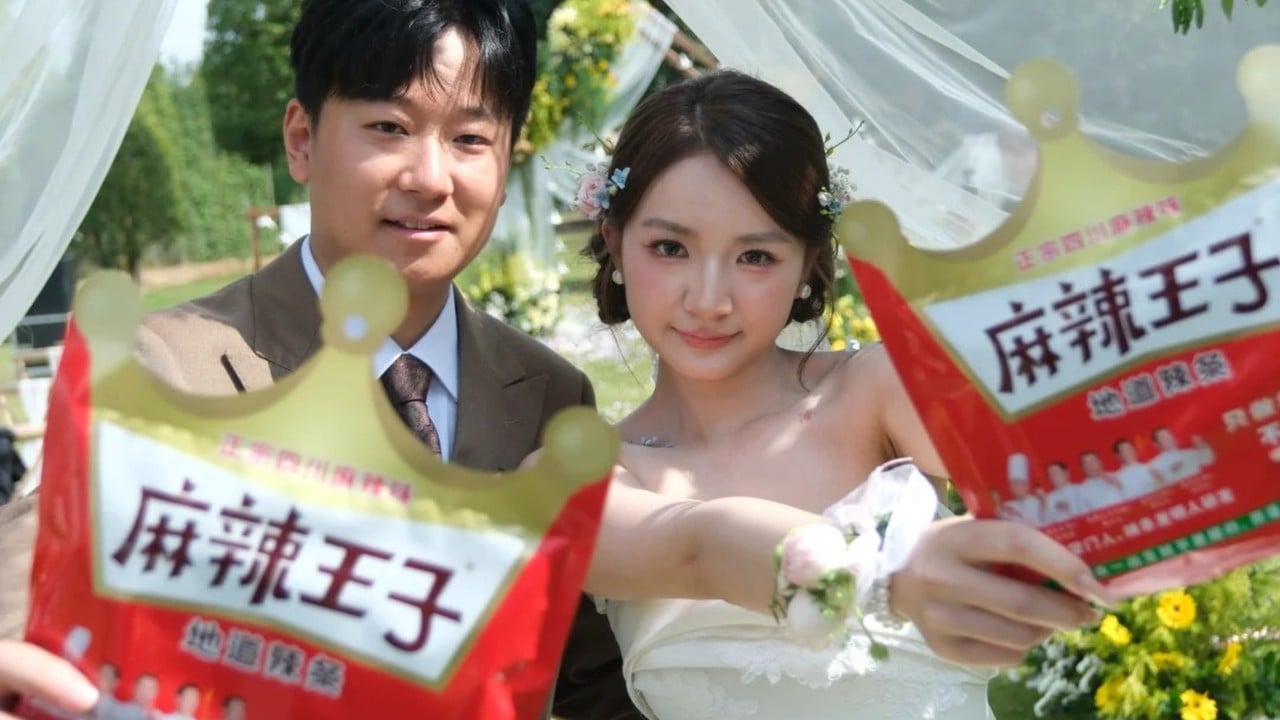
Welcome to the quiet revolution happening inside China’s multi-billion-dollar wedding industry. Faced with crushing financial expectations, exhausted by months of logistical decision-making, and raised in an era where personal life is already curated for an audience, young couples are no longer just planning weddings. They are pitching them. They are cold-emailing beverage companies, cosmetics brands, boutique hotels, and artisanal bakeries, offering up their most intimate milestone as prime advertising real estate in exchange for free products, steep discounts, or outright cash sponsorships.
To understand why a bride would willingly turn her reception hall into a pop-up showroom, you first have to understand the weight of what she is trying to escape.
The Heavy Crown of the Traditional Banquet
For decades, a Chinese wedding was never really about the two people standing at the altar. It was a monumental exercise in social accounting.
Consider the mechanics of renqing—the intricate web of favors, obligations, and reciprocal gift-giving that binds families and communities together. When parents insist on inviting three hundred guests, half of whom the bride and groom have never met, they are not merely showing off. They are settling old debts and issuing new ones. Every red envelope stuffed with cash (hongbao) handed over at the reception desk is meticulously recorded in a ledger, creating a financial obligation that must be repaid with interest when the giver's own children eventually marry.
I remember sitting in the back of a cavernous hotel ballroom in Hangzhou a few years ago, watching a groom mechanically clink glasses at forty-two consecutive tables. By table thirty, his smile had frozen into a rictus of pure exhaustion. The air smelled of expensive baijiu, steamed sea bass, and quiet desperation. Between the mandatory hotel banquet packages, the multi-outfit photography shoots, the bridal dowry negotiations, and the towering floral installations that would be thrown into a dumpster by midnight, the event had become a high-stakes financial performance.
According to industry surveys from wedding planning platforms like Hunliji, the average cost of getting married in major Chinese cities regularly climbs between 200,000 and 350,000 yuan—sometimes exceeding eight to ten times the average annual per capita income.
That number does not just buy flowers and food. It buys anxiety.
Planning fatigue sets in months before the actual ceremony. Couples find themselves trapped in an endless loop of micro-decisions, haggling with vendors over chair covers while working sixty-hour weeks at their day jobs. The romance evaporates, replaced by the cold friction of invoice management. When the price tag climbs high enough, love begins to feel less like a choice and more like an unserviceable loan.
At some point, the pressure becomes unbearable. Something has to give.
The Birth of the Sponsored "I Do"
If your wedding already feels like a massive, exhausting corporate event, you might as well get a corporate sponsor to foot the bill.
That is the cold, brilliant logic currently sweeping through Xiaohongshu, China’s lifestyle and social commerce powerhouse. Search for terms like "wedding sponsorship" (hunli zanzhu) or "wedding brand partnership," and you will enter an ecosystem that looks remarkably like a venture capital incubator.
Young brides-to-be share downloadable pitch deck templates. They trade spreadsheets listing which skincare brands are generous with gift bags and which craft beer companies are eager to supply wedding favors. They dissect their own social media metrics—follower counts, engagement rates, audience demographics—with the clinical precision of a Madison Avenue media buyer.
Think of it like this: traditional advertising is a megaphone shouted into a crowded street, hoping someone turns their head. A sponsored wedding is a whispered recommendation inside a locked room full of the exact people a brand wants to reach.
For a brand, the appeal is obvious. Wedding guests are a captive, emotionally primed audience. They are dressed up, taking hundreds of photos, and actively posting to WeChat Moments and Xiaohongshu throughout the day. When a guest opens a welcome box containing a niche fragrance, a hangover recovery drink, and a custom-labeled tin of oolong tea, the association is immediate and deeply personal. The product is no longer just merchandise; it is part of a happy memory.
In return, the couple gets relief.
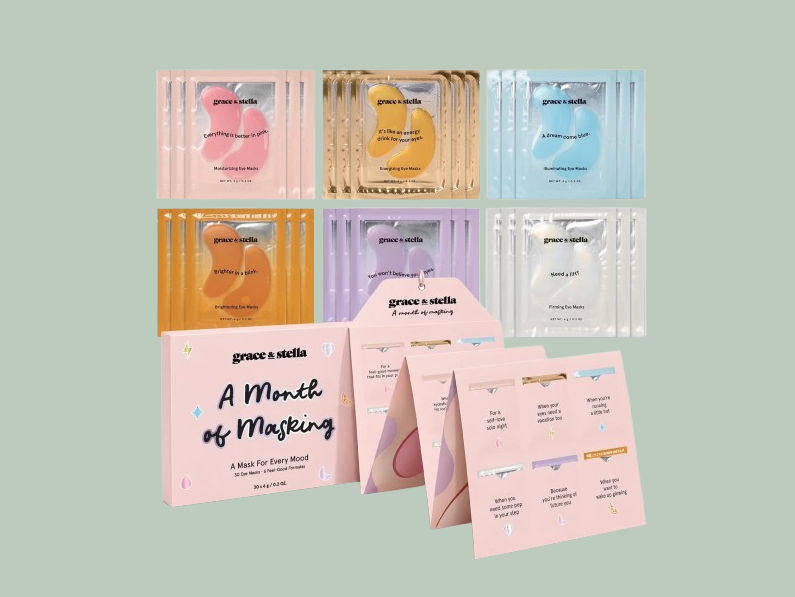
A mid-tier cosmetics company might provide a hundred deluxe sample sets for the bridesmaid boxes and guest favors, wiping 8,000 yuan off the couple's expense sheet in a single afternoon. A local bakery might supply the multi-tiered cake and dessert table for free, asking only for a prominent tag in the wedding photographer's final gallery. Some couples with modest followings—micro-influencers with five to ten thousand followers—have successfully secured sponsorships covering up to thirty or forty percent of their non-banquet wedding expenses.
It is an astonishing display of resourcefulness. Yet when you look closely at how these deals actually work, the narrative shifts from clever life-hack to second full-time job.
What Happens Behind the Curtain
Let us return to our hypothetical couple, Lin Wei and Chen Hao, three weeks after they sent out forty pitch emails.
They landed four sponsors. A sparkling water startup agreed to supply ten cases of cans. A boutique hand-cream brand sent eighty travel-sized tubes. A local coffee roaster provided custom-printed drip bags, and a photobooth company knocked fifty percent off its rental fee. Total value saved: roughly 14,000 yuan.
Then came the contracts.
Sponsorship is never free; you simply pay in a different currency. Instead of yuan, Lin Wei and Chen Hao were now paying in deliverables. The sparkling water brand required three dedicated posts on Xiaohongshu before the wedding, a prominent display near the welcome sign, and at least five high-resolution photos of guests holding the cans with the logo clearly visible. The hand-cream company demanded a close-up shot of the bride applying the product while getting her makeup done, posted within forty-eight hours of the ceremony.
Suddenly, the couple wasn't just managing a wedding. They were managing a multi-channel marketing campaign.
This is the invisible friction that rarely makes it into the triumphant social media posts boasting about "free" weddings. When you invite a sponsor to your wedding, they bring a clipboard. The photographer, already racing against the clock to capture fleeting family moments, now has a shot list dictated by a brand manager in Beijing. The bride, instead of breathing deeply before walking down the aisle, is checking the lighting on a sponsored tube of lip gloss.
I have spoken with creators who monetize their major life milestones, and the emotional whiplash is real. There is a distinct, lingering unease when you look back at the photographs of one of the most vulnerable days of your life and realize that the framing of your laughter was subtly adjusted to keep a corporate watermark in focus. You start to wonder where the genuine memory ends and the branded content begins.
Is the trade worth it? For many, the answer is an unapologetic yes.
A Generation Rewriting the Rules of Value
To judge these couples as shallow or overly commercialized is to completely miss the economic reality they inhabit.
We are watching a generation navigate a brutal collision between inherited cultural expectations and modern financial stagnation. Youth unemployment numbers, slower wage growth, and the astronomical cost of urban real estate have forced young people in China—and increasingly around the globe—to rethink every traditional milestone.
In the West, we see echoes of this same impulse. Couples crowdfunding their honeymoons on registry sites, brides bargaining with florists for social media shoutouts, or destination weddings structured around group discount minimums at all-inclusive resorts. The underlying math is identical. The traditional rituals of adulthood have become prohibitively expensive, while the tools of personal broadcasting have become universally accessible.
When young Chinese couples pitch brands for their weddings, they are engaging in a quiet act of rebellion against two distinct pressures. First, they are refusing to let a single day bankrupt their future or force them into deeper financial dependence on their parents. Second, they are taking the unbearable tedium of wedding planning fatigue and gamifying it.
If you have to spend six months obsessing over table arrangements and guest favors anyway, turning it into a negotiation strategy gives you back a sense of agency. You are no longer a passive consumer being bled dry by an opaque wedding industrial complex. You are a partner with leverage. You have an audience, you have taste, and you are demanding a seat at the table.
Moreover, the aesthetic of these sponsored weddings is shifting the culture away from ostentatious, copy-and-paste luxury. Because niche, direct-to-consumer brands are the most eager to participate in grassroots sponsorships, these weddings often look fresher, weirder, and more personal than the stiff, gold-plated hotel banquets of the past. A welcome bag filled with indie skincare, craft cold brew, and local artisanal snacks tells a much more authentic story about who the couple actually is than a generic box of mass-produced chocolates ever could.
The Fine Print of Intimacy
Still, the line between clever resourcefulness and quiet commodification remains razor-thin.
As more couples flood brand inboxes with pitch decks, the market is inevitably tightening. Marketing managers are growing selective. Where a couple with two thousand followers could once secure free favors simply by asking nicely, brands are now demanding harder metrics, stricter exclusivity clauses, and guaranteed impressions. The informal barter system is rapidly professionalizing.
And with professionalization comes a subtle shift in how we view our own lives.
When every major personal milestone—a graduation, a move to a new city, an engagement, a birth—is evaluated for its sponsorship potential, we risk training ourselves to view our private joy through the eyes of a consumer insights analyst. We begin to ask not What do we love? but What is marketable? We start curating our guest lists not just for emotional closeness, but for social reach.
Think about the quiet exhaustion of that mindset. Marriage is supposed to be a sanctuary from the relentless performance of modern working life—the one space where you do not have to optimize, pitch, or prove your return on investment. Bringing the boardroom into the banquet hall solves an immediate financial crisis, yes. It relieves the crushing weight of the invoice.
Yet it leaves behind a lingering question about what happens when nothing is left off-limits to the market.
Picture Lin Wei and Chen Hao at the end of their reception. The guests have gone home. The banquet hall is quiet, save for the clatter of catering staff clearing away empty plates and stacking chairs. Lin Wei kicks off her heels, her feet aching, and looks across the room at her new husband.
On the table between them sits a half-empty can of sponsored sparkling water, its bright label catching the harsh overhead fluorescent light. Beside it lies a crumpled wedding program, a handful of red envelopes, and a printed checklist of social media deliverables due by Tuesday afternoon. Chen Hao picks up the checklist, folds it neatly in half, and slips it into his jacket pocket before reaching across the table to take her hand.