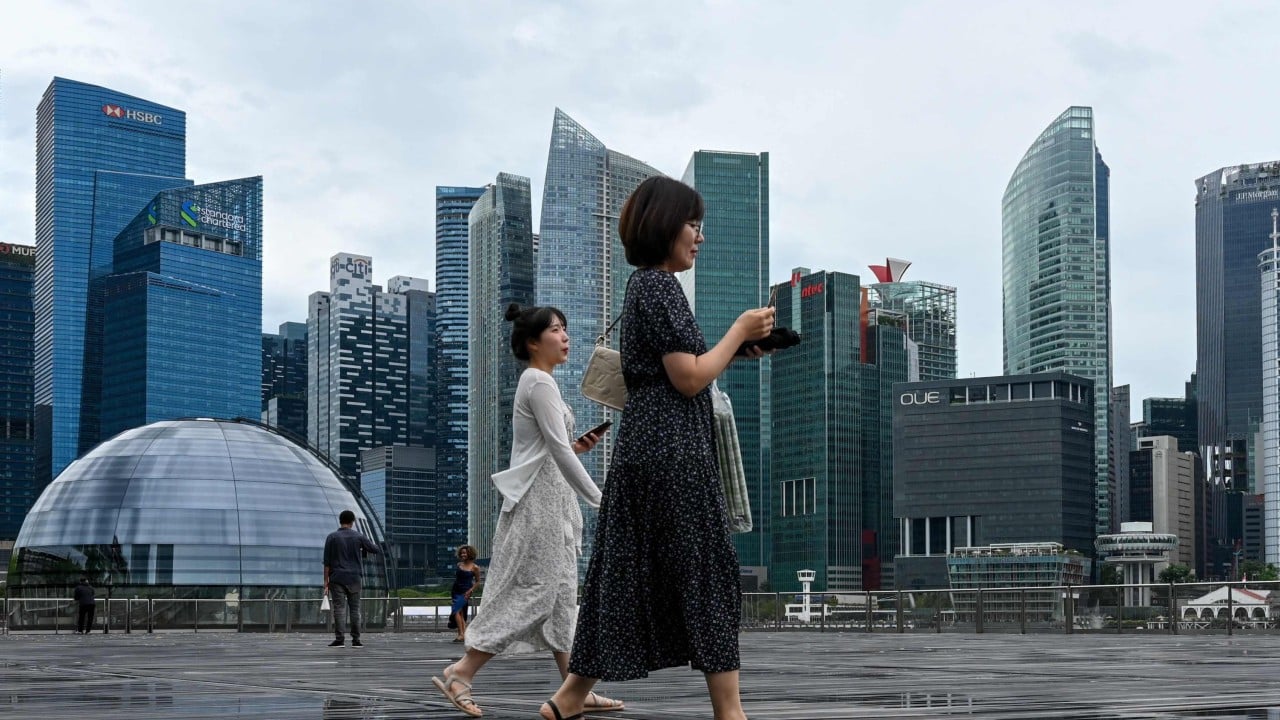
The concept of a "happy" economy is a statistical illusion. When global financial indices rank Singapore and Thailand as the world’s least miserable nations, they aren't measuring smiles, life satisfaction, or the psychological well-being of the citizenry. They are measuring the Misery Index, a cold calculation that adds the seasonally adjusted unemployment rate to the annual inflation rate. By this narrow definition, these two nations have mastered a specific brand of economic discipline that keeps the numbers low while masking a much more complex social reality.
Singapore and Thailand dominate these rankings because they have engineered labor markets and monetary policies that suppress the two traditional pillars of economic pain. Singapore utilizes a hyper-flexible foreign workforce that acts as a shock absorber during downturns, while Thailand relies on a massive informal sector that prevents traditional unemployment from ever showing up on a balance sheet. These aren't accidents of history. They are deliberate, hard-nosed strategies.
The Singaporean Buffer and the Price of Precision
Singapore’s presence at the top of the "least miserable" list is a testament to its status as a managed economy. The city-state’s unemployment rate rarely drifts above 2%. This is not merely due to a vibrant tech sector or a busy port. It is the result of a calibrated immigration policy.
When the global economy slows, Singapore doesn't just watch its jobless numbers climb. It adjusts the number of work permits issued to non-residents. By exporting its unemployment back to the home countries of its foreign laborers, the domestic "misery" remains statistically invisible. This creates a friction-less data point for analysts, but it ignores the underlying pressure on the local middle class who face a staggering cost of living.
Inflation management in Singapore is equally clinical. Unlike most nations that use interest rates to control prices, the Monetary Authority of Singapore (MAS) uses the exchange rate of the Singapore Dollar. By keeping the currency strong, they blunt the impact of imported inflation. Since Singapore imports almost everything—from water to energy—this currency manipulation is the only thing standing between the population and a cost-of-living crisis.
However, the "happy" label falls apart when you look at debt. Singaporeans carry some of the highest household debt-to-GDP ratios in the region. They are employed, and prices are stable, but they are locked into a cycle of high-cost housing and mandatory savings that leaves little room for the actual pursuit of happiness.
Thailand and the Informal Labor Trap
Thailand’s ranking often baffles Western economists. How can a country with frequent political upheaval and a lower GDP per capita than its neighbors be "happier" than Switzerland? The answer lies in the informal economy.
Approximately 50% of the Thai workforce is employed in the informal sector—street vending, subsistence farming, and small-scale service work. In the eyes of the National Statistical Office, if you work for one hour a week and earn enough for a meal, you are not unemployed. This creates an artificially low unemployment rate that rarely exceeds 1.5%.
This is a survival mechanism, not a sign of prosperity. When a factory in Samut Prakan closes, the workers don't sign up for government benefits that don't exist. They return to their family farms in the Isan region. They are "employed" by the land, but their productivity and income plummet. The Misery Index records this as a win because the unemployment rate stayed flat, ignoring the fact that the quality of life for those workers has collapsed.
The Inflation Illusion in Emerging Markets
Thailand has also been aggressive in its use of price controls. The government frequently subsidizes diesel and essential cooking goods to keep the Consumer Price Index (CPI) under control. While this prevents the "misery" of inflation, it creates a massive fiscal burden.
Debt is the ghost in the machine here. Thailand’s household debt has hovered around 90% of GDP for years. People are working, and the price of a bowl of noodles is relatively stable, but the average Thai citizen is servicing interest payments that prevent any real wealth accumulation. A low Misery Index score in this context is a mask for a stagnant floor.
Why the Misery Index Fails the Modern Worker
The Misery Index was created in the 1970s, an era defined by stagflation. It is a blunt instrument. It fails to account for underemployment, where a Master’s degree holder is driving a ride-share vehicle because no corporate roles exist. It fails to account for wealth inequality, which can breed resentment even in a low-inflation environment.
In Singapore, the competition for "Elite" status creates a high-pressure environment that mental health professionals have flagged for years. In Thailand, the lack of a robust social safety net means people work because they have no other choice, not because the economy is thriving.
The Hidden Metrics of True Stability
To understand if these economies are actually healthy, we have to look past the Misery Index at three critical factors:
- Purchasing Power Parity (PPP): What can a minimum wage actually buy in the capital city? In both Bangkok and Singapore, the gap between the lowest wages and the cost of basic housing is widening, regardless of what the inflation data says.
- Social Mobility: The ease with which a citizen can move from the bottom quintile to the top. This is slowing in both nations as education costs rise and "old money" or state-linked entities consolidate power.
- Fertility Rates: This is the ultimate "misery" metric. Singapore has one of the lowest birth rates in the world. People do not stop having children because they are happy; they stop because the economic cost of the future is too high.
The Structural Dead End
The reliance on low unemployment and low inflation as the sole indicators of success is a trap for policymakers. If a government focuses only on these two levers, they ignore the rot in the foundation.
Singapore’s model requires a constant influx of new capital and high-end talent to keep the currency strong, which in turn drives up the cost of living for the average person. Thailand’s model requires a massive underclass of informal workers to keep the official statistics tidy, preventing the modernization of the labor market.
These "happy" economies are actually highly stressed systems. They have traded volatility for a grinding, high-pressure stability. It is a trade-off that works for sovereign credit ratings and foreign direct investment, but it creates a different kind of misery—one that doesn't show up on a spreadsheet.
The real test for these nations won't be a rise in inflation or a spike in unemployment. It will be the internal breaking point of a workforce that is technically employed and financially stable, but increasingly unable to afford the life they were promised. Stability is not the same thing as prosperity. You can have a perfect score on the Misery Index and still have a population that is drowning.
Stop looking at the inflation prints and start looking at the debt-to-income ratios and the suicide rates. That is where the truth lives.


