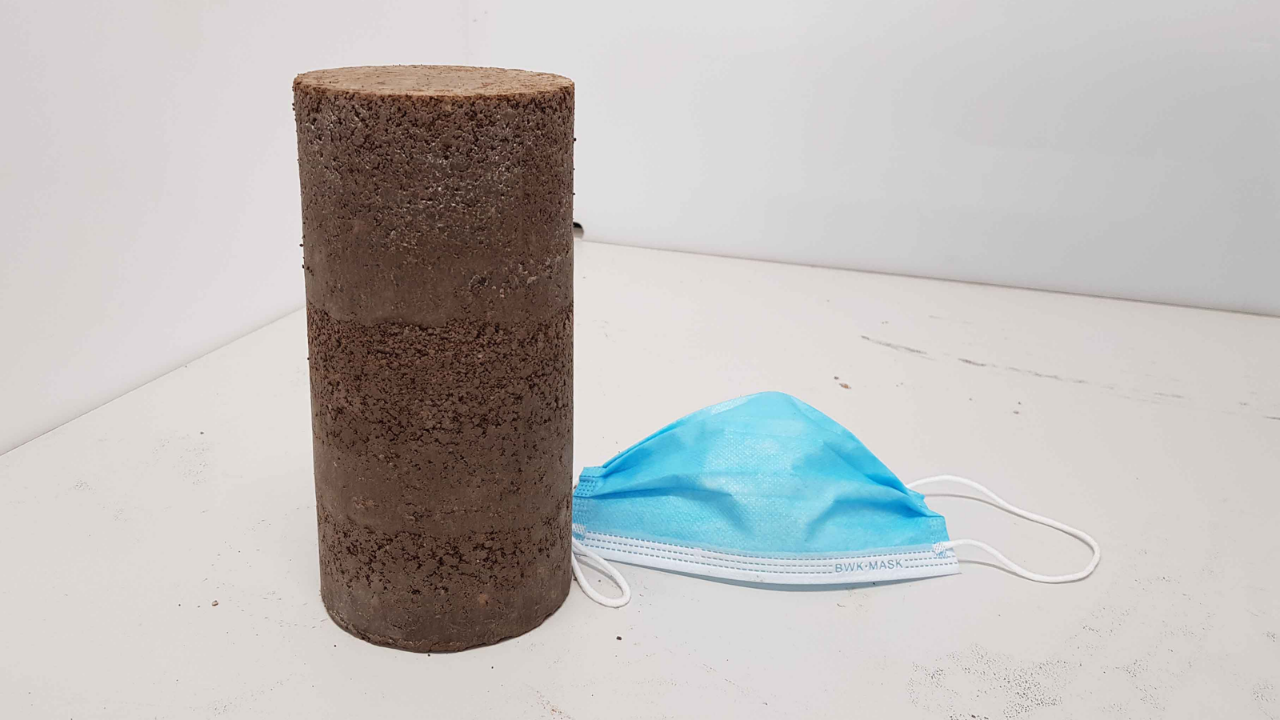
We threw away billions of plastic face masks during the global health crisis. Most of them ended up in landfills or tangled in marine ecosystems. But a team of researchers at RMIT University in Melbourne looked at that mountain of single-use polypropylene waste and saw aggregate for asphalt.
Instead of treating pandemic debris as a permanent environmental nightmare, civil engineers figured out how to shred it, mix it with recycled concrete rubble, and use it to build actual infrastructure.
You might think tossing medical trash into road base sounds like a reckless shortcut. It isn't. The math behind this Australian study changes how we should look at disaster waste management forever.
The Surprising Math Behind Mask Modified Roads
Let's look at the numbers because they shock most people. Researchers found that using just three million face masks can produce enough material to pave a one-kilometer stretch of a two-lane road.
Three million sounds like a massive pile, yet any mid-sized city generated that many in a single week during peak safety mandates. When ground down and blended at a precise one-to-one ratio with processed building waste known as recycled concrete aggregate, these shredded plastics meet strict civil engineering standards for road sub-base applications.
Traditional road construction relies heavily on quarried rock. Extracting virgin aggregates destroys natural landscapes, consumes diesel, and drains local resources. By substituting a portion of that quarried rock with crushed concrete and shredded single-use polypropylene masks, engineers solved two distinct problems simultaneously. They cleared out municipal waste streams and reduced the demand for raw stone mining.
Why Standard Asphalt Plants Can Not Just Melt Them Down
If you assume road crews simply toss handfuls of dirty medical gear into a hot asphalt vat, you misunderstand the mechanics completely. Doing that would create structural failure and toxic fumes.
The RMIT team spent months testing precise blends. Untreated plastics melt inconsistently and create weak spots in pavements. To make road-grade material, the masks undergo a multi-step preparation process:
- High-temperature sanitization to eliminate biological contaminants and viral residue.
- Mechanical shredding into uniform, fibrous fragments measuring just a few millimeters.
- Precise blending with recycled concrete aggregate at an optimum 1-percent mask to 99-percent concrete ratio.
That tiny one-percent threshold matters more than you think. Cross it, and the structural integrity drops. Stay at or below it, and the plastic fibers actually improve flexibility and ductility, making the final road surface far less prone to thermal cracking during extreme weather shifts.
The Real Environmental Trade-Offs Nobody Mentions
We love happy recycling stories. This one has real merits, but it also exposes uncomfortable truths about modern infrastructure.
Collecting, transporting, sanitizing, and shredding millions of lightweight plastic masks requires energy. If the carbon footprint of hauling medical waste across a state outweighs the carbon saved by avoiding virgin rock extraction, the project fails the environmental audit.
Fortunately, localized processing centers change the equation. When cities process their own municipal waste streams near regional asphalt plants, transit emissions drop significantly.
Another hurdle involves public perception. Workers handling the initial sorting stages require strict personal protective equipment, even after industrial sanitization. Communities near asphalt recycling yards often push back against handling what they still view as hazardous biomedical waste, regardless of lab certifications proving the material is completely inert.
How Cities Are Rethinking Construction Waste Today
Municipalities across Australia and parts of Europe are moving past pilot programs and looking at long-term supply chains for alternative aggregates.
Civil engineers no longer view trash as a nuisance. They view it as an unmined quarry. Every discarded plastic bottle, rubber tire, and disposable medical garment represents a potential substitute for natural resources that take millions of years to form.
If your local municipal council is currently repaving streets, ask them where their aggregate comes from. Push for specifications that allow recycled content. Demand transparency regarding whether your tax dollars are funding virgin stone extraction or supporting local circular economy initiatives.
The next time you drive down a newly paved stretch of highway, remember what might be hiding beneath your tires. A smoother ride built from the debris of a global crisis proves that human ingenuity can turn almost any disaster into a foundation for the future.