The grass in the Waikato doesn't just grow; it vibrates with a deep, neon green that feels almost aggressive. It is the color of money. Specifically, it is the color of liquid gold—the kind that comes from a cow’s udder and keeps the lights on in Wellington.
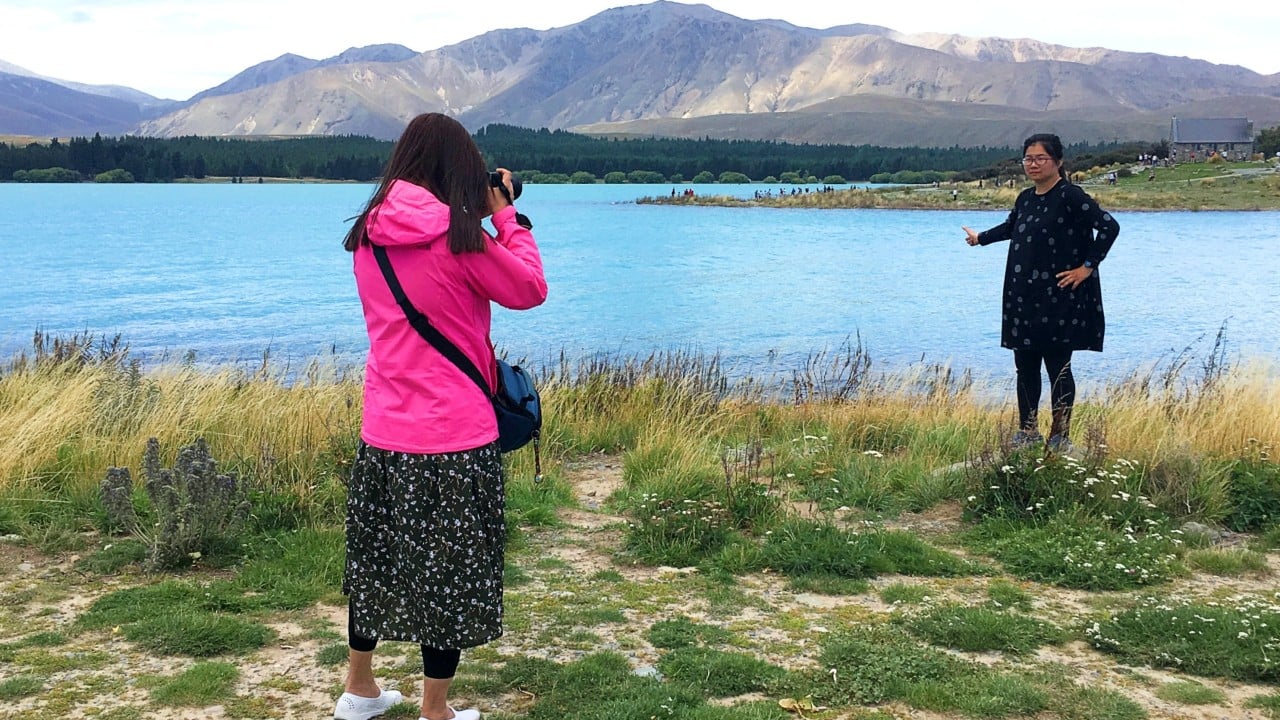
For decades, New Zealand told itself a specific story. We were the world’s playground. We marketed ourselves as a pristine, Middle-earth escape where people from London, Beijing, and San Francisco would fly halfway across the globe to spend their hard-earned currency on bungee jumps and flat whites. We called tourism our "top earner." We wore that title like a badge of honor, a sign that we were a modern, service-oriented economy.
Then the world stopped.
The planes sat on the tarmac, and the Milford Sound fell silent. When the dust of the pandemic finally settled, the hierarchy of the New Zealand economy had suffered a seismic shift. The hiker in the expensive puffer jacket hadn't come back in the numbers we expected. But the milk? The milk never stopped moving.
The Invisible Engine
Consider a hypothetical farmer named Arlo. Arlo doesn't care about Instagram aesthetics or the "Lord of the Rings" filming locations. While the borders were locked, Arlo was waking up at 4:30 AM. His cows didn't know there was a global supply chain crisis. They needed milking.
During the years when the tourism industry was effectively on life support—surviving on government subsidies and the hope of "domestic travel" that never quite filled the $16 billion hole—the dairy sector quietly put the country on its back. In the post-pandemic reality, dairy hasn't just recovered; it has cemented its position as the undisputed heavyweight champion of New Zealand’s export economy.
The numbers tell a story of a lopsided divorce. In the year ending March 2023, dairy exports surged to over $26 billion. Meanwhile, international tourism expenditure, while recovering, struggled to break the $10 billion mark. That is a massive gap. It is the difference between a thriving national budget and one that is perpetually checking its pockets for spare change.
We used to think of tourism as our future and primary industry as our past. We were wrong.
The Fragility of the "Experience"
Why did one bounce back while the other limped? It comes down to the nature of the "product."
When you sell a bottle of milk or a block of cheese to a consumer in Shanghai, you are selling a necessity. People have to eat. The demand is baked into the human condition. It is a physical good that can be put on a ship and sent anywhere, regardless of whether the person buying it is allowed to leave their house.
Tourism, however, is a luxury of movement. It is a fragile "experience" that requires a perfect alignment of disposable income, open borders, and a sense of safety. When the cost of living skyrocketed globally, the first thing people cut wasn't their grocery bill; it was the $5,000 flight to Auckland.
The tourism industry is currently a ghost of its former self, haunted by "labor shortages" and "capacity constraints." You can’t just flip a switch and bring back a decade of accumulated hospitality talent. When the hotels closed, the staff moved on. They became builders, or they moved to Australia for higher wages. Now, even when the tourists do arrive, there isn't always someone there to make the bed or drive the tour bus.
The stakes are invisible but high. When tourism lags, the regional towns suffer. A dairy farm employs a few people and supports a local vet. A bustling tourist town like Queenstown or Rotorua supports an entire ecosystem of laundries, cafes, mechanics, and artists. When the "top earner" status shifted to dairy, the economic heart of these communities started beating slower.
The Environmental Tug of War
There is a tension here that no one likes to talk about at dinner parties. New Zealand’s brand is "100% Pure." It is the foundation of our tourism appeal. Yet, the very industry that is currently saving our economy—dairy—is the one that puts the most pressure on that "pure" image.
Imagine the irony. We need the dairy money to pay for the infrastructure that tourists use, but the more we lean into dairy, the harder it is to sell the pristine image that attracts the tourists. It is a circular problem.
Nitrates in the water. Methane emissions. These aren't just buzzwords; they are the literal cost of being a dairy superpower. We are currently leaning on our old-school primary industries because the shiny, new-school service economy turned out to be more volatile than we ever imagined.
But the shift isn't just about cows versus cameras. It's about a fundamental misunderstanding of what makes a nation resilient. We put all our eggs in the "international visitor" basket, and when that basket dropped, we realized we had forgotten how to value the people who actually produce things you can hold in your hand.
The Ghost at the Table
The "lag" in tourism isn't just a statistical blip. It’s a cultural identity crisis.
For twenty years, New Zealanders were told that we were a "boutique" destination. We focused on high-value travelers. We didn't want the backpackers who spent ten dollars a day; we wanted the billionaires who stayed in $10,000-a-night lodges. But billionaires are a fickle demographic. They follow trends. They go where the newest, shiniest thing is.
Dairy is boring. It’s predictable. It’s a truck on a dusty road at dawn. But in a world that feels increasingly unstable, boring is a superpower.
We are currently witnessing the Great Rebalancing. The government is realizing that you cannot run a country on "vibes" and scenery alone. You need a base. You need an export that people will buy even when the world feels like it's ending.
The problem is that the "lag" in tourism has left a hole in the soul of our cities. Walk through downtown Auckland or Christchurch. The "For Lease" signs in the windows of souvenir shops aren't just signs of a bad quarter; they are the scars of an industry that was told it was invincible and then found out it was anything but.
The Cost of the Comeback
Will tourism ever reclaim the throne? Perhaps. But it won't be the same industry it was in 2019. It can't be.
The price of flights is higher. The "social license" for tourism—the idea that locals actually want millions of people crowding their beaches—has eroded. People in places like Wānaka and the Far North have had a taste of what their homes look like without the crowds, and many of them aren't in a hurry to go back.
Meanwhile, the dairy industry is facing its own reckoning. Regulations are tightening. The "easy" growth of the 2000s is over. Every liter of milk produced now has to account for its carbon footprint and its impact on the river.
We are watching two giants pass each other in the night. One is an old king returning to power, weary and under fire for its environmental impact. The other is a young prince who found out that his kingdom was built on sand and is now trying to figure out how to rebuild on solid rock.
The reality is that New Zealand needs both. We need the dairy money to fund the transition to a greener economy, and we need the tourism industry to keep our culture outward-facing and vibrant. But for now, the ledger is clear.
The cows are winning.
The next time you see a milk tanker lumbering down a state highway, don't just think of it as a traffic hurdle. Think of it as a lifeline. It’s the sound of a country paying its bills while it waits for the rest of the world to remember how to find us on a map.
The hikers might come back eventually. They might find their way back to the trails and the mountains. But they should know that while they were gone, the land didn't wait for them. It went back to work. It went back to the mud, the grass, and the morning cold. It went back to the only thing that has ever truly been a sure bet in this corner of the Pacific.
The milk is in the vat. The check is in the mail. The mountains are still there, but they’re no longer the ones paying the mortgage.