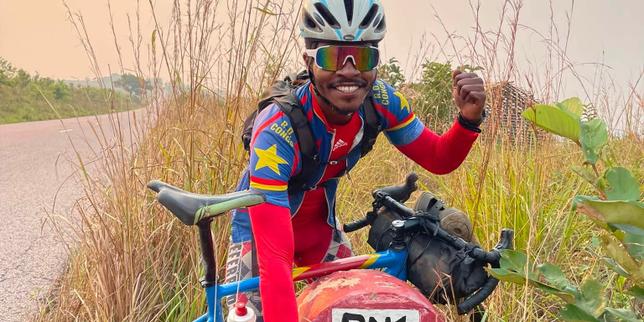
Some journeys are measured in kilometers. Others are measured in raw courage, quiet defiance, and an unbreakable refusal to accept the status quo. When twenty-three-year-old Miguel Masaisai set out from Goma on the first day of May, he wasn't just testing his endurance against the African continent. He was carrying the collective heartbreak, exhaustion, and hope of millions of people trapped in the shadow of eastern Congo’s endless conflict. His initiative, dubbed Pedals for Peace, was designed to do what politicians and diplomats had failed to accomplish for decades: force the world to look at the human cost of violence in the Kivu region.
Tragedy struck on September 18, 2026. In the northern region of the Republic of the Congo, near the town of Ouesso, Masaisai’s life was abruptly cut short in a devastating road collision. He was only twenty-three years old. The news tore through social media, newsrooms, and village squares across Central Africa, leaving a profound void. Yet, as tributes poured in from sports ministers, civic leaders, and ordinary citizens, one sentiment echoed above the rest. His bicycle stopped rolling, but his message never will. Don't miss our recent article on this related article.
The Road From Goma to Cape Town
Understanding why his death hit so hard requires looking at who he actually was before headlines turned him into a symbol. Masaisai wasn't a professional athlete backed by massive corporate sponsors or elite training camps. He was a young man from Goma—a city battered by displacement, volcanic eruptions, and armed conflict—who decided that staying silent was worse than facing the open road. Long before his fateful ride toward Rabat, Morocco, he had already proven his mettle.
In 2025, he completed a grueling, three-month expedition cycling all the way from Goma to Cape Town, South Africa. That thousands-of-kilometers trek wasn't a rehearsal; it was a statement. He wanted to show that Congolese youth possess the willpower to conquer impossible odds if given half a chance. People who followed his 2025 ride watched an ordinary athlete transform into an endurance icon known locally for his relentless grit. He didn't complain about broken chains or punishing heat; he just kept pedaling. To read more about the background of this, The New York Times offers an excellent breakdown.
Pedals for Peace and the Anatomy of an Impossible Ride
The Pedals for Peace campaign scaled up that ambition exponentially. The goal wasn't merely to ride a bicycle across international borders. It was a massive fourteen-thousand-kilometer undertaking meant to connect Central Africa with North Africa, drawing a living line of solidarity through seventeen countries. When he left Goma on May 1, 2026, he knew the risks. He knew that African highways are notoriously dangerous for cyclists, shared with speeding freight trucks that treat vulnerable road users as mere obstacles.
In interviews before his departure, he spoke candidly about those very dangers. He understood the physical toll, the heat, the isolation, and the sheer unpredictability of rural infrastructure. Still, he went anyway, fueled by a desire to show the world that the youth of eastern Congo refuse to be defined solely by war.
The first major milestone of the expedition arrived on August 5, 2026. After sixty-seven days on the road and more than 6,500 kilometers logged through the punishing terrains of the Kasaï and Bandundu regions, Masaisai arrived in Kinshasa. The capital welcomed him with open arms. Crowds gathered to cheer for the young athlete whose bicycle was wrapped in messages of unity and respect. Invited to local media broadcasts like Sosola Lelo, he explained his mission in plain, unvarnished language. He didn't use rehearsed political talking points. He spoke straight from the gut, urging African youth to channel their talents toward building communities rather than destroying them. He reminded anyone willing to listen that the eastern provinces of the Democratic Republic of the Congo are filled with human potential, not just casualties of war.
The Final Days in the Congo Basin
After a brief respite in the capital, he crossed the Congo River into the Republic of the Congo on September 6. His route took him through Brazzaville, Gamboma, and Oyo. By September 14, he reached Oyo after completing a grueling ninety-eight-kilometer stretch from Gamboma. He was moving northward, aiming next for Cameroon before pushing onward to Morocco. Local cycling federations and regional officials tracked his progress with admiration. He was living proof that grassroots activism could take physical, inspiring form.
Then came the dark turning point. Mechanical trouble forced a temporary pause in his cycling rhythm. To reach a location where his bicycle could be serviced properly, he boarded a local transport vehicle in the Ouesso area. It was during this transit phase that the fatal accident occurred, involving a heavy vehicle collision. The suddenness of the loss stunned everyone who had watched his progress online and cheered for every milestone he posted.
Reactions from across the political and sporting spectrum reflected the shock. Didier Budimbu, the sports minister, released statements expressing deep sorrow over the loss of a young man who pedaled with courage to carry hope to the eastern provinces. Regional sports figures, such as the president of the North Kivu cycling league who had supported Masaisai for nearly a decade, spoke of a devastating personal and collective blow. In Kinshasa, a moving posthumous ceremony held at the esplanade of the Hôpital du Cinquantenaire honored his bravery. He was awarded the Gold Medal of Civic and Sports Merit, cementing his status in national memory.
Why Endurance Sports Become Acts of Defiance
Medals and official tributes risk turning a dynamic human being into a marble statue. Miguel Masaisai was messy, ambitious, tired, joyful, and relentlessly stubborn. He faced headwinds that would have made anyone else turn around at the first village outside Goma. He slept in unfamiliar towns, dealt with stubborn equipment failures, and constantly dodged reckless drivers on poorly lit asphalt. His journey exposed the harsh realities of intra-African travel and road safety infrastructure.
Moving across borders on two wheels in Central and West Africa isn't just an athletic challenge; it's a daily negotiation with danger. The lack of protected cycling lanes, the dominance of massive commercial trucks, and the absence of basic road safety enforcement create a silent crisis that claims thousands of lives away from the global spotlight.
Critics sometimes question the practical value of symbolic acts like long-distance cycling. What does a bicycle ride actually change in a war zone? Does it disarm militias? Does it rebuild destroyed homes? The answer is obvious: no, a bicycle doesn't stop a bullet. But that misses the entire point of what Masaisai achieved. Conflicts thrive on despair, isolation, and the belief that nobody outside a war-torn zone cares what happens to ordinary civilians. When a young man from Goma pedals thousands of kilometers across multiple nations carrying a banner of peace, he shatters that isolation. He forces governments, media outlets, and everyday citizens in distant capitals to look up from their daily routines and confront a simple truth. People are suffering, but they are also fighting back with hope.
Building a Legacy on the Asphalt
The legacy left behind in the wake of his passing extends far beyond sports. Observers in Congolese media have drawn comparisons between his nonviolent endurance and historic civil rights movements, noting how physical presence and peaceful witness can shake national consciences. His initiative serves as an unfinished blueprint for youth mobilization. Instead of waiting for international aid organizations or stagnant peace talks to deliver stability, Masaisai took matters into his own hands. He used his physical body, his athletic training, and sheer willpower to create a living bridge between divided regions.
Honoring that legacy requires more than mourning. It demands addressing the very dangers that cut his life short. Governments across the region need to invest heavily in highway safety, better regulation of heavy commercial transport, and basic infrastructure for non-motorized travelers. Cyclists and pedestrians shouldn't be gambling with their lives every time they step onto a national highway. Beyond infrastructure, civil society organizations must find ways to institutionalize the dialogue he started. When young people from Goma, Kinshasa, Brazzaville, and beyond connect over shared cultural and athletic goals, they build a foundation of trust that politicians cannot easily dismantle.
Miguel Masaisai started his ride as an individual athlete with a big dream. He ended it as a national icon whose story will be told to generations of young Congolese looking for a model of courage. His bicycle may be silent now, but the road he opened stretches out into the future, waiting for others to pick up the pedals and keep moving forward.